Review: The Mary Pages by Sally Read

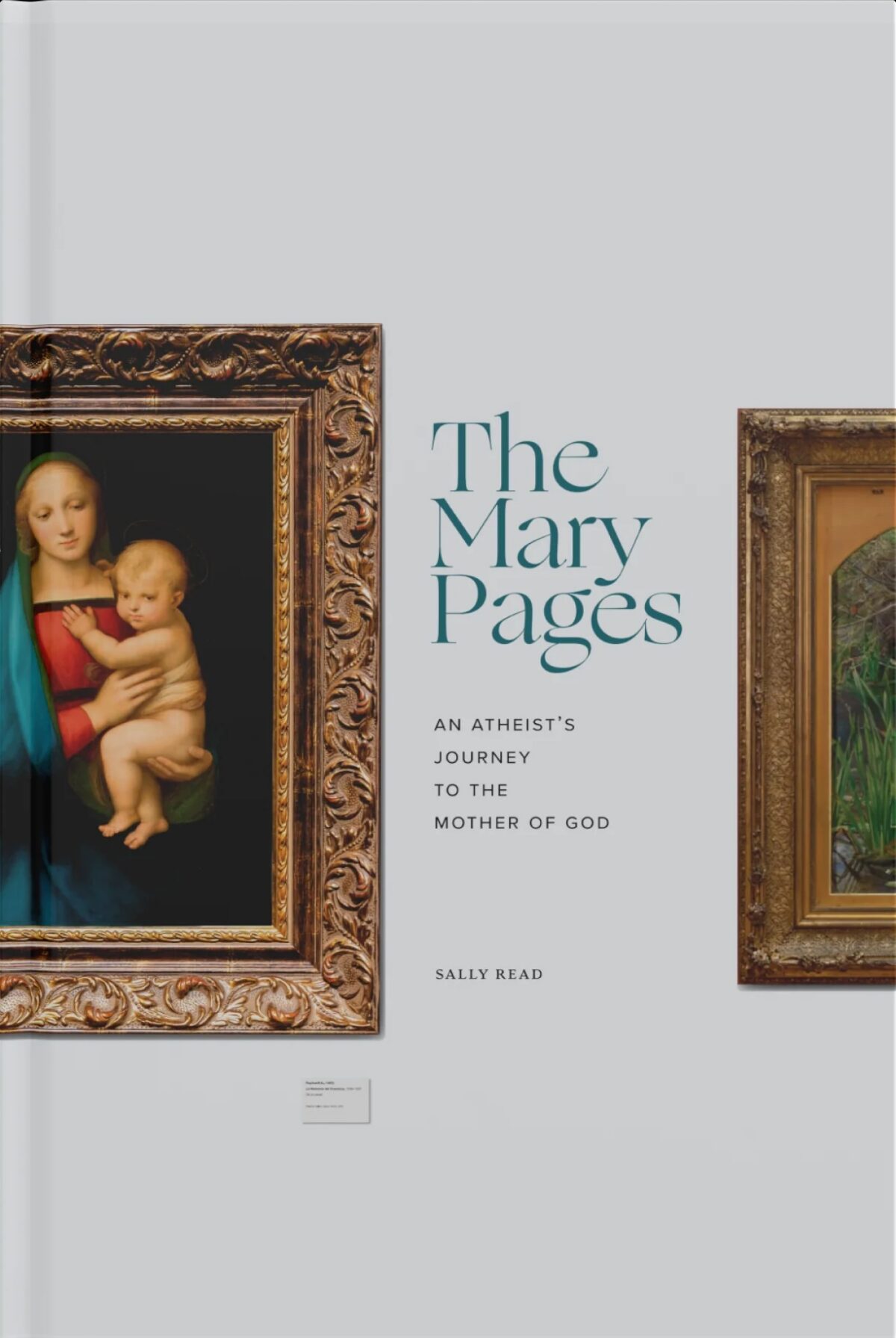
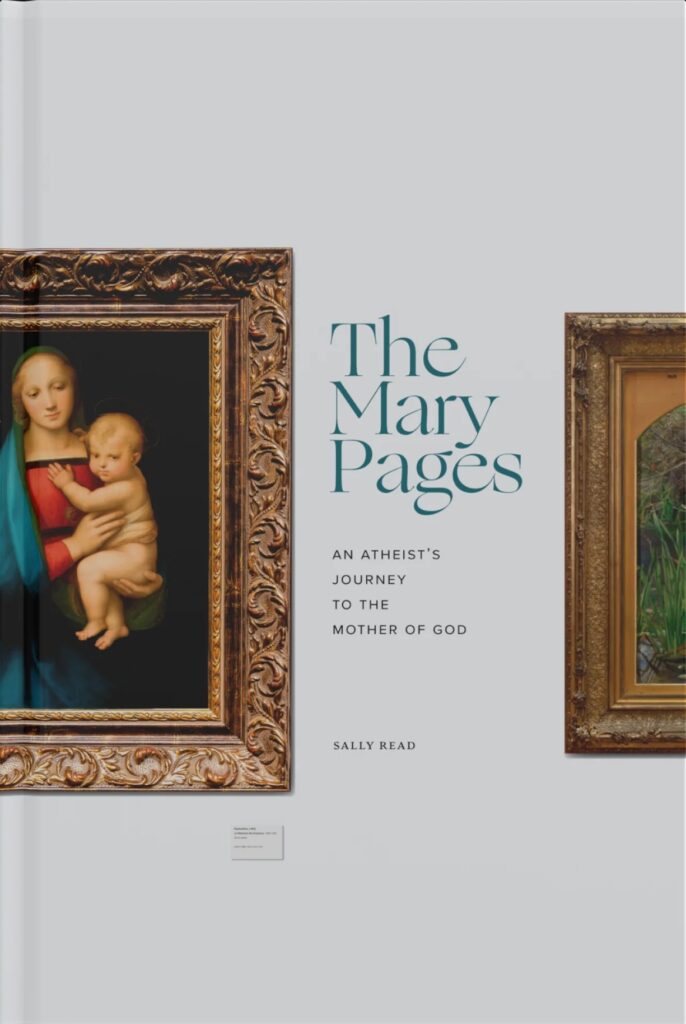
Sally Read, born in East Anglia in 1971 and now living near Rome, was a secular poet before she was a Catholic poet. Determinedly secular, too, as she relates in her new memoir, The Mary Pages: An Atheist’s Journey to the Mother of God (Word on Fire). 
Raised by an atheist father who scorned all things religious, in a country that had stripped its churches bare of iconography (especially all that was Marian) centuries before, and imbibing to the full the defiant feminism that marks our current culture, Read unsurprisingly regarded the Mother of God, at least as the Catholic Church views her, with faint contempt. “How best to shut a woman up?” she once mused as she she contemplated Mary’s seeming irrelevance to contemporary women’s issues such as genital mutilation, date rape, and domestic violence. “Put her on a pedestal, and give her a crown.”

The Mary Pages is not a conversion story. Read has already told that story, of her nine-month journey in 2010 from cynical atheism to the Catholic Church, in a 2016 memoir, Night’s Bright Darkness. Nor is The Mary Pages a conventional autobiography; it seems purposely vague on detail. Instead, it is a story, meticulously and beautifully written, of how Mary insinuated herself into Read’s internal life so thoroughly, starting in childhood, that she would be inevitably led to Mary’s Son. The medium was art. Read’s grandmother had a copy of a Raphael Madonna hanging on a wall. The mother and baby mesmerized the unchurched little girl who scarcely knew who Mary was.

Later, Read went to nursing school in London, where she found herself haunting the National Gallery’s Renaissance rooms with their myriad images of Mary—and then hanging a print in her bedroom of Filippo Lippi’s radiant Madonna and Child With Two Angels. The story behind the painting overwhelmed her as much as the painting itself. The model for the Virgin had been a Dominican novice-nun, Lucrezia Buti, with whom Lippi, although a professed friar, had fallen in love. One day he kidnapped Lucrezia from a procession and seduced her. She eventually bore him two children, but even when released from his vows and given ecclesial permission to wed, he refused to marry her.

That resonated with Read, who herself was seeing a man, a doctor she calls Mischa (she has altered identifying information for most of those she writes about), who declined to commit himself to her because he already had a live-in partner, a woman physician at his hospital. Read’s relationship with Mischa was misery (“a kind of slavery,” she writes), but he did one thing for her: He encouraged her to keep writing the poetry she was already starting to write. He brought her books by women poets he thought would inspire her: Sylvia Plath, Sharon Olds. They did. If you have read Read’s poems (some are online), either pre-or post-conversion (where her subjects are nearly entirely Christological), you will find the powerful  rhythms, minutely focused examinations of the natural world and the human body, and the naked emotional engagement that mark the work of Plath and Olds. Read’s years in the secular literary world did not go to waste. 

She got up at 5:30 every morning to write furiously, then worked a shift at a psychiatric hospital tending the human dregs and outcasts no one else seemed to care about. She collected Marian art in her apartment—but at the same time she was composing a feminist poem that would portray the Virgin as a pregnant rape victim who had to invent the Annunciation as a cover story: “I could not tolerate a male God—and Mary, I suspected as much, was inextricable from him.” Read’s mental images of Mary were refracted into other wounded women: Lucrezia Buti; Elizabeth Siddal, the copper-haired model for many a pre-Raphaelite painting of Mary who killed herself like Sylvia Plath when her artist/poet husband, Dante Gabriel Rosetti, had an affair with another of his models; Princess Diana, then at the height of public pity for her and also made violently dead, in 1997. Read enrolled in a graduate writing program on the American “Plains” (the University of South Dakota, according to her Wikipedia biography), where her friends, like her, were women left stranded by men, sometimes with children to raise alone

She returned to London, and then, somewhere and somehow (remember, this is not an autobiography) she met the man who became her husband: Fabio, an Italian. They moved first to his native Sardinia, then to the Roman seaside suburb of Santa Marinella. All over Sardinia—in roadside shrines, bars, schools, grocery stores–were plaster and wooden statues of the Madonna, sometimes wearing a lace dress and blonde wig, like a doll. Read found them repulsive, and she chafed under the unwritten rules of traditional Mediterranean society, where respectable women did not go out at night alone, and her visiting female friends, bohemian free spirits who flirted and more with the local shepherds, drew the wrath of her in-laws, who deemed them loose women. In Santa Marinella a church housed La Madonnina, a small statue of Mary, a souvenir from Medjugorje, that was said to weep human blood from time to time. “This florid thing…only distanced Mary further from me,” Read writes. “The bloody face was like something from a horror movie.”

The turning point came—although it would be another four years formally—when she gave birth to her daughter, Celia Florence, in a Roman hospital. She had had trouble getting pregnant, and the labor was prolonged and excruciating (the baby’s head wasn’t positioned optimally). Alone in her hospital bed in her agony (husbands weren’t allowed bedside in Roman maternity wards), she realized that Mary had also been alone when Jesus was born, because as it is with all women in childbirth, “[n]o one, not even her husband, could possibly imagine what was happening to her.”

“Alone of all your sex,” -[the fifth-century Latin poet] Sedulius wrote, and the feminists seized on this as example of the Virgin’s difference, her exceptionality, her exceptional holiness, her exceptional loneliness—her special subordination to God and man….But what I will arrive at, in a shortening number of days, is Mary’s aloneness as the archetype of every woman’s aloneness: Mary as foundress, as defender, as mother-creator, as collider with the harsh, existing world. For in childbirth, there is no act of creation so similar to God’s as he pulled form out of nothing and watched the world spin.

The only thing that I could have wished for more of in this haunting and gorgeous book is the visual images of Mary that have followed Read since her childhood. There are some of them, to be sure: her grandmother’s Raphael, the Filippo Lippi, the striking 1922 statue of Our Lady of Walsingham, whose shrine in her native East Anglia Read visits as a pilgrim in the book’s final pages. I longed to see a photo of La Madonnina, for example. It is also unfortunate that Read’s oeuvre as a poet has been divided in two by her conversion, with each half perhaps rendered inaccessible to admirers of the other. Her first three books of verse, dating from the early 2000s, were published by Bloodaxe Press, a leading British secular publisher of poetry. Her most recent volume, Dawn of This Hunger (Angelico Press, 2021), as well as her memoirs and other prose works, come from Catholic presses, and it would be unfortunate if her secular readers assumed she was addressing her richly laden recent words solely to a Catholic literary ghetto. Sally Read is too fine a stylist and too penetrating an observer for readers of any religious sensibility or none to miss.

Pre-conversion poem:

Gestation

Post-conversion poem:

Anne: The Coming of the Immaculate

At times prayer is wordless, but it fills
the empty night as water fills a lake
with its own meaning. I pray to break
this body with a child, for my taut pelvis
to open and ache its tight basketwork
apart; to yield. Sometimes I sense God
in the darkness—like a heavy leaning
at the door—always with an inexplicable
tenderness in how he does not burst in.
Perhaps he would break me if he did,

so waits instead to pour into my own undoing—
so just when I would moan, It’s done!
that life did not go well, Perfection rests in me,
and I expand, like wood ticking in the sun.

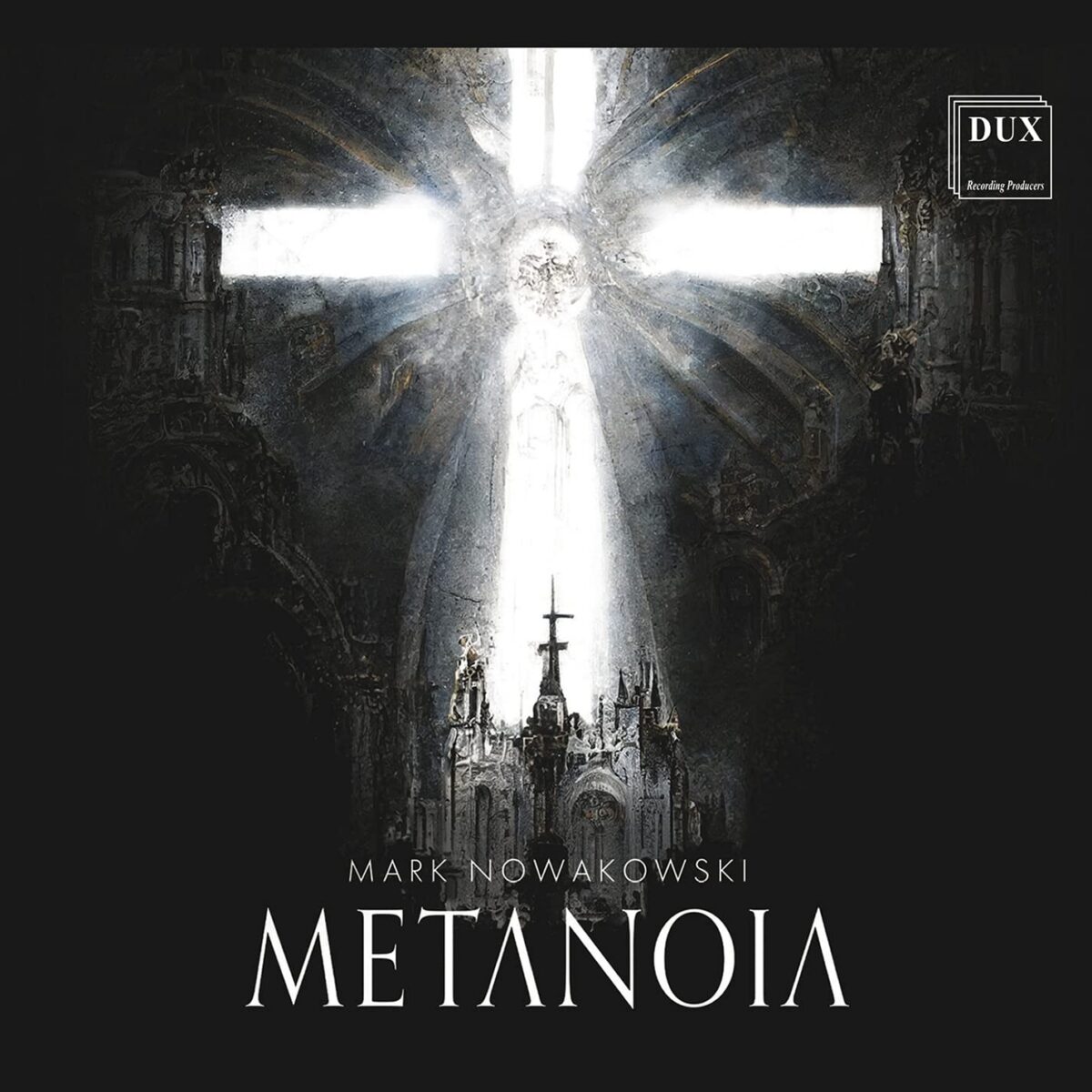
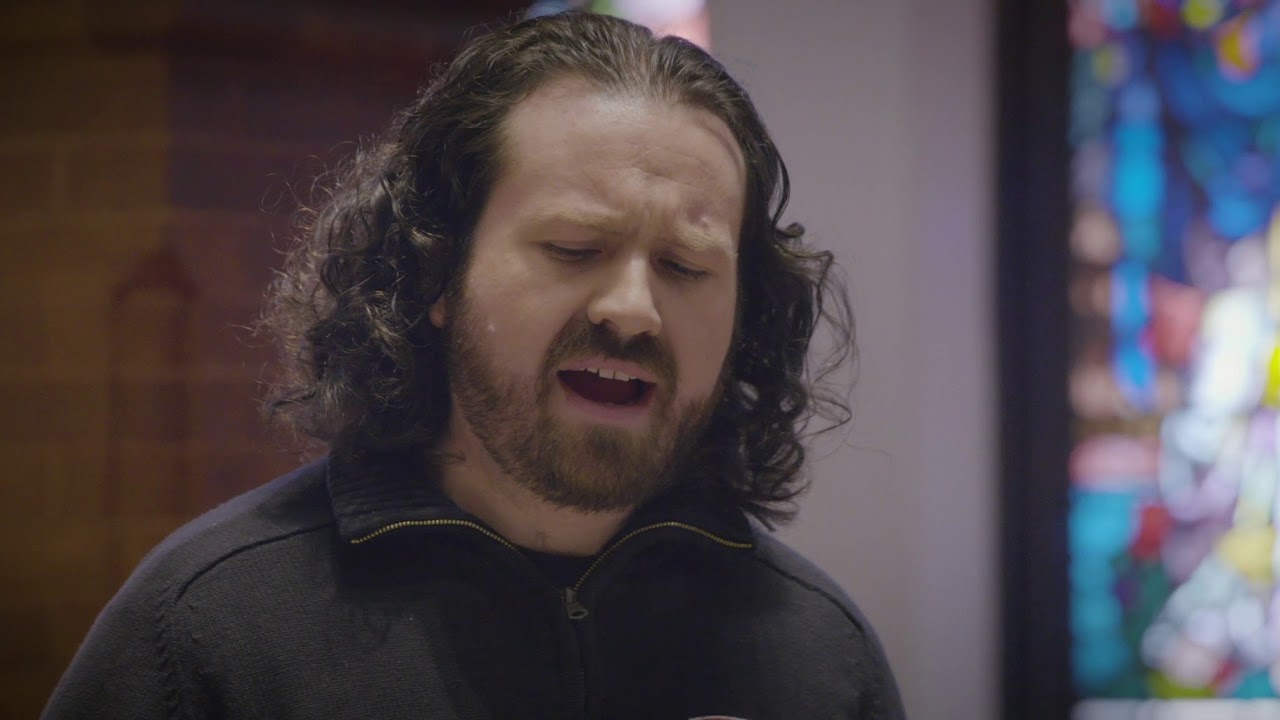
Metanoia: One Composer’s Catholic Journey

On May 19th I’ll be releasing my second album, Metanoia, published by the Polish label “DUX” and distributed internationally via Naxos. This is the story of a composer’s journey in creating new sacred music that brings people closer to God.

What is sacred music? This is the first question I wrestle with, for while the line between liturgical and non-liturgical music is at least somewhat clear, the question of what makes music “sacred” drifts into more fraught philosophical territory. Music itself points towards transcendent striving and the music most fully realized is one which engages our contemplative nature. Sacred music is that which makes us stop and contemplate what lies beyond the noise and distraction of the world: It points us toward God.

Even during a time of growing hostility to faith in general and Catholicism in particular within the concert hall, it is the works of Catholic and Orthodox composers which have continued to play a major part in our classical music.

The 20th century’s greatest composition pedagogue, Nadia Boulanger (1887-1979), was a deeply faithful Catholic and daily communicant, and most of her famous students (even those not implicitly Christian) retain a distinctly spiritual approach to their work.

One of her many contemporaries was Olivier Messiaen (1907-1992), a French composer whose compositions are marked by his Catholic faith and fascination with theology. Some secularists love his fascination with birdsong (which I suspect for Messiaen pointed to the universal harmonies of the Creator anyway). I rather prefer his Poèmes pour Mi, which strikes me as a historical musical prelude (and musical counterpart) to the deep theological meditations of John Paul II’s Theology of the Body.

Francis Poulenc’s (1899-1963) many sacred works, including his Gloria and Stabat Mater, reflect his deep spirituality and commitment to the Catholic Church. In midlife, when a dear friend died in a traffic accident, Poulenc made a pilgrimage to the Sanctuary of the Black Virgin in Rocamadour, triggering a profound spiritual revelation. His resulting Litanies for the Black Virgin for women’s chorus and organ was premiered by Nadia Boulanger during a London BBC concert.

Henyrk Górecki (1933-2010) was another Catholic whose works include luminous choral works and the best-selling Third Symphony, yes, but also a grouping of more challenging chamber works which invite deeper contemplation. (I’ve written about them here.)

Giya Kancheli (1935-2019) was a devout Orthodox Christian born in Soviet Georgia whose striking works, including his Liturgy for Viola and Symphony No. 6, are characterized by their meditative quality and evocative use of soundscapes. John Tavener (1944-2013) was an English convert to Orthodox Christianity. His masterworks include the record-setting The Protecting Veil and haunting Funeral Ikos.

Today the heirs of this line of composers include Arvo Pärt (Orthodox, but setting almost exclusively Catholic texts), and Sir James MacMillan. MacMillan’s compositions reflect his Catholic faith and Scottish identity, with works such as his St. John Passion and Symphony No. 5 receiving critical acclaim, though it is his Confession of Isobel Gowdie and his Sing a New Song which move me most profoundly. Pärt’s minimalist style is infused with religious motifs, evident in works such as his Magnificat and Tabula Rasa.

In Poland, Pawel Lukaszewski holds a dominant role among composers, and I think succeeded in his astounding Via Crucis in writing the first sacred masterwork of the 20th century. Lukaszewski in turn has inspired composers like Sebastian Szymanski, who writes truly gorgeous music.  Finally in North America we have our own Frank LaRocca, who is leading a new generation of Catholic composers in various stages of their career including Jeffrey Quick, Daniel Knaggs, Bobby Chastain, Xanthe Kraft, and others.

The next generation of Catholic composers should take heart: despite the hostility we encounter, both the origins of our craft and its modern manifestation are distinctly Catholic by nature, and I would go as far as to claim that a Catholic art needs a Catholic perspective to be most fully realized.

As to my own part, In my 2017 release for Naxos, Blood Forgotten, the string quartets featured within were deeply personal statements (as many string quartets are) and represented some of my most heady and complex music (as many string quartets do). There are rich statements of culture and philosophy here, yes, but also distinct moments that reach for the sacred in music. While the album was successful, a number of other diverse projects were already brewing, from chamber to choral to even electronic music. Over a period of eight years I collected the best recordings from these various collaborations, intent on assembling them into a distinctly Catholic vision of non-liturgical sacred music. I hope to craft and share music which challenges the listener and takes them on a journey, or perhaps provides contemplative fodder for their own spiritual journey. From this my second album, Metanoia, has been born.

The title track, “Metanoia,” was a collaboration with the Italian-based Monteverdi Cello Octet, with whom I developed an immediate connection despite the geographical distance between us. The piece explores the Gospel meaning of the Greek word “Metanoia,” which is often translated as “repent,” but in reality carries the deeper command to “change one’s manner of thinking.” There is difficulty of changing ingrained thoughts and habits, yes, but even more profoundly there is great struggle to change spiritual habits and enliven dead hearts; music for its part is the ideal vehicle with which to explore and express these often indescribable spiritual struggles.

Metanoia begins with strained and uncertain textures and builds into a rich melodic landscape before arriving at a place of fierce conflict. Eventually, the conflicting lines settle into an aggressive percussive repetition, while a new pleading melody emerges, threatening to explode into ecstasy before descending into a more uncertain ending: the journey goes on, as we have “put into the deep,” but Christ is with us, and our fundamental transformation continues.

It’s the most challenging work on the album and intentionally put first on the disc: This is contemplation, not easy listening.

We travel from Italy to Poland next with “Tu autem, Domine?” which is a gentler work, a meditation for mixed chorus that repeats and refashions its short text into a series of varied spiritual questions, which seem as much a plea as an impassioned demand. The questioning ultimately settles into a dramatic “Amen,” vacillating between uncomprehending resignation and peaceful acceptance. I explored the particular way that Poles approach God in our personal and historical difficulties in this work, which was beautifully brought out by Szymon Wyrzykowski and his wonderful “Chaps” choir in a recording session in Szczecin, Poland.

The album proceeds to “Before I formed you…,” a work for voices and baroque stringed instruments, arising from my frequent collaborations with Three Notch’d Road and violinist Fiona Hughes and bass-baritone Peter Walker. As a father of four, the meaning of this work is far from ambiguous for me, and our premieres with Three Notch’d Road featured Catholics pensively approaching me to see “if I really meant what I think you meant.” Indeed, I did. After all, I’ve had the privilege of witnessing beautiful little humans – full of personality and complexity – manifest into our universe, challenging and enlivening us with their precious presence.

To think of what this means, and how God cooperates with mere humans in the begetting of eternal beings, is a shattering reality that I wished to contemplate in this new work. The piece takes its text from Psalm 139:13-15, announcing “For thou didst form my inward parts,” and slowly growing in intensity as they declaim: “thou didst knit me together in my mother’s womb. My frame was not hidden from thee…”. The music takes a fragile and introspective turn with the singers stating: “when I was being made in secret, intricately wrought in the depths of the earth.” If the preceding words can be understood as an individual’s praise for their own creation, the reply from Jeremiah 1:5 is perhaps God’s answer. The strings transition into a modern and sparse sustaining texture as the singers state in unison “Before I formed you in the womb, I knew you,” at which point the sustain buzzes and grows with the words “and before you were born I consecrated you.” The piece is bookended by a variation of the opening string duo, a musical ellipsis implying the continuation of life’s drama beyond the musical expression itself.

All sacred music, properly understood, is prolife, but this hymn happens to use the same Biblical quote Archbishop Cordileone used to title his letter on the Eucharist, abortion and Communion.

Listen here:

"Before I formed you..."

The piano trio Reaching moves from mysterious textures to rampaging exchanges, pushing the University of Memphis Trio to their limits. Metaphorically, the piece is about “crabs in a bucket,” or a story that fishermen tell. When one of the crabs closer to the top sees the light and tries to escape, the other crabs reach up and pull their intrepid colleague back down. The moral of the story, of course, is that “people are like crabs in a bucket.” Anyone who strives to break the mundane will struggle through such things in their own life, and often we are dragged back down despite our best efforts. In such moments a repose is necessary, a re-gathering of strength, a prayer, and a renewed ascent begins.

Quo Vadis, Domine? is a 20-minute sacred drama set on the famous story from the early days of the Church, as famously dramatized towards the end of Henryk Sienkiewicz’s novel Quo Vadis. As a libretto, I set the very words of the scene from Sienkiewicz’s novel into a dialogue form, after which they were translated into Latin by a priest-scholar from the Confraternity of St. Peter (FSSP). Individual singers represent the characters in the story: Peter sung by countertenor, his boy traveling companion by soprano, and the words of Christ by Peter Walker’s resonant bass-baritone. When singing as a trio, the ensemble represents the narrator. This ancient economy of means allows for expansive storytelling, and if a poem can bring deeper spiritual insight and focused intensity into a minute event or observation, then music has the added advantage of also stretching out the emotional and contemplative material of such an encounter into temporal time.

The album concludes with Bogurodzica: Medytacja (“Mother of God: Meditation”) a work for cello duo and electronics which takes as its source material the famous Polish hymn of the same name. The initial low antiphonal exchanges between the cellists allow the electronically generated accompaniment to subtly enter, ushering in a rich tapestry of sounds almost entirely drawn from digitally manipulated recordings of the cello. It is, in many ways, a companion work to Blood, Forgotten, for solo violin, video and electronics, the title track of my debut 2017 Naxos release. I know that some listeners will see the words “cello and electronics” and flee, but it was my intent to go against the grain of so much pointillistic and unapproachable electronic music, and instead write something moving and beautiful where the cello – not the computer – takes the lead. There is a challenging contemplative arc to the piece, but my hope is at the end of this album, Bogurodzica will leave the listener in a timeless and expansive place.

As a Catholic composer, I hope that this work will inspire others to seek transformation and to embrace the challenges and opportunities of the spiritual life.

Composer Mark Nowakowski’s latest work Metanoia is available here: https://naxos.lnk.to/DUX1916

Subscribe to Our Emails