Sacred Artists for the Eucharistic Revival

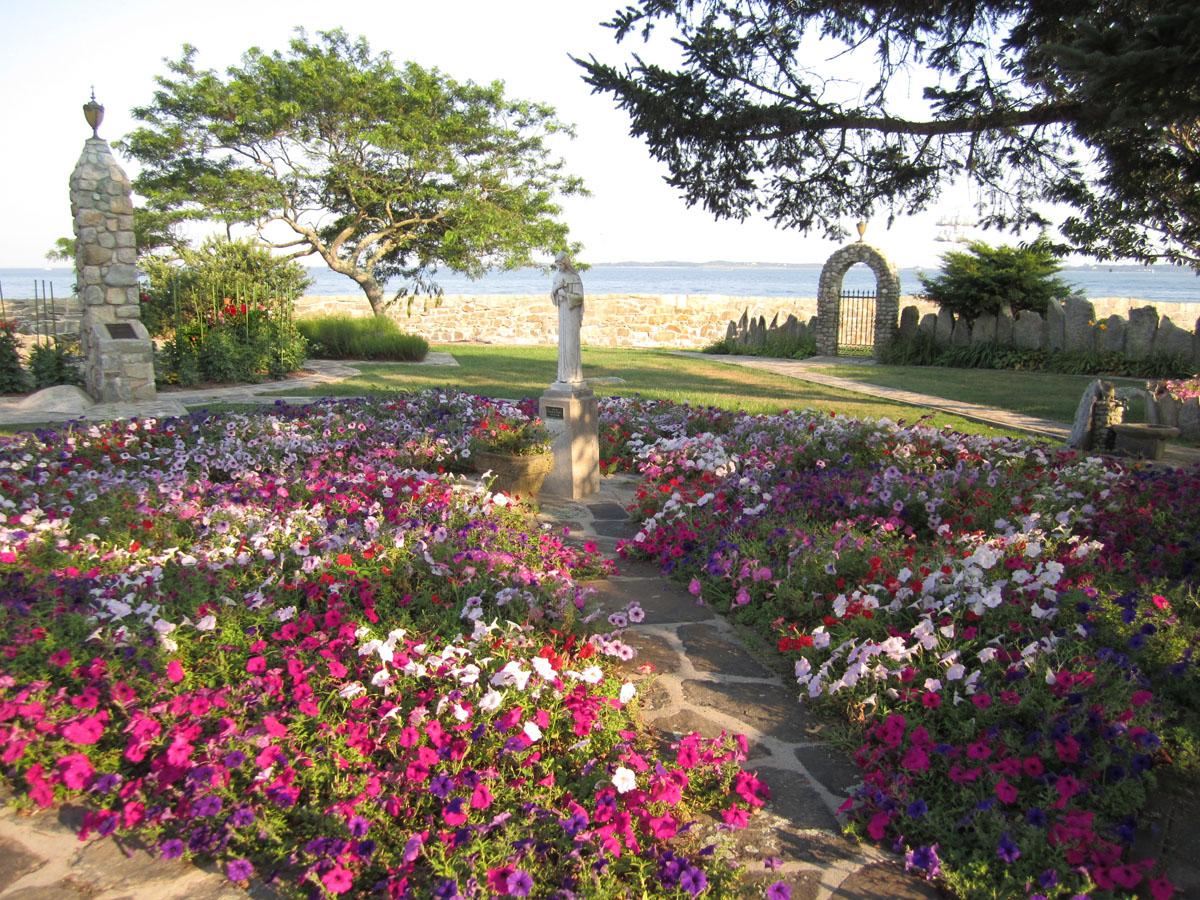
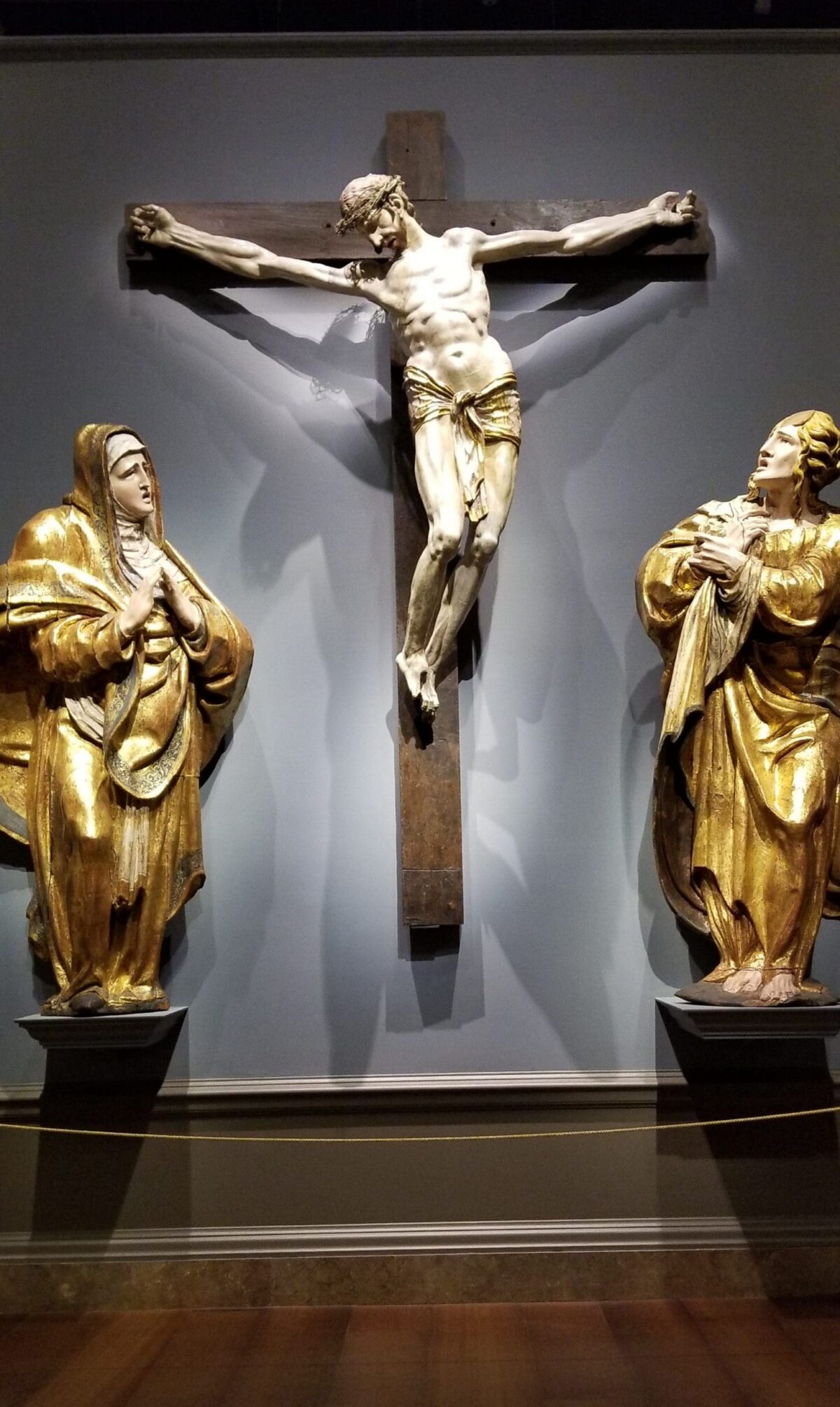
Picture it (above): The St. Edmund’s Sacred Art Institute located in Mystic, CT has issued a call to U.S. artists for entries of artwork for a National Eucharistic Revival Art Exhibit.
“We are working with the National Eucharistic Congress and the Blessed Michael McGivney Pilgrimage Center in New Haven, CT to gather artwork nationally for the exhibit that begins next May 2024,” says Deacon Francis Valliere, executive assistant to the CEO and coordinator of the St. Edmund’s Sacred Art Institute. The Benedict XVI Institute has agreed to cosponsor and promote this contest. To further this ambitious broad-based national call for entries, the Institute has already benefited from the strong leadership team of Anthony Visco and Dan DeLouise.
As artistic director of the Institute, Anthony Visco brings an international reputation based on decades of teaching, consulting, and fulfilling commissions in liturgical and sacred art. Recipient of a Fullbright-Hayes grant in Italy, he studied the Florentine School of Art and Architecture as a young man, and his career has continued to soar. Twice awarded the prestigious Arthur Ross Award for sculpture within a Classical setting, Visco has also been awarded the Henry Hering Memorial Medal by the National Sculpture Society. Always in demand as a mentor and teacher, Visco also directs the Atelier for the Sacred Arts in Philadelphia, PA. Of particular importance to the current Eucharistic Revival exhibit, Visco brings his experience participating in the 43rd International Eucharistic Congress in Philadelphia, his hometown, in 1976. “There was an exhibit of liturgical and sacred art at the Convention Center. Many commissions were given to artists and their works can still be seen in our churches.”
Dan DeLouise, the Institute’s artist-in-residence as of October 2023, is a previous gallery artist-owner whose career spanned both the worlds of commercial illustration in the toy and game industry and the plein-air traditions of fine art painting before his transition into the sacred art world. Also an award-winning artist in each phase of his career, DeLouise brings a passion for seeing God’s beauty in the external world of natural creation. “There is something about painting in nature that brings us closer to the hand of God, the ‘Ultimate Creator,’ whose designs we as artists so often strive to imitate. It becomes almost impossible not to contemplate the heart of God as we begin our own works by observing the vast beauty in the gifts of nature.”
Uniting Valliere, Visco, and DeLouise is a love for the sacred arts born in a love of God. This love for the Divine has shored up these men through the hard choices and tough situations engendered by trying to follow God’s will in their own sacred-art careers. “Faith is going to require us, at some point, to step out into the unknown,” says De Louise speaking about his own transition from creating art for the secular world into the world of sacred art. “With each move I made in a direction towards Him [God] in my work, I began to gain confidence watching how He would provide for me each step of the way.”
Another important value uniting these three men is their desire to create opportunities for sacred artists to learn skills, create community, and be ready for commissions, exhibitions, and visibility. This desire to assist artists forms the sturdy foundation of the men’s work at the Institute as they work to create a vibrant center where artists at all stages of their careers can come to learn and be nourished by the joy of advancing in their skills while finding spiritual nourishment in daily Mass, 24/7 Adoration, and the opportunity for spiritual direction. “Our goal is to bring together sacred artists . . . to promote the sacred arts and fill the churches, institutions, homes, and galleries with God’s sacred beauty, “ says Valliere, “With Anthony Visco directing the curriculum and Dan DeLouise onsite, we are working to bring the best instructors to teach on the Island. We aim to be a nationally known Sacred Art Institute employing the highest caliber of teachers.”
At present, plans for the juried art selected for the Institute’s Eucharistic exhibit include an April 2024 opening exhibition at the Institute’s Enders Island location in Mystic, CT. Then the exhibit will travel to the Blessed McGivney Center in New Haven, CT from May to August 2024. A selected group of works will travel to the Lucas Oil Stadium in mid-July for the National Eucharistic Congress in Indianapolis, IN. Negotiations are underway for additional locations.
One of the sacred artists who have responded to the call for entries is Ann Schmalstieg Barrett, an instructor at Franciscan University and the Sacred Art Institute at Enders Island, among other institutions: “I am indebted to artists of previous generations who have revealed the mystery and beauty of the Eucharist through their work. One source that deepened my devotion to the Blessed Sacrament is St. Thomas Aquinas’s prayer ‘Adoro te Devote’ Set to a simple melody, it offers poetic imagery that has greatly enriched my meditation. I see the chant expressed in Jan Van Kessel’s painting entitled ‘Altar Niche with Symbols of the Eucharist,’ created almost 400 years after Aquinas entered into eternal life. It is exciting to continue the work of these artists and the many others who have helped to illuminate the hearts of the faithful to perceive the beauty of the Eucharist.”
Another artist responding to the call is Eric Armusik, a Pennsylvania-based Classical figurative artist for three decades. He says, “We must reanimate the world for Christ. It’s imperative for faithful artists to rebuke the darkness of the modern world that has failed humanity and deprived us of beauty. There is no greater gift we have received from God than the Eucharist and attending Mass regularly . . . As Catholics and artists, we are responsible for sharing the truth and inspiring faith.”
The call for entries on the Institute’s webpage lists various possibilities of Eucharistic themes from the Old and New Testaments to spark creative ideas, such as the Marriage Feast at Cana, Manna in the Desert, the Miracles of the Loaves and Fishes, and Elijah fed by the ravens. The list is replete with reminders that many great saints had a profound relationship with Jesus Christ in His Eucharistic Presence. From St. Tarcisius, an early Christian boy-martyr in pagan Rome, to the more recent Blessed Carlo Acutis, a soccer-playing teen in Italy, the annals of Christianity contain saints devoted to the Eucharist, such as St. Peter Julian Eymard, St. Padre Pio, St. Teresa of Calcutta, and many others.
Deeper than any list of names, however, is the mystery and miracle of Christ’s Presence in the consecrated bread and wine. The Catechism of the Catholic Church in paragraph 1337 reminds us to see the Eucharist as the fulfillment of Christ’s pledge of love: “The Lord, having loved those who were his own, loved them to the end . . . In order to leave them a pledge of this love, in order never to depart from his own and to make them sharers in his Passover, he instituted the Eucharist as the memorial of his death and Resurrection, and commanded his apostles to celebrate it until his return.”
Grounding the call for entries and the desire to curate such a broad-based Eucharistic Revival exhibit is their wish to bring the spiritual gift of a closer relationship with Jesus Christ to a wide range of viewers across the U.S. All three men express their own love of Jesus Christ in the Eucharist in eloquent terms. For Valliere, “I find no greater peace than when I am in the presence of the Eucharist. As a deacon, I have the honor and privilege of celebrating a Holy Hour with Exposition [of the Blessed Sacrament] . . . I feel a closeness to God and an inner peace surpassing any other experience.” DeLouise says: “[There is] a spiritual nourishment that I have only found in the reception of our Eucharistic Lord.” And Visco gives us this peek into one of his experiences during Eucharistic Adoration: “It was a Sunday afternoon and the only lights were the burning candles. I was alone with a friend who had converted to the Catholic Church. We watched the natural light fade and the church became darker as the sun set . . . afterwards we spoke of how we were watching and experiencing Time and Eternity, how the fading light was Time and the Eucharist remained Eternal . . . the experience stayed with me.”
Just as Visco’s experience in the lowering dusk as he prayed in front of the Eucharist allowed God to speak into his deepest heart, the images in the National Eucharistic Revival exhibit will open people’s hearts and souls to be formed by God’s holy will. The current deadline for the submission of digital entries is February 20, 2024. Further details are available at https://www.endersisland.org/national-eucharistic-art-exhibition
Sarah Cortez is president and founder of Catholic Literary Arts, www.catholicliteraryarts.org. An award-winning freelance writer and editor, she is a contributing editor at Catholic Arts Today. She writes for the National Catholic Register and Texas Catholic Herald.