Review: The Mary Pages by Sally Read

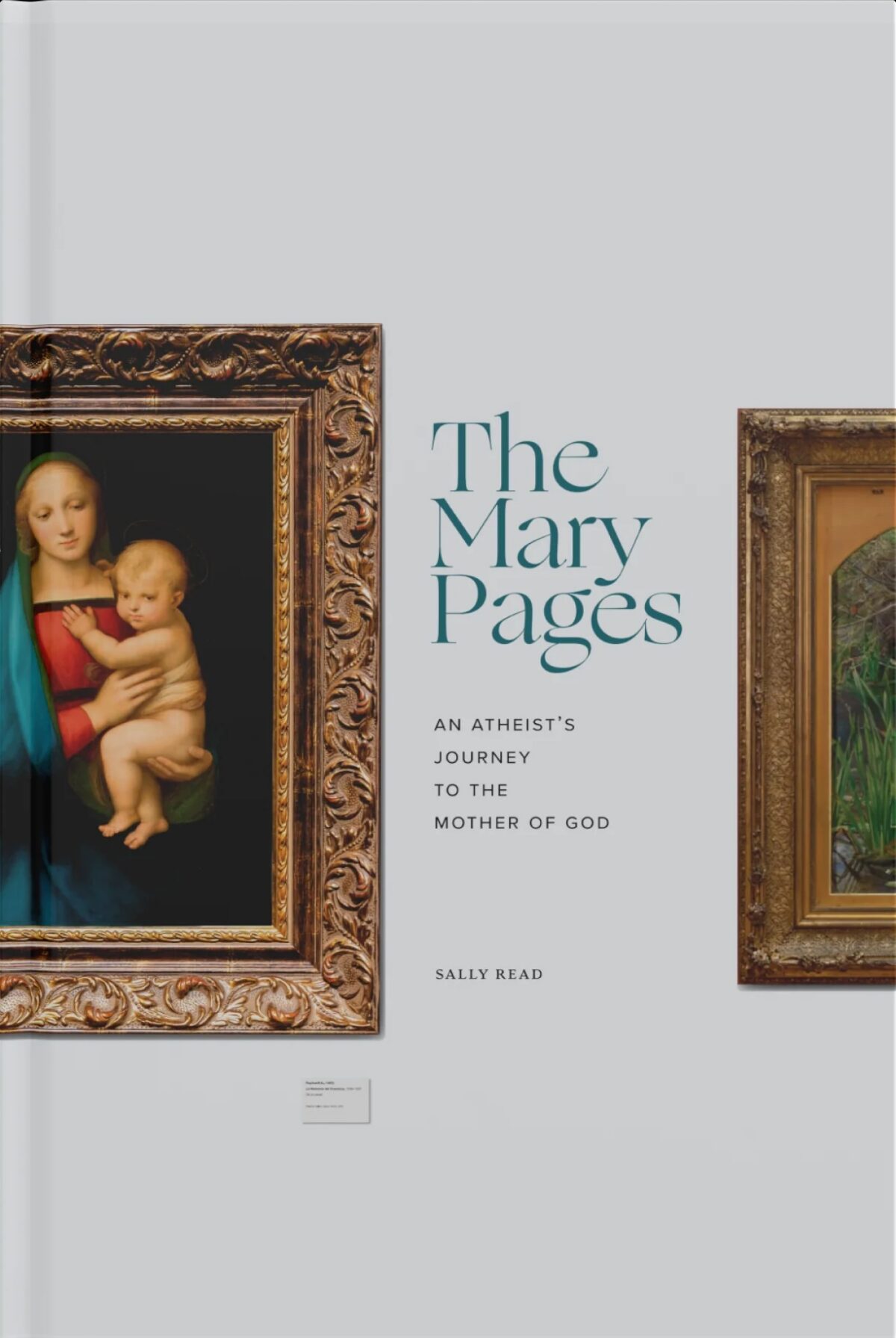
Sally Read, born in East Anglia in 1971 and now living near Rome, was a secular poet before she was a Catholic poet. Determinedly secular, too, as she relates in her new memoir, The Mary Pages: An Atheist’s Journey to the Mother of God (Word on Fire). 

Raised by an atheist father who scorned all things religious, in a country that had stripped its churches bare of iconography (especially all that was Marian) centuries before, and imbibing to the full the defiant feminism that marks our current culture, Read unsurprisingly regarded the Mother of God, at least as the Catholic Church views her, with faint contempt. “How best to shut a woman up?” she once mused as she she contemplated Mary’s seeming irrelevance to contemporary women’s issues such as genital mutilation, date rape, and domestic violence. “Put her on a pedestal, and give her a crown.”

The Mary Pages is not a conversion story. Read has already told that story, of her nine-month journey in 2010 from cynical atheism to the Catholic Church, in a 2016 memoir, Night’s Bright Darkness. Nor is The Mary Pages a conventional autobiography; it seems purposely vague on detail. Instead, it is a story, meticulously and beautifully written, of how Mary insinuated herself into Read’s internal life so thoroughly, starting in childhood, that she would be inevitably led to Mary’s Son. The medium was art. Read’s grandmother had a copy of a Raphael Madonna hanging on a wall. The mother and baby mesmerized the unchurched little girl who scarcely knew who Mary was.

Later, Read went to nursing school in London, where she found herself haunting the National Gallery’s Renaissance rooms with their myriad images of Mary—and then hanging a print in her bedroom of Filippo Lippi’s radiant Madonna and Child With Two Angels. The story behind the painting overwhelmed her as much as the painting itself. The model for the Virgin had been a Dominican novice-nun, Lucrezia Buti, with whom Lippi, although a professed friar, had fallen in love. One day he kidnapped Lucrezia from a procession and seduced her. She eventually bore him two children, but even when released from his vows and given ecclesial permission to wed, he refused to marry her.

That resonated with Read, who herself was seeing a man, a doctor she calls Mischa (she has altered identifying information for most of those she writes about), who declined to commit himself to her because he already had a live-in partner, a woman physician at his hospital. Read’s relationship with Mischa was misery (“a kind of slavery,” she writes), but he did one thing for her: He encouraged her to keep writing the poetry she was already starting to write. He brought her books by women poets he thought would inspire her: Sylvia Plath, Sharon Olds. They did. If you have read Read’s poems (some are online), either pre-or post-conversion (where her subjects are nearly entirely Christological), you will find the powerful  rhythms, minutely focused examinations of the natural world and the human body, and the naked emotional engagement that mark the work of Plath and Olds. Read’s years in the secular literary world did not go to waste. 

She got up at 5:30 every morning to write furiously, then worked a shift at a psychiatric hospital tending the human dregs and outcasts no one else seemed to care about. She collected Marian art in her apartment—but at the same time she was composing a feminist poem that would portray the Virgin as a pregnant rape victim who had to invent the Annunciation as a cover story: “I could not tolerate a male God—and Mary, I suspected as much, was inextricable from him.” Read’s mental images of Mary were refracted into other wounded women: Lucrezia Buti; Elizabeth Siddal, the copper-haired model for many a pre-Raphaelite painting of Mary who killed herself like Sylvia Plath when her artist/poet husband, Dante Gabriel Rosetti, had an affair with another of his models; Princess Diana, then at the height of public pity for her and also made violently dead, in 1997. Read enrolled in a graduate writing program on the American “Plains” (the University of South Dakota, according to her Wikipedia biography), where her friends, like her, were women left stranded by men, sometimes with children to raise alone

She returned to London, and then, somewhere and somehow (remember, this is not an autobiography) she met the man who became her husband: Fabio, an Italian. They moved first to his native Sardinia, then to the Roman seaside suburb of Santa Marinella. All over Sardinia—in roadside shrines, bars, schools, grocery stores–were plaster and wooden statues of the Madonna, sometimes wearing a lace dress and blonde wig, like a doll. Read found them repulsive, and she chafed under the unwritten rules of traditional Mediterranean society, where respectable women did not go out at night alone, and her visiting female friends, bohemian free spirits who flirted and more with the local shepherds, drew the wrath of her in-laws, who deemed them loose women. In Santa Marinella a church housed La Madonnina, a small statue of Mary, a souvenir from Medjugorje, that was said to weep human blood from time to time. “This florid thing…only distanced Mary further from me,” Read writes. “The bloody face was like something from a horror movie.”

The turning point came—although it would be another four years formally—when she gave birth to her daughter, Celia Florence, in a Roman hospital. She had had trouble getting pregnant, and the labor was prolonged and excruciating (the baby’s head wasn’t positioned optimally). Alone in her hospital bed in her agony (husbands weren’t allowed bedside in Roman maternity wards), she realized that Mary had also been alone when Jesus was born, because as it is with all women in childbirth, “[n]o one, not even her husband, could possibly imagine what was happening to her.”

“Alone of all your sex,” -[the fifth-century Latin poet] Sedulius wrote, and the feminists seized on this as example of the Virgin’s difference, her exceptionality, her exceptional holiness, her exceptional loneliness—her special subordination to God and man….But what I will arrive at, in a shortening number of days, is Mary’s aloneness as the archetype of every woman’s aloneness: Mary as foundress, as defender, as mother-creator, as collider with the harsh, existing world. For in childbirth, there is no act of creation so similar to God’s as he pulled form out of nothing and watched the world spin.

The only thing that I could have wished for more of in this haunting and gorgeous book is the visual images of Mary that have followed Read since her childhood. There are some of them, to be sure: her grandmother’s Raphael, the Filippo Lippi, the striking 1922 statue of Our Lady of Walsingham, whose shrine in her native East Anglia Read visits as a pilgrim in the book’s final pages. I longed to see a photo of La Madonnina, for example. It is also unfortunate that Read’s oeuvre as a poet has been divided in two by her conversion, with each half perhaps rendered inaccessible to admirers of the other. Her first three books of verse, dating from the early 2000s, were published by Bloodaxe Press, a leading British secular publisher of poetry. Her most recent volume, Dawn of This Hunger (Angelico Press, 2021), as well as her memoirs and other prose works, come from Catholic presses, and it would be unfortunate if her secular readers assumed she was addressing her richly laden recent words solely to a Catholic literary ghetto. Sally Read is too fine a stylist and too penetrating an observer for readers of any religious sensibility or none to miss.

Pre-conversion poem:

Gestation

Post-conversion poem:

Anne: The Coming of the Immaculate

At times prayer is wordless, but it fills
the empty night as water fills a lake
with its own meaning. I pray to break
this body with a child, for my taut pelvis
to open and ache its tight basketwork
apart; to yield. Sometimes I sense God
in the darkness—like a heavy leaning
at the door—always with an inexplicable
tenderness in how he does not burst in.
Perhaps he would break me if he did,

so waits instead to pour into my own undoing—
so just when I would moan, It’s done!
that life did not go well, Perfection rests in me,
and I expand, like wood ticking in the sun.

The Mind of the Maker and the Art of Liturgy: A Poet’s Eye View

…the mind of the maker and the Mind of the Maker

are formed on the same pattern, and all their works are made in their own image.

—Dorothy Sayers, The Mind of the Maker

Hope always draws the soul from the beauty which is seen to what is beyond,

always kindles the desire for the hidden through what is constantly perceived.

—Gregory of Nyssa, The Life of Moses

PROLOGUE

           Asked to write on “liturgy and the artistic imagination,” I find myself rocking on a restless sea. So young in Orthodoxy that I am not even a toddler, I wonder what I can say about liturgy that will be worth a reader’s while; though I have no interest in adding to the liturgy I experience—itself already a work of participative art—I am interested in how liturgy and a maker’s imagination might dance together.

           Yet since many shiploads of words have been written about imagination, what cargo shall I add to these? More, what is meant by artistic imagination? How does it fit into the braid of the human, a winding together of nous—often defined as “the eye of the heart” or “eye of the soul”—sense perceptions, and reason? What happens when we marry liturgy and the urge to make?

1.

THE WISH FOR INFANT SIGHT

The flame of fire, the living spring

              Not long ago, I found myself at a Sunday parlor church deep in the Carolina mountains, sitting between my mother in her wheelchair—she having been felled from walking by a long bout with covid—and an elderly man named Jerry, who had introduced himself to me a few days before by saying that he was lost, and who had kissed me on the cheek when I walked him to his room. We were twelve in that parlor, with a rural Baptist preacher accompanied by his wife and two daughters in mightily spangled red-and-gold dresses. Around me sat the halt and lame, and I remembered the Centuries of Mediation by lovely-minded 17th-Century Anglican poet, priest, and philosoph Thomas Traherne, conveying in a great flow of words the enchantment and beauty of his infant sight, and his adoration of an Edenic realm radiant with signs of divine making:

The corn was orient and immortal wheat, which never should be reaped, nor was ever sown. I thought it had stood from everlasting to everlasting. The dust and stones of the street were as precious as gold: the gates were at first the end of the world. The green trees when I saw them first through one of the gates transported and ravished me, their sweetness and unusual beauty made my heart to leap, and almost mad with ecstasy, they were such strange and wonderful things: The Men! O what venerable and reverend creatures did the aged seem! Immortal Cherubims! And young men glittering and sparkling Angels, and maids strange seraphic pieces of life and beauty! Boys and girls tumbling in the street, and playing, were moving jewels. I knew not that they were born or should die; But all things abided eternally as they were in their proper places. Eternity was manifest in the Light of the Day, and something infinite behind everything appeared which talked with my expectation and moved my desire. The city seemed to stand in Eden, or to be built in Heaven. The streets were mine, the temple was mine, the people were mine, their clothes and gold and silver were mine, as much as their sparkling eyes, fair skins and ruddy faces. The skies were mine, and so were the sun and moon and stars, and all the World was mine; and I the only spectator and enjoyer of it (701.)

           As the rural Baptist pastor sang the old songs praising the solid rock and the flying-away of the soul, as he preached on Christ walking the waves and calling for Peter to come to him on the sea, through the boisterous air, I was surprised to find myself stirred to tears, with a strange, uncanny sense of the parlor being encircled by a great wheel of figures, dim and pale. It seemed that the saints came even to the Carolina coves and hollers, even to those who do not call to their names, and even to those who are losing the powers of speech. We did not need the liturgy to feel the nous stirring. For long moments, I shared Traherne’s intense sweetness and joyful infant sight and could—compassing the world—say with him, “The streets were mine, the temple was mine, the people were mine….”

           What happens at such moments? Is this part of the infant sight, to love and feel our heart go out to others, living and dead, and to be called to walk the uncanny waters of what lies beyond us? In For the Life of the World, Alexander Schmemann – the 20th century Orthodox theologian whose most famous work on liturgy, “For the Life of the World,” was distributed by samizdat in the old Soviet Union – says quite plainly that the church is “the joy of recovered childhood, tithe free, unconditioned, and disinterested joy which alone is capable of transforming the world” (39.) He quotes Romano Guardini on liturgy to say that “It is in the highest sense the life of a child, in which everything is picture, melody, and song…it unites act and reality in a supernatural childhood before God” (40.) I look to the magical vision of little Thomas Traherne, future poet and writer. For some happy period of time in the seventeenth century, he lives at the Edenic mountain peak where a child of time touches eternity, and where the soul streams forth and kisses Creation and its creatures. His Blakean “doors of perception” are bright and clean, and so reveal the infinite. Like Christ in the Eucharist, he is broken into pieces for love of every part of the world, and yet he is not divided: he remains young Thomas, already the poet who has eyes to see.

2.

CHILLING AT THE PALAZ OF HOON

Illuminate our intellect, / Pour forth thy love

           One view of the early church fathers is that imagination is a risk, that it can endanger the soul. This danger appears particularly in the region of contemplative prayer, where stillness and rejection of images is desired. According to the fathers, images may become part of what separates the human from the divine; the contemplative should never image God or find pleasure in imaginary scenes during prayer, lest he fall prey to pride and self-deception and passions. In the seventh-century Ladder of Divine Ascent, Saint John Climacus writes that the very first step in prayer is to shoo away thoughts. Silence of mind is desired. (Note: This idea remains strong in the Orthodox tradition and, yes, is clearly opposed by the mode of Ignatius of Loyola.)

           In our age, when attention spans are fragmented by a quick, frenetic TikTok pace and where no subject is taboo, wildness may be far more appealing than silence of mind. Chaotic seas of our culture may carry us very far from stillness, into ports of our own invention—each creating the self as a proud Wallace Stevens figure, as in “Tea at the Palaz of Hoon”: “Out of my mind the golden ointment rained, /And my ears made the blowing hymns they heard. / I was myself the compass of that sea: / I was the world in which I walked, and what I saw / Or heard or felt came not but from myself”. (Stevens 65.) I am fond of many Wallace Stevens poems, yet I would say that Hoon’s self-born sight is not Traherne’s child sight, easily perceiving and indeed knowing that the world is more than what our senses tell us and catching hold of a divine radiance.

           Instead, Wallace Stevens’ Hoon is a Modernist questioner and answerer who is his own god and his own creation, self-anointed and self-sung: a kind of solipsist-ruler who has yielded utterly to the powers of the imagination. Like his artificer, Stevens, Hoon finds redemption in poetry. He may seem at first glance to be congruent with Maritain’s affirmation that “The mind rejoices in the beautiful because in the beautiful it finds itself again: recognizes itself, and comes into contact with its very own life,” but Hoon has neither sense of himself as creature rejoicing in being a part of Creation, nor sense of Traherne’s the infinite-behind-beauty—God as author of beauty (26.) Gazed at through a Modernist lens, the figure of Hoon recalls Salvador Dali’s prophetic remark that the time appeared to be drawing near when confusion might be systematized and so lead to a complete discrediting of the world of reality.

           So yes, there is a curious danger. The possibility of replacing God with imagination and making is an idea that appears to be passed down by the Romantics, who turned the artist into a secular priest of art.

3.

MADE AND MAKING

Oh, creator Spirit, appear

           What is this element I am asked to discuss, this artistic imagination?

           Made in the image of the Maker, we’re all makers, whether we’re baking or roofing or turning a pot on the wheel. We have the urge to make, to use some Ars, some art, skill, or craft: this is the inner call to imagination, to bodying forth some new thing, some sub-creation. Those of us who want to paint or sculpt or compose or dance or make stories and poems have often—perhaps not so much lately, and certainly not among the institutionalized “avant-garde”—been the wandering pursuers of the great transcendentals inherited from the classical world. Beauty, truth, and goodness would probably be regarded as excessive demands for most making, but perhaps not for, say, a poet pouring his energies into the uncompromising shape of a traditional sonnet. The poet is not thinking about beauty or truth, though he is attempting to capture something—to catch it in a net of words, or as Yeats would say, “a mouthful of air.”

           Ideally, the maker who chases the transcendentals would possess the “wise-heartedness” attributed to the artists of the tabernacle in Exodus, and so use the plait of reason, nous, and bodily senses to create good things that add to the sum of beauty and truth in the world. In my recent book, Seren of the Wildwood, the eponymous heroine achieves something of wise-heartedness after seven years of journeys, peril, and sorrows in Wildwood. Transformation leads to a place where she looks back and retrieves out from raw, tumultuous years a desire to make that streams with soulfulness, yet is grounded in earthly things. She thinks

                                                     . . . how in secrecy

                     She might become a golden bowl of flame

                     In an enchanted world—this one, a place

                     Of paradise and hell and mundane hours,

                     Where she could learn to make, to sing her tale

                                                     Around

                                A hearth and wildwood blaze

                                On nights in winter crowned

                                By the strange, striking lays

                                That hold mortals spellbound (72.)

A wise-hearted pursuit of the transcendentals: yes, I think we might call it artistic. Making, in this view, can be regarded as part of the fulfilling of human nature as formed in the image and likeness of God.

           Wielding the imagination—making—in order to bring something worthy out of the generous profusion and welter of Creation is a simple though profound idea. Making does not need the complication of the Romantic vision of a suffering, unstable creator, nor does it need to proclaim Aestheticism’s “l’art pour l’art,” nor does it need to reject skill and embrace ugliness and transgression. It must not want to hammer out a message, for that is a work’s ruination. It must not try to cram everything the maker knows into the work. Making will fail if a maker does not honor the makers of the past and refuses to learn their craft and technique. Making will fail if a maker lets the unfairness of the present times and particularly in the world of the arts sap his spirit.

           People with the eyes to see the naked emperors of our world—the Repha’im kings of our day—already know that making can miss its mark entirely in execution (as in weak mimesis, ungainly form, axe-grinding, obsession with originality, domination by politics, kitsch, determination to shock or repulse, inappropriate feeling)  or in loveless purpose. We discern that missed mark in Genesis when Adam and Eve believe they can hide the shame of an act by stitching together leaves to make coverings for themselves. We see missed marks all around us, as in graffitied and decaying Brutalist architecture, in new Duchampian works influenced by his “readymades,” in lyrics of political hate, or in slatternly poems of worn-out transgression and shapelessness.

           Such creations are reductive; they diminish beauty and truth, rather than reaching for “the rendering strange of reality in order to make it clearer” (Mosley 23.) When a visionary Traherne sees children as “moving jewels,” he grasps at the strangeness of a paradox, joining together the stillness of gems to the liveliness of children at play, and in doing so reveals the human form as precious, alive with precious, sparkling light and color, a part of the wider Creation that bathes him in glory. This is revelation, “the rendering strange” that summons up beauty and truth.

           A maker should remember that we who make do not only make works that may be labeled as art. We also are co-making ourselves because whatever spirit that flows through a work as it is coming to fruition is also changing us for good or for ill. This, too, is part of what we may call the work of the imagination. Just as all humans ought to have a sound diet in order to thrive, we peculiar humans who have the desire to reach toward a higher making are best fed by strong, fine materials and purposes. And when we are done with a work, we are to yield to others what we have made out of the abundant stuff of Creation, which is our given, our great donnée.

           What does that mean for us as viewers, listeners, readers, receivers of what is made? We cannot experience the essence of a maker through what he or she has made, but we can experience the energies of the person and the beauties of a work. Such an encounter can be, to some greater or lesser degree, an immersion in the flowing energies that birth art, and a kind of renewing of the thing made. (This way of looking is a small reflection of the large Orthodox idea that we cannot know God’s essence but can experience his energies or attributes, for that grace radiates from his essence and is revealed to the soul.) For, “the beautiful does not exist for the artist and poet alone—though these can find in it more poignant depths of meaning than other men—so the world of Reality exists for all; and all may participate in it, unite with it, according to their measure and to the strength and purity of their desire” (Underhill 13.)

           And if the thing made by a poet or painter or choreographer or composer has captured enough of a sense of life, enough of the maker’s vital energies, it may continue to burn brightly and share its light with all for many years. It may even inspire and be generative for other makers, later in our linear time.   

4.

MAKERS AND LITURGY

As we enter now the timeless mystery

           The liturgy is a work of symbolic, participative art—it is a vessel, a form filled with adoration, spirit, and oblations meant to join human beings with the Trinity and the Divine Council, to feed men and women through “the holy and immortal mystery” of “our most essential bread,” filling them with divine, uncreated grace (Liturgy 40, 37.) Like a graft on an apple tree, a communicant is incorporated into the very body of Christ through the mystery of mysteries. In the Cherubic Hymn, those called to the Eucharist mystically “represent the Cherubim,” a reminder that they are one with the Divine Counsel. The liturgy lifts a fragment of Creation toward God, and sees that bread and wine transfigured. What is mortal touches the immortal; time and eternity greet each other. As then-Cardinal Joseph Ratzinger asserts in The Spirit of the Liturgy, “Christ himself is the bridge between time and eternity” (92.) Liturgy is a kind of procession over that bridge, into the strange light of the kingdom beyond.

           So too, in a far more modest way, human making can result in a shape, a vessel that spills over with mortal mystery—the inspired blending of attention, spirit, and human energies. The influx of power that inspires the poet and embodies itself in words has long been compared to the Holy Spirit, and no writer knows where her muse comes from, or where it goes. A writer can fiddle and make something out of words, or she can be borne on the flood of spirit that clothes itself in her very thoughts and words. Such imaging forth is mystery, and a faint, fractal likeness to the God who speaks the world into being. To repeatedly participate in works of art as maker or enjoyer is, like that crossing of a holy bridge into another kingdom, a way to see more clearly. And like the liturgy, words and musical notes and dance can be seen as procession; they move through time toward their right closure.

           Both religion and any art devoted to transcendental qualities are intensely countercultural for us, in a time when the world has been flattened, and all that exists for many has been reduced to material desires. Simultaneously, others have reached a Silicon-Valley hope-for-transcendence where some plot and hope that we can abandon the messiness of life and upload our minds into some technocratic cloud, where we may have faux material pleasures forevermore, or until the plug on the matrix is pulled. Others plan to have their frozen heads revived in some utopian and even more technology-mad age. Surely, we are already veering into that era; iPhones are glued to hands, AI-generated articles appear on Buzzfeed, bad ChatGPT poems pop up online, and we pause to glance at faux retro photographs from Midjourney. Whether pleasing or fleeing the flesh, life is dwindled down to material pleasures bodily felt, or to what can be known without the body, through some fabulous-seeming technology. As Ivan Ilyin warns in his 1937 Foundations of Christian Culture, “a people can stand on the absolute high point of technology and civilization, while in the arrest of spiritual culture (morality, science, art politics, and economy) they can be undergoing a period of degradation (19.)

           Christianity and transcendentally-inclined art resist all reductionism and show by their very presence that this world is more than what it appears to be, that the symbolic landscape around us is constantly speaking to us: that it may be broken but is good, beautiful. For a Christian, every tree rooted in earth and pointed toward heaven can recall the cross, and all water the baptism of Christ. Our home planet is alive with energies and mystery.

           We may look again to literature to find a more-than-seems world; the Gawain poet shows us how the strange and uncanny may crash into a gathering and drop its weird challenge. Rejoicing in human making, Keats gives to us the lovely “still unravish’d bride of quietness”: an urn. Dickinson joys in a route of evanescence, a wheel of emerald and cochineal: the hummingbird, bright spark of Creation. Vaughan recalls the time of his “Angel-infancy” when he felt “bright shoots of everlastingness.”

           Lovely, revelatory images take us back to Traherne’s “Eternity was manifest in the Light of the Day, and something infinite behind everything appeared which talked with my expectation and moved my desire.” In a question that may serve as a response to Traherne’s outpouring of beauty and his sense of a subsequent fall into a “dirty world,” theologian Timothy Patitsas speaks of the necessity of beginning with beauty and pure feeling, and asks whether faith might not be “the memory of theophany, the continuing to launch towards that divine supernova when it seems to have gone dark” (96.)

           The slow, powerful procession of the liturgy leads us to the light of Traherne’s “something infinite,” God the maker and giver, the sacrificer, the server, the one who loves his Creation. It teaches, hands down the apostolic faith, joins the human and divine together into one assembly, and allows what is mortal to brush against the infinite. For centuries, human makers mirrored those actions, serving the good of the thing made, passing down tradition and technique, seeking to learn and surpass their own previous work. The maker’s role began to show distinct signs of change during the Renaissance, a transition especially clear in painting, where artists moved from a focus on holiness to the fleshy and erotic in classical and even biblical subjects. The artist became a special, sensitive figure with a role set apart in the Romantic era, when poets and painters grasped after the sublime in nature. By the time we reach Surrealism, with its writers and painters who fulminate against societal structures of many sorts, “nothing is to be regarded as sacrosanct except the random destructive/creative will of the artist, who as a prime principle and presence eclipses God” (Jeffrey 300-301.)

           Today we often find that tradition, skill and craft, beauty, and the good of the made thing are rejected—tendencies that may be most vividly exposed in our out-of-control art market for “avant-garde” painting and sculpture but are present in other branches of the arts. What can liturgy say to this?

           A unified work of art proclaiming truth and beauty, liturgy upholds and offers the larger life that can be lived in Christ—a corrective to the trivialization, confusion, and technological chaos of the times. Liturgy simultaneously enlarges the maker’s conception of what life is and, thereby, the possibilities of art, while gifting us all with something our rebellious era heartily resists, a kind of modesty: knowledge of our own limits. That is, the liturgy shows useful ways of belonging: our place in family; our place in a community, past, present, and future; and our human limits, our place in the universe as creatures, part of the wider Creation, sharing in its fragility and its need to be stewarded. The journey of liturgy takes us to a place where we know our own modest place, yet can see Traherne’s “Eternity…manifest in the Light of the Day.”

A maker might yet find transformation in the presence of the Maker, and might come to honor not nature, an element outside of us, but Creation, of which she is a part.

O send out thy light and thy truth

___________

Marly Youman’s latest narrative poem Seren of the Wildwood may be purchased at Wiseblood Books: https://www.wisebloodbooks.com/store/p129/seren-of-the-wildwood-by-marly-youmans.html

Bibliography

Ilyin, Ivan. Foundations of christian culture. Translated by Nicholas Kotar, Waystone Press, 2019.

Jeffrey, David Lyle. In the Beauty of Holiness: Art and the Bible in Western Culture. William B. Eerdmans, 2017.

The Divine Liturgy of Saint Gregory the Great according to the usage of Cloud-Bearing Mountain Christian Retreat & Training Center and St. Herman of Alaska Church in the Catskills. 2023.

Maritain, Jacques. 1947. Art and scholasticism. Cluny Press, 2016.

Mosley, David Russell Being deified: poetry and fantasy on the path to god. Fortress Press, 2016.

Ratzinger, Joseph Cardinal. The spirit of the liturgy. Translated by John Saward, Ignatius Press, 2000.

Schmemann, Alexander. 1970. For the life of the world: sacraments and orthodoxy. St. Vladimir’s Seminary Press, 2018.

Stevens, Wallace. 1923. The collected poems of wallace stevens. Alfred A. Knopf, 1954.

Traherne, Thomas. “Centuries of meditation.” Seventeenth-century prose and poetry (4th ed), edited by Witherspoon, Alexander M. and Warnke, Frank J. Harcourt, Brace & World, 1963, 693-704.

Underhill, Evelyn. 1915. Practical Mysticism. Digireads.com Publishing, 2010.

Youmans, Marly. Seren of the wildwood. Wiseblood Books, 2023.

Kierkegaard’s Enormous Paradox: A New Poem

Sloucher crooked like a human question mark.

Flaneur of Copenhagen, Street-corner loafer.

Unscientific method-ist, proto-existentialist

Godseeker labeled philosopher by posterity.

Writing the opposite of what you intend.

Shifting persona. Hinting at ephemera.

Mystifying readers, teasing out truth.

How do I know you? Let me count the ways.

Humanities 101. Brandeis Freshman.

Great-genius-wannabe-me. Why study long-dead

Philosophers like Aristotle and you,

I sniffed, who got so much so wrong years ago?

Now at 77 I know you better, a recent taste

Acquired doing research to write this poem,

You who only knew post-Catholic Danish

Worship services with hours-long sermons.

Congregations dozing behind glazed eyes.

Memorized verses filed in their heads.

You weird-bodied sensitive like some of us who get you,

Heard Scripture as the living Word it is.

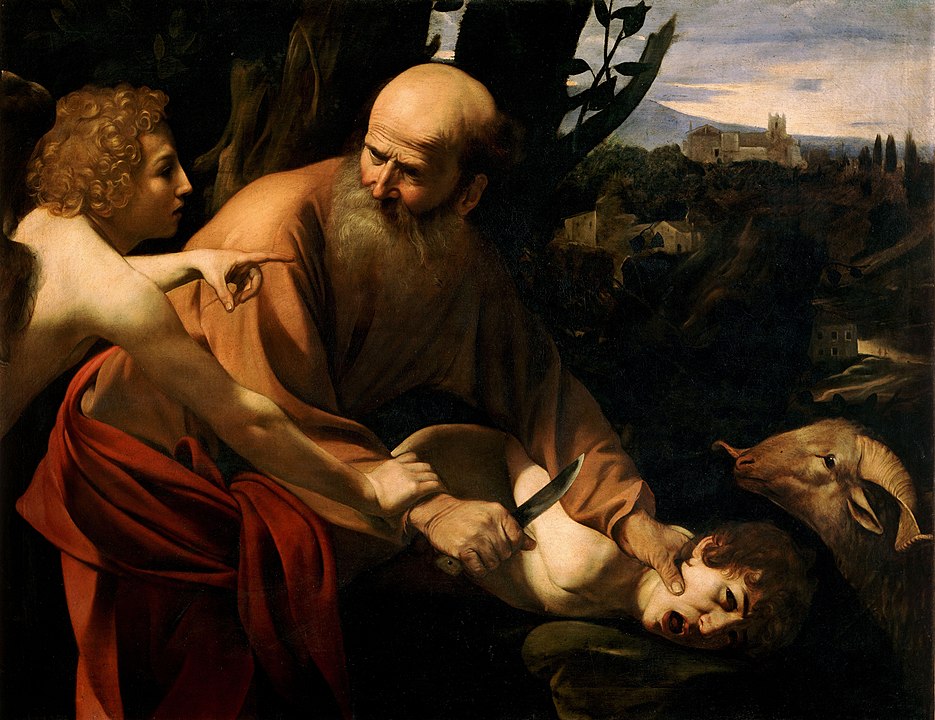
You eavesdropped when God told Father Abraham

To sacrifice Isaac, belov’d child of His promise.

Journeyed with that father, that son, the knife,

The binding rope, the fuel. Until with great relief  . . .

You all caught sight of the ram. Then you pondered

Whether Isaac ever got over his near immolation

By his own father’s hand. And why Abraham

Set his face like flint to do that monstrous deed.

Suspension of morality? Obedience über alles? I think not.

Did you forget or overlook what St. Paul told us?

Abraham walked with Him so long and knew Him so well.

He reasoned God could raise Isaac from the dead.

And why didn’t you consider this either, how later,

Much later after Abraham’s multitudinous offspring

Were long settled in the promised land, astoundingly

God Himself enabled what He asked Abraham to do?

Roseanne T. Sullivan is from the Boston area and currently lives in a Victorian in San Jose, California. Besides writing poetry, Sullivan writes memoir pieces, essays, and articles about sacred music, liturgy, art, and whatever else captures her Catholic imagination. This poem, “Kierkegaard’s Enormous Paradox,” has been selected for publication in Homage to Soren Kierkegaard, an anthology to be published by Wiseblood Books.

“Can we break out of this prison of self?” The CAT interview with Phil Klay

Phil Klay is a novelist and a Marine Corps veteran. His short story collection Redeployment won numerous important prizes: the 2014 National Book Award for Fiction, the National Book Critics’ Circle John Leonard Prize for best debut work in any genre, and one of the 10 Best Books of 2014 by The New York Times. His novel Missionaries was named to the Wall Street Journal’s best 10 books of 2020 list. His writing has appeared in The New York Times, The Washington Post, The Wall Street Journal, The Atlantic, The New Yorker, and the Brookings Institution’s Brookings Essay series. He currently teaches fiction at Fairfield University. His latest work, the essay collection Uncertain Ground was released in May of 2022 with Penguin Press.

Catholic Arts Today’s contributing editor, Sarah Cortez, interviewed Klay about his vision as an artist and as a Catholic artist in Dallas during the 2022 Catholic Imagination Conference.

Sarah Cortez: In the story “Prayer in the Furnace” a line written by an older priest to a younger priest, an Army chaplain, caught my attention. It says: “Sin is a lonely thing.” I wondered if this is the appropriate lens through which to read all the stories in Redeployment, through the lens of the spiritual detachments that your characters endure: meaningful sex, memories of home, security of training, security of location, faith in God, faith in fellow humans. Are you consciously stripping away a man’s spiritual struts?

Phil Klay: It’s not that all these things must fail. Some props are more false than others. Sex with a prostitute is not going to do it in terms of connection or meaning. But the isolation, the alienation people experience was important to me. A central drama of the book is that the characters are trying to make contact. Are we isolated atomized creatures only experiencing things that are only ours? Is there a way to break out of this prison of self?  Are there points of contact?

It is important that the old priest (though he has never been to war) is not impressed with the horrors of war; not because war is not horrific but because horrible things are what humans often do: This is sin and its consequences. It is not fundamentally different than what he’s dealt with back at home, maybe more extreme, but the question remains the same: Can we escape from the prison of the self? Can contact can be made?

So in the longer story “Psychological Operations,” there are intertwined narratives of a character telling stories to a woman that he’s attracted to and a story of his relationship with his father along with multiple stories about insurgents. I did that not because I was interested in playing a metaphysical game of nesting Russian-doll narratives, but because of the way that language is being used in each of those iterations of the story while the character moves closer and closer to a space of genuine vulnerability.

Sarah Cortez:  One thing I enjoyed in your stories was the male humor: the visceral roughness and crudity. The fact that the characters are often facing death or dealing with its aftermath seems to ratchet up the humor?

Phil Klay: Rough humor is one way of bonding, a way of bluntly acknowledging a difference, then agreeing to laugh about it.  On the other hand, humor can also be used as a way to make distinctions and create barriers. Sexist humor often functions like that in male groups: You tell the joke that is inherently demeaning in front of the one woman who is present. That woman is then put in a bind: Either she laughs loudly and accepts the underlying premise of the joke, which is demeaning to women. Or she pushes back against it, in which case, she’s not a team player.

You can also see humor as positive. The amount of racial humor that went around among a very diverse Marine population was, and is, enormous. But humor was also a way of bluntly acknowledging differences and then making a conscious decision, like “we’re going to laugh about this rather than make an issue of it.”  I don’t want to overly idealize it, because it’s not like there wasn’t a double-edged sword to it, but humor could be a method for dealing with this distance and difference that results in bonding. If somebody says something that sort of bothers you or offends you, turning it into a joke is one way of acknowledging it without insisting on it being your way. The humor then is another way of saying, “Let’s just get past these things, together.”

Sarah Cortez: One of the moments that hit me the hardest in Redeployment was in “Bodies” when the young soldier at home on leave lies down on top of the covers of his ex-girlfriend’s bed with her. He knows she’s a pacifist and no longer loves him. When he held her hands a few moments earlier, her only response was to say, “I didn’t shave my legs today.” The way that she reacts is so far from what he needs.

Phil Klay:  But it’s also related to what he needs. It’s that hairline moment. It’s Frank O’Hara’s line: “I want to be at least as alive as the vulgar.” It’s not supposed to be where you stop. But it is being alive.

There’s something about sex for a lot of these characters who want connection. Sex often feels to people like it is the epitome of intimacy. That’s why sex can also be the most alienating thing, as it is in some of the stories, because the thing that is supposed to be most intimate is actually the moment when you feel most alone.

At a visceral level, the opaqueness of the other body in front of you makes the failure that much greater. And yet the characters come back to sex because it does have that aura that it will be a portal to connection. When it’s working, sex is about vulnerability, it’s about connection and intimacy. It’s about love. Sex can be about family and community, and so it can be about building a family, making sexual intimacy not just a moment of connection, but about your future, and your past as well. Sex is this thing, and, of course, sex is often this kind of substitute for experience, right? It’s often a substitute for God. But there’s a reason for that, right? Sex is sort of like a key to the self, a key to understanding. What matters most about sex is that it’s not like other human acts.

Sarah Cortez: You’ve said you consider yourself a Catholic writer. Tell us more about this.

Phil Klay:  Readers are free to take what they can from my work; if somebody who’s not interested in the religious themes isn’t necessarily missing everything about the book, they’re just focusing on something different. There are reviews of my novel Missionaries that were all about it being Catholic, and then there were reviews that were all about American military policy.  You’d almost think there were two different books, and to me that is fine. In some ways, I like that, I like the readers coming with different things that they’re interested in and taking different things away.

In fiction, it’s not like there’s a correct answer that everybody is supposed to come to. That’s not the point. Fiction is something that you come with your own world view and understanding, then you enter into this other world that has been created for you, and then you make something out of it. You have a creative response to it, so not everybody’s supposed to have the same response. Hopefully, a writer is able to hit different people at different levels.

But I do want people to be aware that the Catholicism is important to me, and not just because a priest shows up in the book, which is the most obvious thing. When you read a novel like Andre Dubus’ The Lieutenant, (which is being re-issued and is a wonderful novel), you can read it without any idea that he’s a Catholic author, or that religion is extremely important to him because there’s not a whisper of it in the book. It’s a military novel full of ritual and purpose and an institution that provides those things within a collective setting—and it’s about a character who is trying to find himself and his identity and a source of meaning in life through that purely secular institution. If you understand more of Dubus’ worldview and what matters to him, you understand that he’s writing about a world that his interest in is deeply related to his faith. He’s also showing skepticism about the depth and the extent to which a purely secular world can satisfy someone in those regards. It’s also deeply related to his faith, and so it adds a different layer and a different way of reading the book, and a different way of understanding what matters to the author. So, yes, of course, I want be known as that kind of author; I want to write in that way.

Sarah Cortez: You’ve said that stories that engage with the world and engage with the faith can be tools for the faithful to use. Could you tell us how you might see this happening?

Phil Klay: I wouldn’t still be a Catholic except for Flannery O’Connor’s “Parker’s Back.” In this story you find characters really grappling with the difficulties that people encounter. What drew me back to the faith was not a set of intellectual propositions, but rather more of a sense that a world view that is informed by Catholic sensibility is richer and truer to the beauty of reality and to real evil. The Catholic sensibility is attuned to the characters’ struggles.  You can have a character that is no longer Catholic that is struggling with the same crises.

Stories are deeply important to our faith. What we have are traditions, rituals, communal practices…and stories, stories. The Bible is a cacophony of stories that must be appreciated through literature. The stories about the saints. We are story-telling animals. For each age we must find stories that grapple with the world as we find it.

Sarah Cortez: Why do you teach creative writing?

Phil Klay: I like it. What’s not to like when you take your favorite thing in the world, and you share with students who are trying to express things that are important to them now? Storytelling is the best way for us to express that which is most vital to us. You can become utterly vulnerable on the page in fiction in a way that you can’t in any other form—and that is a glorious thing. It’s a thing that keeps us human.

Sarah Cortez is president and founder of Catholic Literary Arts, www.catholicliteraryarts.org. A Houston writer and editor with fourteen award-winning books to her credit, she is a fellow of the Dallas Institute of Humanities and Culture, a Scanlan fellow at the University of St. Thomas, and a former fellow of the Virginia Center for the Creative Arts. www.poetacortez.com

“Are We Not Interested in the Cosmos Anymore?” James Matthew Wilson, Katy Carl, Glenn Arbery and More: A Contemplative Realism Symposium

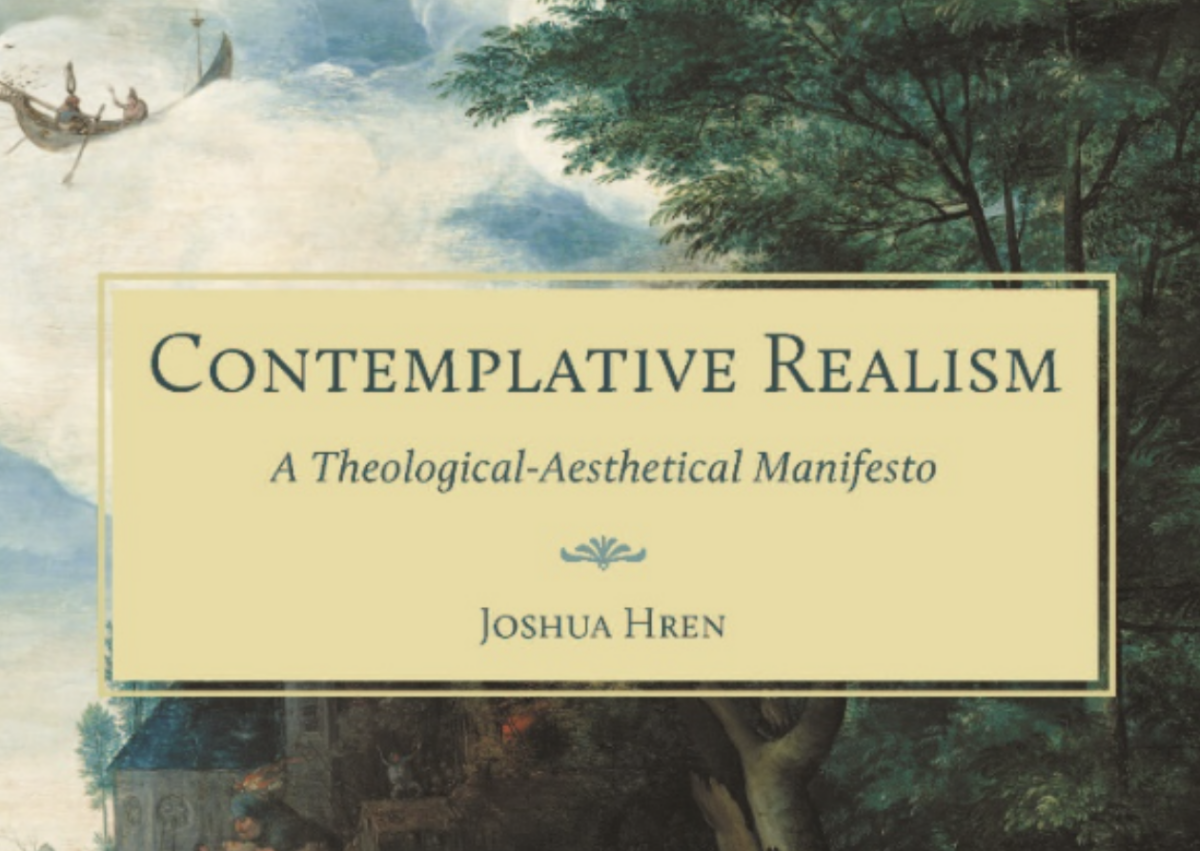
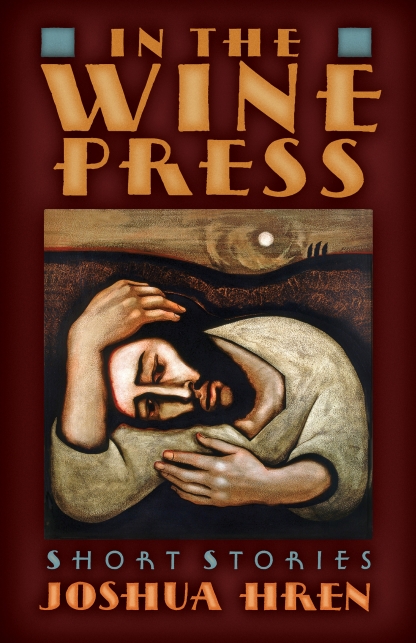
            In February 2022 the Benedict XVI Institute published Joshua Hren’s Contemplative Realism: A Theological-Aesthetical Manifesto, by Joshua Hren, founder of Wiseblood Books, co-founder of the Master of Fine Arts in Creative Writing program at the University of St. Thomas in Houston, and prolific novelist, poet, and essayist. His essays and poems have appeared frequently in such periodicals as First Things, America, Commonweal, National Review, Catholic World Report, and Law & Liberty. His books include two collections of short stories, This Our Exile (2017) and In the Wine Press (2020); the book of poems Last Things, First Things, and Other Lost Causes (forthcoming, 2022); Middle-Earth and the Return of the Common Good: J.R.R. Tolkien and Political Philosophy (2018); How to Read (and Write) Like a Catholic (2021); and the novel Infinite Regress (2022).

A recent article in Mere Orthodoxy explains Contemplative Realism’s germinal yearning. John-Paul Heil reviews the report in The University Bookman, Only the Lover Writes,” and, a review of both Contemplative Realism and Benjamin Myers’ book appeared over at Voegelin View: Literature for the Recovery of Reality: Joshua Hren and Benjamin Myers’ Christian Vision for Literature.”

            Contemplative Realism is Hren’s response to Pope Benedict XVI’s summons to writers to “ask rather more carefully what ‘the real’ actually is.” “Are we not interested in the cosmos anymore?” Benedict asks. “[T]he man who puts to one side the reality of God is a realist only in appearance.”

            Hren takes up this challenge. Since its origins in the eighteenth century, Western fiction has for the most part eschewed the metaphysical—the presence of the divine behind the scrim of the visible world—to present a “reality” limited to the surface conditions of day-to-day modern life and thus often, although not always, infused with bleakness, black humor, cynicism, and despair. Any sense that some other reality might exist is reserved for the genre of fantasy. Contemplative Realism aims to define the response that a Christian writer of fiction might have to this self-imposed limitation: crafting a distinctive literature that includes ultimate as well as surface reality. The models already exist: Dostoevsky, Flannery O’Connor, Marilynne Robinson. Hren writes:

The underbellies of our civilizations and the cesspools rank in the pockets of our souls are real. They rightly make us reel. Sometimes the vestiges of God in the world can seem scarce or scattered relative to the apparent success of raw evil. At this juncture the contemplative realist seeks to stoke reverence for the reality of the Paschal mystery—a passion, death and Resurrection that is more real than an infinite tally of the sins and the frightening fissures, the apparently irreversible cracks in existence. But, countenancing the same absurdities that unnerved Camus and the existentialists, the contemplative realist will prevent his story’s perspective from relishing the farcical or capitulating to the       cruel to the point of souring cynical even as (fiction being largely a record of man in rebellion), a large part of his work consists of drawing out the spiritual intensities of man’s refusal to serve.

 and:

The contemplative realist, considering the actual existence of things, at once sees them as we were meant to see them and also shows the rest of us how to see them. Sometimes he shows us the same thing several times, in several ways, leading us up the ladder of perception to a fuller share in the beauty of being: superficially first, operating in the mode of “how things are” in their apparent blasé “nothing to see here” state, or scattered in apparent disorder; then, as St. Bonaventure puts it, “he considers things in themselves,” namely, in their matter and substance, power and activity, measure and motion, and from here “the observer can rise, as from a vestige, to the knowledge of the immense power, wisdom, and goodness of the Creator.” The contemplative, as         contemplative, can achieve this ascent without needing to communicate it at all. No one, says Bonaventure, “arrives at contemplation except through penetrating meditation, holy living, and devout prayer.” The contemplative realist surely needs these things and more. Wedded to the word and world in a different manner, the contemplative realist must     manifest this perception in his prose. 

Hren’s Manifesto, besides being a beautifully written and passionately argued 64-page book, is an actual manifesto. Hren has garnered the signatures of a number of Catholic writers who endorse his theory of a distinctively Christian approach to literature.

            Catholic Arts Today has decided to engage Hren’s intriguing and challenging theories. To that end, we have posed some questions his manifesto raises to its signatories. What follows is a kind of symposium, a conversation we have cobbled together from our questions and the responses of five of the signatories.

Besides Joshua Hren himself, the signers of the Manifesto participating in the conversation include:

–Glen Arbery, president of Wyoming Catholic College and author of Why Literature Matters (2001) and the novels Bearings and Distances (2015) and Boundaries of Eden (2020).

–Katy Carl, editor-in-chief of Dappled Things and author of the novel As Earth Without Water (2021) and Praying the Great O Antiphons: My Soul Magnifies the Lord (2021).

–Sarah Cortez, author or editor of 14 collections of poems and essays, including Tired, Hungry, Standing in Spot for Twelve Hours: Essential Cop Essays (2019), third-place winner of the National Federation of Press Women’s nonfiction award.

–Benjamin Myers, professor of literature at Oklahoma Baptist University, author of three books of poetry, and 2015-2016 Poet Laureate of the state of Oklahoma.

–James Matthew Wilson, poet-in-residence at the Benedict XVI Institute, director of the Master of Fine Arts program at the University of St. Thomas in Houston, and author of eleven books, including six books and chapbooks of poetry.

 Catholic Arts Today: How would you distinguish contemplative realism as a fictional mode from realistic fiction that happens to have been written by a Catholic writer? For example, there’s Flannery O’Connor’s wonderful story “Everything That Rises Must Converge,” about the black and white mothers who meet on a newly integrated Southern bus and have no ability to understand or even perceive each other (not to mention the white mother’s oh-so-sophisticated but comically obtuse son). We know that O’Connor was a Catholic writer who took seriously the mysterious workings of grace in the human heart–so we might classify this story as a work of contemplative realism. But a secular admirer of O’Connor–and there are many–might see the story as a strictly secular story of the tragedy of the human condition–something that all good secular writers as well as Christian writers recognize. Why is this story an example of contemplative realism–in contrast to just plain realism as explicated by a talented and observant writer?

James Matthew Wilson: In my view, Contemplative Realism is not a manifesto positing a new or specialized literary practice or poetics, though it may have touches of that. It is rather an insistence that contemporary literature recover the fullness of breadth and depth proper to the great literature of every age. Odysseus descends to the underworld. Aeneas descends to the underworld. Since Dante, our knowledge of the real comprehends the descent into mystery and the ascent to the divine essence. Not all art can have such a cosmic scope; the minute, particular, and immanent is also a worthy theme for literature. But once we have seen those grand or awesome vistas, art is itself transformed. The weakness to which Joshua is responding is that, with full knowledge of how revelation and grace have transformed what we know about nature, so much contemporary art proceeds as if nothing had changed. It shies away from grandeur, it fumbles in knowing ignorance, and settles for a foreshortened horizon that even the unbeliever knows is not the full range of the spirit. Art does not tolerate special pleading, but it becomes a lie when it pretends to be utterly unaware of things just because its authors do not like them or believe in them or feel capable of speaking of them.

Katy Carl: This question helps to clarify that contemplative realism is not being presented as though it were the one and only “right” way to be a “Catholic writer” (that fraught, much-contested term) or even a spiritual writer. Rather, it serves to articulate one aesthetic approach to literature that is deeply consonant with the best of the Catholic intellectual and spiritual tradition. We can locate it among a multiplicity of “Christian realisms” whose emphases may vary. O’Connor, who considered herself a “Christian realist” and as such also a “prophet of distances,” has a voice so sui generis that any imitation must pale beside the original. The secret of her genius was not “violence” or even “hillbilly Thomism” but the gift to see things as only she could see them.

As you rightly notice, this is the work of any writer worth her salt, regardless of that writer’s other beliefs. But for a writer who starts from a position not of habitual doubt or materialist skepticism but of enthusiastic assent that what the Church proposes and believes in the Creeds is essentially true, what is seen and how it is seen will shift. This is what O’Connor meant when she said doctrine was an instrument of vision, not an obstacle to vision. Jacques Maritain is also on to this when he speaks of the altitude from which an artist is able to see. To my mind, a contemplative realist seeks to dramatize the point of intersection between the vertical axis of human experience, the aspiration toward God, and the horizontal axis of the observable world.

Catholic Arts Today:  Conversely, what’s to distinguish a work by a secular writer who happens to “show the rest of us how to see…the actual existence of things” and a work by a contemplative realist? Take Hemingway’s 1927 story “Hills Like White Elephants,” about a young woman being pressured by her boyfriend into having an abortion. This story is an extraordinary narrative of “the actual existence of things”: the girl’s horrifying realization of the ultimate sterility–and shallowness–of the pair’s months-long relationship that is in fact like the dry, barren condition of the hills in the Ebro Valley. Was Hemingway a writer of contemplative realism manqué? Or just a secular writer who could see inconvenient truths? How would a Catholic writer have handled the story any differently?

Katy Carl: The virtue and the liability of Hemingway’s pared-down style both dwell in the power of suggestion by omission. Speaking just for myself as a reader, I find this power can be brilliantly used or pursued to a fault, depending on the context, and in “Hills Like White Elephants” the brilliance all comes across in the felt absence of love. This absence is only too realistic in the story’s context, but if it were all we could expect from reality on or off the page, we’d be right to despair. It’s much harder to write unsentimentally, truthfully, about the presence of love than about its frequent absences and failures in human behavior. This is especially true when you’re dealing with characters who have numbed themselves beyond the reach of feeling or connecting with any love that may be present in the situation. The contemplative realist is always on the search for a suggestion of the “Love that moves the sun and other stars,” whether or not a particular story’s characters are similarly inclined.

To return to O’Connor, think of her Haze Motes in Wise Blood, charging through the streets of Taulkinham, as hellbent on sustaining his own misery as either of Hemingway’s lovers here—but O’Connor calls our attention beyond and above the misery in a way Hemingway might have considered cheating because it reaches beyond the senses, though you couldn’t with any justice call it distanced from the senses either. Again, O’Connor makes that attempt to discover the sensorially rendered intersection of the vertical and horizontal planes, which Hemingway might have seen as a pointless exercise but which, to a contemplative realist, is almost the whole point.

Benjamin Myers: I think it is important to note that the signs of the transcendent are in the reality depicted by the fiction not just in the words of the story. Two photographers might capture two images of the same bright light, one calling it a trick of the lens and one calling it an angel, but it cannot be both. If it is an angel, then they have both taken a photograph of an angel, regardless of one photographer’s ignorance of that truth. In other words, the more talented and observant a writer is, the more difficult it would be for that writer to be merely a “plain realist,” regardless of the writer’s awareness of what true reality he or she may be capturing in fiction. (Of course, the artist who knows what he or she is depicting has an advantage). Nihilism and materialism require scant attention to the nature of things, but many great writers have been of God’s party without knowing it.

Sarah Cortez: Especially within the Catholic (Christian) worldview, intentionality is paramount because sin requires intentionality, just as not sinning does.  Therefore, I would say that great or even good writers who undercover layers of meaning in their work, even metaphysical meaning, may not necessarily have the contemplative realist goal in mind due to lack of intentionality.

Catholic Arts Today: Joshua has pointed to a cynicism, nihilism, and despair that he suggests is a cornerstone of the realistic tradition. He cites the novels of Balzac, Flaubert, Camus, and Jonathan Franzen as some of his examples. But is this dichotomy the only way to contrast the realistic tradition with contemplative realism? What about novelists and story-writers of manners, such as Trollope, George Eliot, Chekhov, Nabokov, A.S. Byatt, and others who simply aren’t interested in metaphysical reality? Where do they stand in the realism vs. contemplative realism dichotomy?

Benjamin Myers: The signs of the transcendent are not always spectacular. The bread and the cup are household things. When a writer is observant of what is, even in the “mundane,” the transcendent can come through, though a writer such as Trollope or Chekhov will certainly often, whether consciously or unconsciously, attempt to stifle that transcendence. That is one kind of materialist realism, a blessedly failing kind at times– or blessed to the extent that it fails. In Nabokov I sense a greater awareness of what is missing, a yearning for transcendence that the writer feels as near but refuses to believe in. In such cases the frustrated yearning itself can become a kind of sign of the transcendent, when the writer is sharp enough.

James Matthew Wilson: Hans Urs von Balthasar says that the Christian must be the guardian of metaphysics in the present age. So is it with the Catholic or contemplative-realist writer. Some authors have little or no metaphysical scope to their work and the work suffers for it, even if the work can still — and with ease — be affirmed as good, or even very good. Literature always faces the temptation to become secular, whether in an imitation of classical humanism or a vulgar politicization of aesthetic form or in a mere playful romanticism. One does not need to deny the value that may be found in each of these secular visions to observe that they do not tell the whole story. It’s my hope that my work celebrates the discipline and reason of the human spirit in keeping with the best aspects of classicism, while it also keeps the work open to the transcendent. A vision of the secular, and of the merely human, always implies by its own internal essence and existence, the presence of that which transcends it. Paul Claudel wrote of this often in his poetry: to study the nature of things is to study causality, and, for Claudel, the only cause was that of the God who created all things and held them in relation to one another.

Catholic Arts Today: Can you be a Catholic novelist (or poet or screenwriter) without being a contemplative realist? What about such Catholic novelists as Robert Stone, Alice McDermott, Phil Klay, and Kirsten Valdez Quade, who have brought their Catholicism to their writing and dealt with serious questions of faith, salvation, and morality in their fiction. What might separate them from contemplative realists?

Joshua Hren: Many contemporary Catholic writers operating in different veins contain considerable goods. As I note in a piece for University Bookman, Phil Klay’s Missionaries contains a stunning intrusion of Christ onto the scene. I also appreciate much that is happening in the realism of Christopher Beha–both in What Happened to Sophie Wilder and The Index of Self-Destructive Acts. And then there’s Randy Boyagoda’s comic contributions to contemporary Catholic letters, Dante’s Indiana, which I’ve reviewed at Law & Liberty.

In How to Read (and Write) Like a Catholic, I outline three main ways that we can approach the goods of literature:

1. The study of literature as the study of human nature, which is to say the study of ancient texts in order to obtain a greater understanding of human passions and ends, possibilities and limits, to witness man’s innate social nature, to hear the whispers of natural law as it chastens man in rebellion, and to consider how the human story unfolds outside of a direct encounter with Christian revelation. (This does not exclude reading the deep meanings of these works according to the light of Christ.)

2. The study of literature that is intrinsically Catholic. This can be undertaken through an examination of the presence of metanoia (conversion) in great literary texts; through a consideration of the way in which writers dramatize the workings of grace upon nature; and through a sacramental approach that sees the ways in which seen images point to unseen realities–a cultivation of the capacity to, in Flannery O’Connor’s words, see evil as “a mystery to be endured” and “not a problem to be solved.”  

3. The study of “Christ-haunted” fictions–the persistence, often in traces or in veiled form, of Catholic ideas, images, and tradition in purportedly secular or postmodern poetry and stories, as well as literature grappling with faith within an increasingly secularized literary canon.

Catholic Arts Today: Is there a temptation for the contemplative realist to be complacent, to write simple dichotomies of faith versus its lack, to elide over despair and doubt? How can a contemplative realist avoid that trap?

Glenn Arbery: Chaucer makes fun of such complacency and such “dichotomies of faith versus its lack” in “The Prioress’s Tale,” the horrifically pious story of a sweet Catholic boy killed by demonic Jews. He mercilessly satirizes the Prioress herself in the General Prologue of The Canterbury Tales, but he is just as satirical about the Miller, whose tale of sexual antics remains both hilarious and outrageous.

Contemplative realism means taking the world as we actually experience it. When Joshua coined the term, I don’t think he meant to suggest a new approach but rather to emphasize that the Catholic writer has never needed to be afraid to face the whole truth of things, which necessarily includes spiritual levels. I get the impression that some Catholics are horrified by depictions of eros or bad language or violence–I think of Flannery O’Connor’s Wise Blood or her stories “Good Country People” or “Greenleaf” (not to mention most of Walker Percy)–as though the faith could not stand up to them. But, even more than when O’Connor or Percy were writing, the culture we inhabit promotes “expressive individualism,” which negates the very idea of transgression, and one thing we need is to see sin as sin.

The imaginations of children might need to be protected (even from some passages in the Bible), but the mature imagination needs the real world of beauty and transgression, misery and grace. It’s important to present people in their self-consciousness and the allure of sin without glamorizing evil, and also to present them in their prayer, their doubt, their suffering, because these are realities that must be worked through with fear and trembling. 

 I would argue that the Catholic writer has this advantage: he or she does not have to invent the whole meaning. The world is given and given with intention — it already has meaning. If fiction is any good, it is patterned upon real observation, which means that it is the interpretive discovery of what is already there. Instead of having to force layers of meaning into the fiction, the Catholic open to givenness and divine intention can trust that in pursuing the beauty of the work, he or she does not have to intend every meaning consciously. As Jesus says, “a good measure, packed together, shaken down, and overflowing, will be poured into your lap.”

Sarah Cortez: Simplicity of both worldview and of artistic expression can always be a wily seducer. Within the context of this manifesto, however, the only “simplicities” stated are spiritual truths which because of their inherent nature defy their apparent simplicity due to their origin in the Divine nature of God. Thus, the writer, in particular, is left with the task of bringing to the page truths grounded in the many mysteries God has placed within human nature, and each person’s torments and joys as his individual salvation is worked out within a luminous but crazy world.

Joshua Hren: My manifesto on behalf of a “contemplative realism” makes no claims to create, ex nihilo,a new aesthetical species. Nor does it advance this rough school of literary fish as some preeminent or sole “way forward” for fiction in our time. It makes the case for an aesthetic that does not negate so much as it develops the goods of realism. It makes the case for an aesthetic that is consciously committed to unflinchingly gazing at the brokenness and terrifying aspects of nature, resisting the notion that what is “most real” is most evil or difficult to countenance, and yet representing the innumerable crosses in nature and the startling fissures in nature, even as it also gives witness to what St. Bonaventure calls the “vestiges of God” found in the creative world, and the heroic sanctity that can be cultivated even in unpropitious environs.

My manifesto seeks to articulate a literary approach that exists already in diffuse books and also in the potencies of living artists. It seeks to gather and galvanize those souls. It is a soul cry to break through restrictive bonds of the culture we inherited, and yet to be in conversation with our fellow artists who are not believers but who have tremendous natural insights into the state of contemporary fiction or the prospects of the novel in an age of diminishing readers. Amidst this conversation, we necessarily critique the deficiencies of those realisms that reduce what is most real to the seen. 

Mr. Tanner (A Short Story by T.M. Doran)

“MR. TANNER!” an eager voice called out from behind a dense Buttonbush in its red and green glory.

Mr. Tanner knew Betty’s voice as well as he did his own, but he was in hot pursuit of a pea-sized predator on a flowering Blackhaw Vibernum so he didn’t respond.

Mr. Tanner’s chief interests were making things grow, nurturing butterflies, eliminating killer insects and other pests, and the tenor saxophone. He had been a Detroit Zoo gardener for thirty-three years, now responsible for tending the Wildlife Interpretive Gallery’s indoor butterfly gardens and the zoo’s outdoor butterfly garden. He was a sturdy sixty-nine year old, five-foot-eight inch tall man, hitting the scale at exactly one-hundred-seventy pounds. When he’d started working at the zoo, Mr. Tanner had been the only Black man in a crew of twenty gardeners and had stuck out like a praying mantis on a red Hibiscus flower. Now, he drew attention only for the neatly buttoned white shirt and thin tie he always wore beneath his zoo jacket, and the dingy yellow backpack he had carried to work for as long as anyone could remember.

Mr. Tanner debated with himself: Pluck the larvae from its leafy roost by hand? Or use his puffer. The latter would destroy the little thing. Plucking the bug, albeit a more delicate operation, would allow the gardener to retain the living pest for Carla’s examination. Viburnum Leaf Beetle larvae were smaller than caterpillars but if allowed to become full egg-laying beetles could kill a mature shrub in one season.

Mr. Tanner had pruning to do, too, but pests once detected became the first order of business. Who knew how many progeny this creature would beget if he didn’t begot it first—an original saying of his.

Betty burst out from behind the blooming Buttonbush like a trotting ostrich, and Mr. Tanner had to put a finger to his lips to prevent her from interrupting the search-and-destroy operation. A fellow veteran of such missions, the dark-haired, olive-skinned woman in her mid-forties halted in place and, for good measure, held her breath.

Mr. Tanner placed the bug in the plastic container he kept handy for such invaders. “Mission accomplished,” he said to Betty. “How is our prize-winning photographer today?”

She blushed, though Mr. Tanner could tell that Betty appreciated his appreciation. Betty lived alone and could come off as haughty and prickly to those who only knew her superficially. To Mr. Tanner, who knew this woman as well as anyone at the zoo did, she was a person of intriguing contradictions, an adventurer who dared to flout a State Department ban to encounter wild gorillas in the Congo’s Virunga National Park but wouldn’t drive her car half a mile in the snow.

“Here…look,” she said, showing him her camera viewer.

“Oh!” exclaimed Mr. Tanner, observing a young Lion-tailed macaque plucking a snack from a spectacular Blue Celeste Ficus. “Zoo magazine cover material,” he added, and the two shared a smile.

Betty loved the zoo but she hadn’t been an employee there in the sixteen years he’d known her. Rather, she spent hours photographing the animals while serving as a docent in the primate and butterfly exhibits. To Betty, the zoo was a sanctuary rather than a job.

Betty’s smile became a dark frown: “You won’t believe what those people did.”

Per usual, when Betty was preparing to rail against someone, her spine stiffened and she gained an inch on her already towering frame. “The power company cut down that beautiful maple. Now, I have no shade on that side of my house, and I have to look at those ugly poles and electrical equipment!”

For a moment, Betty waved a prefectorial digit at him. Then, mortified and red-faced, she clenched her fists. Mr. Tanner had seen this side of Betty often enough, being the only person upon whom she felt comfortable enough to unload. Mr. Tanner didn’t like the indiscriminate cutting down of mature trees either, but he didn’t know the facts.

“Can you just plant something to replace it?” he asked Betty.

“Nothing as mature and lovely as that maple. What a disaster!”

“Or you could plant a sun garden,” he suggested. “You love the smell of our Bush Honeysuckle.”

“But a bush won’t shade my windows,” Betty objected. “Besides, it won’t overwinter.”

With his mini-snips, Mr. Tanner dead-headed a Blanket Flower, absentmindedly palming the shriveled floral corpse. “I know a woman who keeps a Cape Jasmine in a large pot and winters it in her dark garage. Not cold enough to kill the plant, and no frost. She lets it go dormant for four months. Or what about Hollyhock or Queen of the Prairie? They grow tall.” But mollifying Betty was impossible now, so Mr. Tanner resigned himself to hearing her out, and that took another twenty minutes. He had learned that sympathetic listening was a balm that took some of the sting out of Betty’s chronic frustration.

After lunch, Carla showed up, as she always did. As the zoo’s herpetology curator and Lepidoptera keeper, Carla spent mornings at the larger reptile and amphibian exhibits, and when she’d finished with the snakes and frogs, joined Mr. Tanner in the indoor butterfly garden.

“All well?” she asked him, her standard greeting.

“Very well,” he responded.

“The shipment should arrive tomorrow, and the Malachites. Our first.”

“Beautiful!” he rejoiced with her, and then showed Carla the object of his successful morning hunt. “You might want to add some Spined Soldier Bugs to the next order if you want our butterflies to have healthy Viburnum.”

Mr. Tanner had met Carla twenty-seven years before when the zoo hired her as their reptile keeper. Apart from a gimpy knee, Carla had changed little since that time. Single and stout, with a forceful personality that sometimes put off colleagues, Carla’s demeanor softened, her eyes sparkled, and her voice fairly sang when she showed off her winged and scaly creatures to young people. And Mr. Tanner had witnessed Carla’s generosity when a colleague or one of her staff was in need.

“I’ll keep an eye out for the shipment,” Mr. Tanner said. “How’s your knee?”

“I could help matters by losing some weight. In the meantime, I’ll keep this knee brace handy. Have you solved our water problem?”

“Not yet,” the gardener admitted. “I plan to text Ron.” Fixing things was Ron’s special talent.

She nodded. “Light crowd today.”

“Rain in the forecast.”

Their many years together meant the two were thinking the same thought. Carla had seen Mr. Tanner’s saxophone in the office. That meant today was Friday, and if the weather held out, Mr. Tanner would perform his Jazzy Jingles in the outdoor butterfly garden at three p.m., as he’d been doing for close to ten years; music everyone recognized, even if performed by a solo saxophonist: “These Are A Few of My Favorite Things,” “Put On a Happy Face,” “Honey Please Don’t Be That Way,” Tunes that brought smiles to people’s faces. Some annual passholders visited the zoo on Fridays just to hear Mr. Tanner’s evocative music.

They’re not Coltrane jazzy but they jingle was another of Mr. Tanner’s sayings.

Carla started to walk away but paused and looked back. She exhaled audibly, and said, “My sister lost her job. Third time this year.”

“Laid off?” Mr. Tanner asked.

“No, fired. Not exactly how she explained it, but that’s what it amounts to.”

Mr. Tanner had only met Carla’s sister on two occasions and had decided that two sisters couldn’t be more different in temperament and priorities than those two women.

“I’m washing my hands of the whole business,” Carla remarked. “Why bother when she can’t keep a job for more than six months? And that Barry of hers is worthless…irresponsible.”

“Don’t give up on her,” Mr. Tanner urged his boss.

If Carla was surprised to hear her gardener say this, she didn’t let on. Instead, she said, “What do you suggest I do?”

“Stay connected. What she does with your help…” He turned his palms upward.

“It’s frustrating!”

“Yes, but less frustrating if you admit you can’t control what she does.”

“You think I like to be in control?”

They both smiled.

“I’ll hand-water until the irrigation is fixed. Early, so the visitors aren’t disturbed,” he promised her.

Carla returned to the Reptile House while the gardener made for the office.

Mr. Tanner’s work space was a modest affair. In the corner of the office, he had a locker where he kept his once-neon yellow backpack—now faded to the color of straw—his zoo boots, gloves, and stormy-weather gear. Propped against the wall was a camp chair he occasionally used for Jazzy Jingles. When he needed a computer, he used the one on the office desk.

Mr. Tanner updated the butterfly garden’s Predators and Pests spreadsheet on the computer, then went back to work. He was on his knees and surprised to realize that two hours had passed when Ron tapped him on the shoulder.

“The tigers need me,” Ron announced, “but tell me what’s wrong. I’ll come back tomorrow.”

“The watering system’s acting up,” Mr. Tanner answered. How like Ron this was—a man who had recently passed the half-century mark, handsome and a magician with mechanical equipment—to stop in, rather than texting the gardener that he was too busy. Did anything short of a nuclear reactor exist that Ron couldn’t fix? He’d been at the zoo for twenty-one years and had married for the first time two years earlier—a younger woman with two children.

“I bumped into Betty at the primate exhibit. What rattled her?”

When Mr. Tanner didn’t answer, Ron shook his head. “You don’t have to say it—anxiety. Instead of having one wholesome disease, psoriasis or allergies, she has a new one every month. Like my Aunt Tilly.” The mechanic glanced around the butterfly garden, and said, “We’ll take care of you.”

“You always do, my friend.” The gardener removed his work glove and the two men shook hands.

Mr. Tanner looked at the clock. He’d be late for Jazzy Jingles if he didn’t get a move on.

MR. TANNER WAS SURPRISED TO HEAR someone moving about the exhibit as the zoo was not yet open for visitors, and Carla always attended to her frogs and snakes before she made an appearance here.

Carla’s assistant? Ron? But when the girl emerged from the lush greenery, he recognized her: the bear keeper Suzanne Wayne’s ward, as Carla had referred to her—Benji by name.

They had spoken once before without introducing themselves. Then, the exhibit had been busy with visitors, but unlike most this girl had not looked past the old gardener but had greeted him and asked several insightful questions—“What’s the rarest butterfly in the world?” “What’s the difference between a chrysalis and a cocoon?”

Today’s version of the girl looked troubled and wary, and Mr. Tanner wasn’t convinced she’d say anything unless he spoke first. Carla hadn’t told him much about Benji but enough to suggest the girl had come from a chaotic domestic situation and that Suzanne’s taking her in had been an act of mercy. She was wearing new clothes and shoes—not runaway clothes, and surely provided by Suzanne Wayne. He guessed she was in her early teens, though her eyes were older.

“Hello, Benji,” said Mr. Tanner.

The girl made a little wave, but her features remained cloudy.

He would keep talking. “Want to see who can find the stick first?”

He had surprised her, as he’d hoped. “We have several stick insects in the exhibit. People rarely notice them. Something Curator Carla dreamed up to keep things interesting.”

Benji shrugged.

“Is something wrong?” he inquired delicately.

Maybe she needed to release some of the emotion that fairly oozed out of her because the girl said, “Everything!”

“I’m sorry about that,” Mr. Tanner responded in surprise.

For a moment, he thought she was going to rush off, but a Monarch settling on her shoulder produced a meager smile.

“I want to stay with Suzanne,” she muttered.

“Does she know this?” asked Mr. Tanner, laying down his hand spade. Today, sunlight was rushing into this century old glass-domed building, the beams of light making the colors of the flowers and butterflies more vibrant.

Benji nodded. “But she said she doesn’t know if they’ll let her.”

“Does your mother or father object?” He didn’t think this question would be well-received but had decided to plow ahead anyway.

“I don’t have a father, and Destiny is worse than not having a mother.”

That docile butterfly finally ascended from Benji’s shoulder. Before the girl could step away, the gardener asked, “Why do you say so?”

“The usual…worthless men, drugs, yelling…” Her voice trailed off.

“I know what you mean,” he responded, and before she could fire back, he added, “Yes, I do. I’ve been in such places. But you’re here now, with Suzanne.”

“I love the zoo. I want to be a keeper like Suzanne and Stella.”

Mr. Tanner was acquainted with Stella, the other ursine keeper. “If I know Suzanne, she’ll do her best for you—”

“But will it be enough?” asked Benji, passion in her voice. “I won’t go back. If they make me, I’ll run away again!”

She expected him to caution her, but he didn’t. Mr. Tanner said, “You’re welcome here anytime. The more you learn, the better prepared you’ll be for a keeper’s or curator’s job…or to be a vet like Dr. Bogardus.”

“That’s what Suzanne told me,” the girl said, more engaged now.

“Who could ask for better training?”

“But why?” she pleaded.

Mr. Tanner knew exactly what she was asking—he had that sixth sense. Furthermore, he knew the question wasn’t directed at him. Rather, that question preyed on the girl. He said, “Would you help me clean up before the visitors arrive?”

When Benji hesitated, the old man pointed to the old-fashioned clock on the wall, and said, “Ten years ago, I used to finish all my getting-ready-for-visitors work in plenty of time. Now, those clock hands seem to move faster.”

Without saying anything, Benji picked up a broom and began to sweep the cuttings on the floor.

“Where does your mother live?” Mr. Tanner asked her.

When she told him, he cringed because that area of the city was notorious. “How long have you been staying with Suzanne?”

“Two weeks,” she replied, emptying her sweepings into the plastic bin.

“Does Suzanne live near the zoo?”

“Not far. I sleep all night now. I never did before.”

With Benji’s assistance, the cleaning didn’t take him long, and when they put the tools away and removed the plant debris to the compost bin, Mr. Tanner said, “May I show you something before you go?”

The girl followed the gardener to a corner of the exhibit where the zoo displayed many of its chrysalises. Every day, Carla offered a half-hour learning session here, often accompanied by an emergence, where a bin of butterflies was released to the exhibit, an event that never got old to Mr. Tanner.

“I’ve seen these before,” Benji observed.

Undeterred, Mr. Tanner kept his eyes fixed on the display, as if he expected a butterfly to pop out any minute. Finally, he said, “I wonder what it feels like to be pupae inside chrysalises. I try to imagine how I’d feel…dark, confined, all alone and scared.”

“I don’t think caterpillars feel any emotions,” she observed.

“Probably not, but I imagine how I’d feel.”

Now, they were both gazing at the chrysalises, eyes close to the Plexiglass.

“A caterpillar could crawl from one end of the zoo to the other but until it goes inside a chrysalis—that dark lonely place—it can never become a butterfly.”

Benji’s phone rang. She looked at Mr. Tanner. “It’s Suzanne. I’m late.”

“Thanks for helping me,” he said to her back as the girl ran off.

Mr. Tanner made his normal rounds, less conspicuously with visitors in the exhibit, and tending the outdoor butterfly garden when the building was busiest. He spent at least an hour every day cleaning, sharpening, and repairing his tools. A while back, the zoo’s maintenance chief had been amazed to learn that the gardener had been using several of these tools for thirty-three years.

“Like old friends,” Mr. Tanner had told him. “Reliable. Predictable…don’t talk much though.”

When the Malachite chrysalises arrived, Mr. Tanner quarantined them in the exhibit’s reserve box, making sure the habitat was ready for Carla’s inspection. In the coming days, both he and Carla would be carefully watching their new arrivals for signs of distress.

Near the end of the workday, Ron showed up, asked a few questions, and made for the mechanical room, accompanied by Mr. Tanner.

Ron exuded competence, not because of anything he said but by how he took charge when something needed fixing. If Ron didn’t always think before he spoke, Mr. Tanner had never heard anything vindictive escape the mechanic’s lips.

“Not too many aches and pains?” Ron asked him.

“You know” was Mr. Tanner’s equivocal answer. These days, his left shoulder ached most nights, a different sensation than his normal aches and pains. Occasionally, the pain woke him at night.

Ron nodded. “I’m getting to know. I turned fifty last month, remember?”

“And the kids?” the gardener inquired.

“Yah. Hand me that wrench, please…no, the other one. Thanks…”

Ron worked in silence for several minutes but something told Mr. Tanner to keep the mechanic company. As it turned out, his instinct was good because, without looking up, Ron said, “Those kids are driving me crazy. Their own father left them for Christ’s sake, and I’m not good enough?”

“They’re teenagers, right?”

“It’s the water pump—a metal chip. David’s thirteen and Sara’s twelve. Always mouthing off to their mother, and when I say something, the conversation really gets ugly. I don’t care about honest mistakes, but I won’t stand for disrespect.”

Mr. Tanner could hear the suppressed anger in Ron’s voice—the very first time he’d experienced such fire in this even-tempered man. Mr. Tanner said, “Young people can’t always control themselves.”

“I don’t care about that,” Ron snapped.

Mr. Tanner let Ron work a while before he spoke again. “You have a few years with them before they’re grown. What you say and do will make a big difference in who they become.”

Ron dropped the wrench and looked at Mr. Tanner. “You have children, right?”

The gardener nodded in reply. Ron responded with, “Well, these aren’t my kids.”

Already, Mr. Tanner was shaking his head back and forth. “Not your physical children, but when you married their mother they became your kids.”

“I don’t see it that way.”

“Then, try to see it that way for their sakes…and for yours. Your wife will honor you for it.”

“She’s just trying to keep the peace.”

“Someday, she will honor you for it. She’s worth it, isn’t she?”

Ron’s face was red, and his jaw was clenched, but after a bit the color receded.

“What are you working on for fun these days?” Mr. Tanner asked to lighten the exchange.

“I’m rebuilding a twentieth century military radio…using vintage parts. I’ll bring the radio in and show you when I’m finished.”

Mr. Tanner did his best to conceal the alarm he suddenly felt. His heart started thumping. He took several deep breaths and tried to concentrate on Ron.

The mechanic didn’t seem to notice. He returned the wrench to his toolbox, and said, “No more water problem.”

MR. TANNER DIDN’T KNOW WHY the zoo’s chief operating officer had summoned him but he had a funny feeling about it. He’d been tempted to confer with Carla but in the end had decided to see it through on his own.

Not that Art McLeod had a bad reputation. If he wasn’t as congenial as the zoo director, the COO enjoyed the respect of the staff all the same because McLeod was known to let people do their jobs so long as their work was satisfactory.

“Sit down, Mr. Tanner…please.”

Mr. Tanner did as instructed.

The COO’s office wasn’t ostentatious. Rather, it oozed efficiency, having a large primary desk with a computer facing McLeod, a side desk with a smaller laptop, and nothing on the bare walls. Not a binder, folder, or piece of paper in sight.

“You’ve been here for thirty-three years, Mr. Tanner.”

“Thirty-three years last month.”

“You’ve given superior satisfaction.”

Why didn’t this make Mr. Tanner feel any better?

“Carla told me you’re a man who can handle things…anything. So, I’ll be straight with you.”

Straight with him? Mr. Tanner was on guard now.

“You’ll be seventy soon, and starting on that date the zoo’s landscaping company will take on the butterfly gardens.”

Mr. Tanner overcame a pardonable confusion in his ordinary way, by silently repeating McLeod’s words until they sunk in. “I had hoped to work a few more years,” the gardener mused rather than complained.

The COO said, “Carla insisted that you receive a lifetime pass to the zoo. That’s a rare honor, Mr. Tanner. We hope to see you often. And you can be a docent if you desire. You certainly are an expert on many of the animals.”

Was Mr. Tanner listening? All he could think about was waking in the morning and not having his zoo gardens to tend, not seeing Carla, Betty, Ron, and the others who had become dear to him.

Mr. Tanner lifted his head and looked across the desk at McLeod. “Don’t think I’m not grateful because I am. Hardly seems like thirty-three years.”

McLeod was clearly uncomfortable with the message he’d delivered, and Mr. Tanner didn’t like to make anyone feel uncomfortable. He stood and extended a hand.

The COO took the gardener’s hand and mumbled a few more words of praise.

Mr. Tanner closed the door behind him. The end of the month—eighteen days. No more lively times in the butterfly gardens, no more spectacular butterflies emerging from chrysalises, no more conversations with Carla, Betty, and Ron—no more shoe-leather commutes, no more Jazzy Jingles.

You’re seventy, or almost, he told himself. What did you expect? A blue ribbon? Part of him was grateful and part sad. Like a lot of things in life—his wife, that heart scare ten years back, even the war when he’d managed to forge friendships amidst those horrors.

Carla was there when Mr. Tanner returned to the Gallery. It was after hours so she could have gone home. But not Carla.

“I was against it” were her first words.

“It’s alright,” Mr. Tanner said.

He saw tears in Carla’s eyes. “Will you be our docent? Betty will still have the primates.”

“Make sure they do the job right,” Mr. Tanner told her.

THE DOOR BURST OPEN and in came Benji like a storm cloud. She scowled at Carla, ignored Betty and Ron, rushed to Mr. Tanner and gave him a big hug. When she let go she was crying. And in a flash, Benji rushed out of the Gallery office.

Carla had intended a small retirement celebration for Mr. Tanner, but in a matter of seconds Benji had soured the mood.

The girl’s display didn’t do anything to assuage Betty’s worry. Only in recent days, with Mr. Tanner’s retirement looming, had Betty come to realize how much she relied on him. Who would she go to now when she was anxious about something?

Knowing that Mr. Tanner preferred printed photographs to digital images, Betty had prepared him an album filled with her own pictures of the butterfly gardens. And she had embellished the album with her elegant calligraphy.

“Open it,” Ron said to Mr. Tanner, handing him a package. It had been all the mechanic could do to refrain from critical comments about the COO and director. And though Carla had intimated that she’d fought the decision, Ron hadn’t been convinced. Only the sure knowledge that Mr. Tanner didn’t share his critical views held Ron back.

The mechanic had wrapped the present himself, and it showed. Mr. Tanner set the wrapping aside and displayed the book—a thick field guide to butterflies.

Mr. Tanner grasped Ron’s hand and smiled broadly at him.

He looks older, Ron said to himself. Then, he said to Mr. Tanner, “This book has real meat, the way we like it, not…” But glancing at Betty’s gift, Ron bit his tongue before he said, Not just pretty pictures and a few words.

Carla had felt guilty from the day she had grudgingly acquiesced to the COO’s and zoo director’s decision. Oh, she’d pushed back, but ever since that uncomfortable meeting in the executive office Carla had felt that she’d given in too easily. Yes, Mr. Tanner was well past normal retirement age, and yes, his duties had been curtailed in recent years, but who could deny all that he had contributed to the zoo—and was still contributing? She had witnessed Betty’s and Ron’s veiled suspicion of her own complicity in this action, and Benji’s opinion of her had been less subtle. What had Mr. Tanner once told her about the illusion of control? We have so little control that when the matter comes to our own hearts, we cannot so much as make the patter follow the pitter.

“You’ve been an ideal employee…and—” Carla was finding speech difficult, but she bore down—”and a dear friend to all of us.”

“I’ve been blessed to know you,” answered Mr. Tanner.

Carla dried her eyes without shame. “All your children still in town?”

Mr. Tanner smiled benignly. “Oh, yes!”

The curator suddenly realized how little she knew about her gardener’s private life because he preferred to talk about what interested or concerned the person he was with, and also because she—Betty and Ron too, for that matter—were naturally reserved when the subject involved a colleague’s private affairs. “You will be our new docent,” she told him.

“Give me a bit of time to think on that.”

“What’s to think about?” asked Ron.

What was there to think about? Plenty. Earlier in the day, an old memory had come back to Mr. Tanner while he was wiping down his empty locker—the day he’d opened the locker door and discovered a snow monkey perched on top of his backpack, eating his bagged grapes. The two had stared at each other for a moment—not belligerently, as Mr. Tanner remembered it—before the gardener half-closed the door, secured the office door, and went for help. As things turned out, the monkey had escaped from the Animal Health Center on a cold day and had found its way into the comfortable Gallery. That memory had transformed the doleful task of cleaning out his locker into a cheerier one. Mr. Tanner thought he still had the former zoo director’s letter of praise for his “compassionate and measured handling of this sensitive matter.” He didn’t need to be reminded that even those who receive praising citations and give superior satisfaction must one day clean out their lockers or their large offices.

Mr. Tanner said, “Keep an eye out for that girl—young Benji. Suzanne Wayne’s trying to help her and any support you can give Suzanne will be appreciated, I bet.”

“She’s a runaway,” Betty countered. “She won’t be here long.”

Mr. Tanner gave Betty the look she knew she was going to miss. “How long the girl is here doesn’t matter. What matters is what Benji experiences while she’s here. I know your hearts so I needn’t have said that,” he quickly added.

“Here’s your lifetime pass, Mr. Tanner,” Carla said. “We had it specially made. Betty helped with the butterflies.”

Though the day was Friday, Jazzy Jingles had been canceled. Mr. Tanner placed the gifts in his backpack and lifted himself to his feet. He kissed Betty and Carla on their foreheads and shook Ron’s hand, but he didn’t say another word.

The door closed on Mr. Tanner’s ninety-nine-hundred and fortieth day at the Detroit Zoo.


ALL THREE IN THE CAR were thinking about the same thing as Carla drove east—the brief notice from Pastor Simmonds: A mighty oak has fallen. A funeral service will be held for our brother, Cletus Tanner, this Thursday at ten a.m.

An oak they had seen and talked to almost every day and had too often taken for granted was gone. To Carla, he had offered protection from the workday gales, the precious sense that with Mr. Tanner on the job, nothing too awful could occur. Betty had received shade, a respite from the blazing heat of a life that all too often scorched her. For Ron, Mr. Tanner’s gift was the quiet beauty of changing leaves that enlivened drab days and offered him fresh perspectives on people and events.

Only six months after Mr. Tanner had retired.

“Why do you suppose he never came back?” asked Ron.

“Not what you think,” Carla rumbled, immediately sorry for her brisk tone. “He wanted Betty to continue as butterfly docent and he didn’t want to hear that the landscaping company wasn’t giving satisfaction.”

“Did he tell you that?” Ron pressed.

He had, but in the gracious words that had been her gardener’s trademark.

Mr. Tanner may have gone but his footprints were all over the zoo, like the paint-stamped elephant tracks on the lanes that guided visitors. Why, only last week a visitor had told Carla how she missed Jazzy Jingles, and when the curator had remarked that Mr. Tanner was devoted to popular tunes, the visitor had related how a serious jazz quartet on 8-Mile Road sometimes sent a car for Mr. Tanner when their regular saxophonist was indisposed. “And those cats don’t do popular tunes,” the woman had emphasized.

Why did Carla still feel bad about Mr. Tanner? Didn’t his seven children live nearby? But then again, didn’t she have a nagging memory—about the time she had started working at the zoo—when that number had been four, and hadn’t Mr. Tanner been a widower when they first met?

Betty was remembering how Mr. Tanner had asked them to look after Benji. Betty and that girl couldn’t have been more different, but the older woman had shown Benji some of her photos and let the girl use her cameras. And now? A friendship had been kindled based on their mutual love of animals and the art of the camera. Benji’s occasional vulgar eruptions still startled Betty but at those moments she did her best to picture Mr. Tanner, and that shielded her.

Ron hated funerals and he avoided them whenever he could, but both Betty and Carla had seemed quite forlorn when they’d talked to him about the funeral, and that was out of character for both women. Anyway, Ron wanted to whisper a thank you to the man who had helped him adopt a new attitude toward his wife’s children. While he and the kids still exchanged sharp words, and while he still grew frustrated with them, Ron was slowly changing, and he believed they were too. Could all this have transpired without those few words Mr. Tanner had offered him?

Mr. Tanner’s pastor had asked them to come a bit early.

The King Street Praise and Worship Church was nothing special to look at, just a small street corner building that needed some attention, though the yard was a thing of beauty. The visible neighborhood consisted of a mixture of smaller and larger houses, all intact while exhibiting signs that upkeep was a constant challenge. Nonetheless, most of the yards boasted small but lush gardens of Black-eyed Susan, Butterfly Bush, Phlox, Coneflower, Lily, and more.

Pastor Simmonds was a round man with a cluttered office. By the time Carla, Betty, and Ron settled themselves on unmatched chairs, they were shoulder to shoulder.

The pastor’s eyebrows were thick and the hair on his head was closely mown. The desk in the center of the room had seen plenty of use but wherever it had been chipped or scratched, a matching stain had been carefully applied. A homemade bookshelf was propped against one wall. A vibrantly colored rug covered much of the floor. The pastor’s one window looked out on a block wall.

“How did he die?” asked Ron, provoking a gasp from Betty and a frown from Carla.

The pastor took no apparent umbrage at Ron’s question. “Mr. Tanner loved working in our church yard. A week ago, he just tipped over. I saw him out the vestry window but he was gone when I got there…bless him!”

A large woman wearing a blue and yellow dress and expansive yellow hat somehow squeezed into the room behind Ron. Pastor Simmonds stood and said, “I want you to meet our cantor, Sister Ruth.”

When Ron made an attempt to rise, Ruth put a hand on his shoulder and pressed him back into his chair. “We’re happy to have you with us today. Brother Tanner loved you all so.”

“We loved him too,” Betty stammered, surprising Ron and Carla.

“And he loved his work at the zoo,” added the pastor. “Oh, how he loved his work. Why, Sister Ruth, how many in the congregation offered to drive Brother Tanner to work and back, but he wouldn’t hear of it.”

A moment of deep silence ensued when Carla, Betty, and Ron looked from one to the other.

“He didn’t have a car?” Carla asked the pastor.

“Not for twenty years or so. Spent every spare dime he had prettying up the church and neighborhood homes. Don’t think we didn’t try to convince him otherwise, but…well, you know Brother Tanner when he made up his mind.”

Ron said, “Then, how did he get to work?”

“Walked,” answered Ruth. “Two miles each way, in all kinds of weather.”

“Said he used the time to think and pray,” Pastor Simmonds remarked.

“I tried to pick him up on Woodward,” a new voice intruded, “but Brother Tanner just waved me on.” This new voice belonged to a tall lanky man in his later forties who stood just outside the doorway.

“I was hoping you’d look in, Brother James,” said the pastor. “Brother James teaches physics at Cass Tech and sings in our choir. Friend of Brother Tanner’s since he was a boy.”

James bowed his head. “Will surely miss him,” he whispered. “Mr. Tanner was like a father to me.”

“Amen to that on my account too,” Ruth concurred.

The pastor addressed the trio from the zoo. “Brother Quincy, our organist, and Sister Mazie will want to meet you after the service. They were special to Brother Tanner too. We all feel as if we know you because of what Brother Tanner told us about you…his dear ones at the zoo…Oh my, past time for me to robe. Sister Ruth, would you and Brother Quincy kindly assemble the musicians and choir? And Brother James, please have the pall bearers collect in the rear. I’ll signal when you can come forward, and then you can join the choir.” He looked at Carla. “Please sit up front.”

“We couldn’t—” she began, but Pastor Simmonds raised a hand and the rest of Carla’s protest caught in her throat.

They were preparing to move to the worship area when Betty, of all people, spoke up. “Why do you think he loved to garden?”

This innocuous question froze Pastor Simmonds, Ruth, and James in their tracks.

Finally, James answered Betty. “Brother Tanner never spoke to me of his time in Vietnam but my uncle served with him and we talked about those days in Uncle’s later years. Brother Tanner was a radio man who saw plenty of dangerous action—ugly things. He was also assigned to gray missions in Laos, even worse duty. Brother Tanner told Uncle that when he came home he made a solemn vow to live in decency and beauty. He began by helping neighborhood families to beautify their yards, and he took on gardening duties at the church. Then, he became a zoo gardener, but that didn’t slow down his neighborhood beautification efforts. Most of us have a quantum of generosity we use up early in the day, don’t we? Not Mr. Tanner.”

Betty could no more imagine Mr. Tanner amidst the field of corpses than she could imagine a butterfly in a volcano. Ron and Carla were equally stunned.

Betty thought she detected a few suspicious expressions as the three made their way to the front pew. Carla was too deep in thought about what she’d heard from Pastor Simmonds and James to pay much attention. Ron didn’t often concern himself with what other people thought, but seeing the men in suits and ties and the women in fine dresses and crowned with gorgeous hats while he was wearing an open-collared shirt and dress slacks gave him pause.

Dozens of potted flowers: lilies, tulips, honeysuckle, daffodils, and roses bordered the pulpit and a bricked baptismal font. The variety of pots made Carla wonder if the congregation had brought these plants from their homes and yards for the funeral.

On the front wall hung a large picture of a dark-skinned Jesus teaching from a hilltop. To the right were an organ and a dozen chairs for the musicians and choir, with a saxophone resting on a front row chair.

More and more people entered until the church was full. The side windows were then opened so the overflow could at least hear the ceremony. The zoo trio tried to give their seats away but the congregation wouldn’t permit them.

Pastor Simmonds was standing up front in anticipation of the coffin when the sending-off program was distributed.

Carla’s, Ron’s, and Betty’s eyes were immediately drawn to the last line: Mr. Tanner is survived by his beloved daughters Carla, Betty, Mazie, and Ruth, and by his beloved sons James, Quincy, and Ron.

James and the other pall bearers came forward with the coffin. Carla wept. She had prepared herself for all of this, but when the time came, she was overwhelmed by grief. How her world had been changed by this quiet, almost invisible, man.

Pastor Simmonds walked to the coffin, looked out at the congregation, and said, “Mr. Tanner and his wife were unable to have children, and he never remarried when his dear wife passed. So, his beloved daughters and sons were children of the heart, those for whom he had special affection and to whom he gave special care.” The pastor placed his hand on the coffin and lowered his head for a moment before saying, “Shall we begin, Brother Tanner?”

T.M. Doran is a Catholic, a novelist, a member of the College of Fellows at The Engineering Society of Detroit, and one of the most exciting voices in Catholic literature. His novels Circling the Turtle, Terrapin, and Iota represent a bold breadth of thematic storytelling, while his novel Toward the Gleam has launched an entirely new series of Tolkien-related literature which teems with life and originality. His conversation with composer Mark Nowakowski appeared in Catholic Arts Today on November 7, 2020: https://benedictinstitute.org/2020/11/doran/.

Mater Dolorosa in Via Crucis

Through her heart, His sorrow sharing,

all His bitter anguish bearing,
now at length the sword has passed.

I. As He Leaves the Palace of Pilate

In agony she can see, He is almost dead already
Lashed, mocked, weakened, pale, unsteady.
Rivulets of blood from thorns in His crown trace
Along his supernaturally patient face.

Skin and flesh in tatters and dried blood adhere
To the seamless garment woven for Him by her.
No one else on earth, but she alone, can hear
His moan as the cross is thrown onto His raw shoulder.

Soldiers scourge Him again, rain curses shrill
To drive Him along the sorrowful way
Towards Calvary, the hill of Adam’s Skull.
The crowd engulfs her, she is torn away.

II. After His First Fall

The crowd now somehow parts for her.
The centurions turn aside for her.

He meets her eyes, in com-passion and love.
Words cannot express the inseparable mix
Of shared anguish and a firm resolve
in the long deep gaze they mutually fix.

This day has redeemed you already, my mother.
To save all Our Father’s children, we will not shrink.
You and I together, only us and none other—
We’ll share this cup between us,                                                                                                                            to the dregs of its bitter sweet drink.

Roseanne T. Sullivan writes on art, culture, and liturgy for Latin Mass Magazine, the New Liturgical Movement, Regina Magazine, National Catholic Register, and the Dappled Things blog. She serves as a Facebook page editor at both the Benedict XVI Institute and Catholic Arts Today.  The drawing accompanying this poem is also Roseanne T. Sullivan’s work.

Gleaming Brightly: T.M. Doran’s Catholic Imagination (INTERVIEW)

Editor’s Note:

T.M. Doran is a professor of engineering at Lawrence Technological University, but in recent years he has also managed to become one of the most exciting voices in Catholic literature. His novels Circling the Turtle, Terrapin, and Iota represent a bold breadth of thematic storytelling, while his novel Toward the Gleam has launched an entirely new series of Tolkien-related literature which teams with life and originality. Mark Nowakowski is a rising young Catholic composer of sacred music and a professor of music technology at Kent State.  Listening to these two Catholic creators converse is fascinating and revealing.

Mark Nowakowski: Thanks, Mr. Doran, for your valuable time today! What are significant things about Mr. Doran which animate him as a person and an author?

T.M. Doran: I’ve been married to my beautiful wife for over 40 years. She’s too good for me, and I’m not the only one who says that. My areas of specialty are the environment and infrastructure, having worked on hundreds of such projects over the years, and these subjects sometimes seep into my stories. I’m keenly interested in history/archaeology, astrophysics, and the natural sciences, and always have a book on one of these subjects at hand.

Mark Nowakowski: When and why did you start writing fiction?

T.M Doran: I began composing short stories before I was ten. As a boy, I loved to read, and I suppose that inspired me to try my hand. Many of these early stories had surprise endings.

Mark Nowakowski: How do you think about the relationship of your faith (Catholicism) to your art?

T.M. Doran: I strive to compose rousing, provocative, mysterious stories that people want to read. A common subtext in my stories is that moral choices have transcendent meaning, and consequences that migrate like cracks on an ice-covered pond.

Modernist literature may go so far as to admit that choices produce physical or psychological consequences, but can’t admit that such choices are inherently good or bad, right or wrong. So modern literature often depicts human beings as intelligent animals programmed by natural processes to respond in predictable, albeit dramatic, ways.

Authors with religious faith have to be careful not to fall into a similar trap where good choices are always rewarded in this life and bad choices are always punished in the here and now. Another thing I love to explore in my stories is the arc of human growth, often in fits and starts, and never complete in this life: “The road goes ever on and on.”

Mark Nowakowski: I myself am not an author of fiction, but fiction for me was an introduction to creative thought. As a creative kid, I for instance drew incredible solace and inspiration from the idea that an old English professor like JRR Tolkien felt free to spend incredible amounts of time contemplating an imaginary world. Even today, when I compose music, having good fiction at my side is often a wellspring from which inspiration rises (your books too!). Did you experience anything like this as well, given that you were writing at such a young age? And given the importance of Tolkien to some of your published work, when did you discover this pivotal Catholic author?

T.M. Doran: I first read The Lord of the Rings in my early twenties as a fantasy/adventure story. Subsequently, I’ve read The Lord of the Rings and Tolkien’s connected stories as dense, interwoven sagas and songs of a mythological world, as a caution about the lure of pride and power, and more recently, as a stark depiction of human frailty and our utter dependence on grace.

The hero of Middle Earth, Frodo Baggins is the person best suited to take on that terrifying and daunting mission. But he could not have fulfilled his mission without the “assistance” of Gollum, and only mercy made it possible for Gollum to be present at that moment. As for Frodo, there is no peace for him in victory over the Enemy. Will a boat come for me at the end? is a deeply spiritual question many of us ask in times of trial.

Mark Nowakowski: One can often sense the (often hidden) Catholicity of a writer or filmmaker based on how they approach the idea of the consequence of our actions. It’s really a different way of seeing the world. Could you perhaps speak more to the question of moral choice in fiction?

TD: I perceive this Catholic perspective in many creative people: Vivaldi, Michelangelo, Eliot, O’Connor, Capra, Hitchcock, Brubeck, and Graham Greene among them.

I’ve read many reviews of Greene’s “The Quiet American” but none of these mark this essential last-page reflection of the atheistic journalist who contributed to the death of the American in the story: “I thought of the first day and Pyle sitting beside me at the Continental…Everything had gone right with me since he had died, but how I wished there existed someone to whom I could say that I was sorry.”

Greene’s journalist has a sense of honor and contrition, but without God honor falls prey to desires and fears: Where does one go to confess and receive forgiveness when there is no God?

Mark Nowakowski: Speaking of Tolkien: Toward the Gleam is so successful because you a create a plausible prehistory of Tolkien’s created world which seems like it must have actually happened. Then you spin another tale around it which, while imagined, adds another layer of “this could easily be real” to the formula. Was this your intent?

T.M. Doran: Yes, this is what I intended with Toward the Gleam, though I’m not sure I’d have the courage to compose and submit such a story today. Someone once said that I took the easy path by choosing a Tolkien-like character for Toward the Gleam, not realizing how difficult John Hill was to write.

Even though John Hill was a fictional character, I felt severely constrained by what I could do with him. Jan Skala in Iota and Lyle Stuart in The Lucifer Ego were much easier to write because of the creative freedom I enjoyed with these characters; I could let them go in directions I hadn’t expected when I embarked on these stories.

For Toward the Gleam, I spent countless days researching and matching the era of the world of the manuscript with known biology (flora and fauna), geography, climate, even anthropology, thus John Hill’s meetings with Pepin Hermann (who features again in The Lucifer Ego) and Greta Erickson (who features again in book three). As the prehistoric civilization continues to affect characters in Toward the Gleam, so characters in Toward the Gleam continue to affect characters and events in The Lucifer Ego and Kataklusmós.

“This could easily be real” plays out in book three, something I had intended even as I began composing Toward the Gleam fifteen years ago.

Mark Nowakowski: Music has taught me that great art has some manner of pre-existence, and that the great works feel “necessary” in their own existence. When I think of the poetic, I think of a stream of something objectively real and yet entirely beyond our capacity to describe, one into which artists are allowed to dip despite not understanding. Considering the way in which the palpable realism of Toward the Gleam built upon the palpable history of the Lord of the Rings, can you perhaps speak to something like this? Have you had such a sense or experience?

T.M. Doran: I love how you describe the creative experience. In my writing, I’ve experienced this powerful sense of Truth and Beauty beyond understanding, and I’ve also sensed it in music and visual art: An invitation to a larger life, you might say, a life one is permitted to glimpse/hear for brief periods of time, and something that remains with us as a deep yearning.

When I’m writing, I often listen to classical music or instrumental jazz, as music inspires and invigorates me. Without faith, these glimpses of an “unattainable” larger life can lead to despair, as has often occurred in the lives of artists.

Mark Nowakowski: You speak so lovingly of your wife. Was your own marriage perhaps a model for how you depicted the main character’s marriage in Toward the Gleam, especially the closing chapters when they are old?

T.M. Doran: For John Hill and E.M., I did indeed draw on what I had learned about the Tolkien marriage and on my own marriage, as both marriages involve strong-minded people who are deeply in love. When someone spends “incredible amounts of time contemplating an imaginary world (art that transcends the physical world)” it is bound to affect those close to them, even if not a matter of mortal danger as it was for John and E.M.

Mark Nowakowski: Earlier on you mention Iota. As somebody who visited Communist Poland and heard many stories of this world and subsequently later studied it as an adult, I was beyond struck by the accuracy of the “feeling” you achieved in this novel, set in a Soviet prison shortly after World War II. What lead you down the path to pick this setting for a story? And how did you pursue the particular tone and tenor of the Soviet ideological atmosphere?

T.M. Doran: I embarked with the thought of contrasting heroic mercy, which doesn’t come naturally to man, with man’s unspeakable brutality when he rejects the true God. Doing so in the cauldron of a detention camp with men representing many ways of looking at life, and a world with so much chaos, seemed an appropriate setting for these ideas to play out.

There were so many influences on this story. I read a great deal on the Soviet and Nazi ideologies and regimes: Shirer, Churchill, Gilbert, Weigel’s biography of St. John Paul II among them. I have a friend who escaped from Communist Czechoslovakia via North Africa. Solzhenitsyn’s and Pasternak’s writings. The character of Father Petrenko was influenced by the priest depicted in the German film, “The Ninth Day” who was released from Dachau for nine days with the expectation that if he cooperated with the Nazis he wouldn’t be returned to the camp.

Heroic mercy is the central thread in the story: Fr. Petrenko, the guard Piotr, and finally Drewniak. Then, there is the Major, who is full of schemes, illusions, petty aspirations, and yet so empty of life. And yes, I write about the diabolical influence that accompanies extreme depravity. These were my themes.

Mark Nowakowski: How far do you think we are from an Iota setting in America and the West?

T.M. Doran: The totalitarian inclination has persisted throughout history, and particularly in eras where religious faith has waned or is under attack. Soon after the American Revolution, many actually wanted to emulate the brutal radicalism that triumphed in France. They were unsuccessful but came closer to prevailing than many now realize.

For myself, I’m dumbfounded that, so soon after witnessing the viciousness of 20th-century totalitarian ideologies in action, there is so much ignorance (including the so-called highly educated) of where this path inevitably leads.

Sometimes, I feel like George Orwell must have felt in the 1940s. There’s an irreverent story told about Robert Conquest who unmasked Stalin’s brutality in his book, “The Great Terror” (1968) and was roundly criticized/ridiculed for it at the time. Years later, after the fall of the Soviet Union, when the book was reissued, Conquest was reported to have suggested the title: “I Told You So, You ###### Fools”. Irreverent but to the point.

Mark Nowakowski: What (if any) has been your experience with secular publishers?

T.M. Doran:  I’ve reached out to secular publishers/agents without success. I think it’s harder today to sell a story that goes against the strong secular/materialist spirit of today’s world. On the other hand, I don’t consider myself a strong enough writer (certainly not a Greene or O’Connor or Waugh) to be a good test. Furthermore, I don’t have the traditional education/experience of most authors, a significant shortcoming to many in the publishing world. I’m at peace with this today.

Mark Nowakowski: What can the world expect from T.M. Doran next?

T.M. Doran: I’m in the production phase for Kataklusmós, a story that completes the Toward the Gleam saga. A demanding story to write, 3-4 years composing, a dozen versions, lots of research, and challenging themes. I’m always working on several longer or shorter stories, but after Kataklusmós I may step back from publishing.

Mark Nowakowski: We wish you luck on that, sir, and hope that your step back from publishing may not be too long a hiatus. Thank you for your time today!

The Beha Option

Flannery O’Connor; Walker Percy; J.F. Powers: young Catholic novelists may dream of joining the pantheon of 20th century greats, openly Catholic, yet acknowledged by the literary world. But is that even possible any more?

In 2015 Piers Paul Read, a bestselling novelist published by international giant Bloomsbury, suggested that in the UK the answer was “no”:

A novel with an overtly Catholic theme now finds it difficult to find a British publisher: the fine English Catholic novelist Lucy Beckett, having failed to find a publisher in the UK, has her work published by Ignatius Press in San Francisco. My own novel, The Death of a Pope, was published in the U.S. by Ignatius after I was advised by my agent that it was too Catholic in content to be submitted for publication in the UK.

And so a parallel literary world, a “Catholic ghetto,” has emerged in recent years to cope with this new reality. In the US, journals like Dappled Things and Image and publishing houses like Ignatius, Wiseblood, Angelico, and Slant offer Catholic authors a forum, and, perhaps even more crucially, a sense of community. Inspired by Dana Gioia, Catholic scholars, novelists, and poets now gather biannually in cities across the US to celebrate and discuss the “Catholic Literary Imagination.”

This mini-Catholic literary revival is a wonderful thing, and I am one of its many grateful beneficiaries. But for many of us, some nagging doubts remain: shouldn’t we be trying to escape the Catholic ghetto? Shouldn’t we write novels of the human condition that appeal to all kinds of readers, and not just to fellow churchgoers?

I don’t know whether Christopher Beha’s new novel, The Index of Self-Destructive Acts, deliberately sets out to be such a Catholic novel for all seasons, but the results speak for themselves.

Set among the New York media and financial elite after the 2008 financial crisis, The Index is one of those ambitious, era-capturing sagas that recalls Tom Wolfe and Jonathan Franzen. But Beha’s new novel is also concerned with faith in a thoroughgoing way that’s increasingly rare.

Beha, a cradle Catholic who, after falling away, recently reverted, is the author of two previous novels and a 2010 memoir, The Whole Five Feet: What the Great Books Taught Me About Life, Death, and Pretty Much Everything Else, about the year he took off to read the Harvard Classics. In 2019 Beha was appointed the editor at Harper’s, which The New York Times, in reporting on his elevation, called “a hot seat in the world of highbrow journalism.”

Thus, he is a rare believer in the midst of the literary scene, bringing a Catholic perspective to a disenchanted world.

What that entails, exactly, is worth teasing out. The Index is not about what Beha has elsewhere termed “the Catholic experience.” True, the Doyle family at the heart of the book is Catholic. But they are hardly devout.

Kit, the mother, conceives of prayer as a form of relaxing meditation and doubts its power to act in the world. She goes to Mass every few months at best, and avoids the confessional.

By and large, Catholic practice doesn’t play a major role in the book, except when its patterns resurface under other guises in the behavior of former believers whose longing for meaning has outlived the lapse of their faith.

Instead of hagiography, Beha holds up a mirror in which readers full of ambitious dreams and little faith can see themselves flailing in self-deception, addiction, and sickness.

Walker Percy observed that the pleasure that a novel gives is equal to the recognition it inspires: the more the truth of our condition is revealed in the characters, the more we are elated to find our sins exposed and transcended. Beha puts his finger on the human tendency to tragicomic dysfunction, our compulsion to behave in ways no data-driven model would predict, often at great cost to ourselves and others.

This idea, a close cousin to the doctrine of original sin, is expressed in the titular “index,” a baseball stat that refers to hit batsmen, balks, and other pitching miscues. When Frank and “the kid” attend a ballgame, they argue about whether numbers capture the sport’s essence:

“Unbelievable,” Frank said. “We’re going to lose this game on a balk. How many of your computer simulations would you have to run before that happened?”

“Quite a few,” the kid admitted.

Like that hapless losing team, almost everyone in Beha’s novel meets with self-inflicted disgrace: Frank Doyle, a pundit and baseball writer, torpedoes his career by making offensive jokes on live television (the jokes are objectively offensive, rather than just perceived as such by an indignant mob, which anchors this episode firmly in 2009 rather than 2020). Journalist Sam Waxworth, despite his self-declared coolly rational worldview, embarks on an affair that puts his marriage and new job in jeopardy. Other characters get involved in shady schemes, hit “reply all” when they know they shouldn’t, or suffer illness or addiction without recognizing how weakened and enslaved they have become.

“Something in us wanted to be irrational,” Waxworth thinks at one point. “Something wanted, perhaps, to be wrong.”

Beha suggests these unforced errors are symptoms, the sort of glitch that happens when we don’t face up to our longing for eternity. “Nothing would be returned to us in the fullness of time, because time had no fullness,” Frank thinks despairingly on his deathbed. “It was a constant emptying.” He yearns for “a recording angel” to preserve the instants slipping away, the memories and unrealized projects that will die with him.

When a self-styled prophet named Herman Nash predicts the end of the world, Frank’s daughter Margo reflects that his “great mistake was not to believe that the world would come to an end, but to think that it wasn’t ending every day.” Camus once wrote something similar: “Do not wait for the Last Judgment. It takes place every day.”

Christianity, in Beha’s novel, is less an objective truth that breaks into our lives, compelling assent, than the answer to a subjective, existential predicament. Repeated self-sabotage breaks down trust in the sovereign individual self, leading to a quest—“the search,” as Walker Percy put it—for a transcendent lifeline. Similarly, Frank’s desire to have his life omnisciently transcribed is a sign that we are, inescapably, religious beings, straining toward the infinite.

Nash, the streetcorner preacher with an internet following, is a touchstone for these longings. When a benefactor launches a full-fledged PR campaign to push Nash’s forecast of doom, billboards and even a television spot during the World Series ask a portentous question: “What would you change if you knew it was all going to end? November 1, 2009, 10 o’clock?

Is Nash a lunatic or a con artist? He could be either. Yet his call to repentance resonates, both in our world and in Beha’s fictional one. We live in a culture which distracts us from—and lures us to—death, but the great questions nag at our hearts.

Frank Doyle’s son, Eddie, an Iraq War vet, is one of those touched by Nash’s message. Eddie first sees the preacher performing ad hoc baptisms in the fountain in Washington Square and ends up following him home. There Eddie makes an impromptu confession (“God’s power is greater than any sin,” Nash assures him) and is dunked in a bathtub:

Eddie had anticipated a sense of peace coming over him, but he felt instead exhilaration, as though he’d been walking around with weights on, and now that they had been removed he had a great store of energy and strength. Nash handed Eddie a towel from the rack by the sink, and he retreated discreetly from the room while Eddie dried off his face and hair. When he’d finished, Eddie didn’t go straight outside. He stayed by himself, seated on the edge of the bath, trying to catch his breath.

Eddie grew up Catholic. He has not so much repudiated the faith as found his parents’ lukewarm way of living it out unpersuasive. When eventually he moves in with Nash, the man’s preaching has “a kind of familiarity. So much of it was already somewhere inside of Eddie. He’d thought he’d left the church behind when he went off to college, but thirteen years of Catholic school had left more traces than he’d imagined. He felt as though he were coming home, rather than embarking on an entirely new practice.”

A true seeker, Eddie is humble enough to admit his desire for God, and willing to give of himself. He simply never encountered models of holiness who could make the Christian message vibrant and plausible. His scripture-quoting roommate turns out to be less reliable than anticipated, but through him Eddie rediscovers the power of the sacraments, if only in ersatz form.

Suffering from both crippling jealousy and a strange physical ailment, Waxworth’s wife Lucy also turns to a healer. Someone presses a flyer into her hand on the street: “Ms. Clara Luna says: DON’T GIVE UP!! […] SHE […] can bring the SPIRIT OF RELEASE and CONTROL […] There is a Doctor of all doctors. WHEN YOUR CASE SEEMS HOPELESS THERE IS A REMEDY FOR YOU.

Lit by candles and fragrant with incense, Lucy’s awkward, comical visit with Clara Luna isn’t as satirical as it sounds. Rather than mocking alternative liturgies, Beha seems to be asking what their existence says about our craving for sacramental absolution.

Nash ends up being wrong, of course—the world does not end. But his prophecy comes true individually for Frank, Kit, Eddie, and the rest.

At first, these minor apocalypses produce a rosy foretaste of resolution. Disaster thickens family bonds. Margo and Sam experience moments of clarity—they seem to have come through a decisive ordeal. Yet just when the story seems poised to leave at least some characters sitting pretty, Beha resists the temptation to tidiness. Fortunes are lost; redemptive arcs unravel; couples split up, in spite of rectified intentions and sincere apologies.

While this life offers many good things, ultimate happiness is not among them.

Beha’s ability to reveal upward yearnings and sacramental patterns, as well as his refusal of what Joshua Hren has called “easy exits,” bespeaks a Catholic sensibility no less palpable for being largely implicit. What is missing here, perhaps, is confidence in what lies beyond the secular, a sense that not only do we long for the infinite, but that the infinite also longs for us.

In our days of diversity quotas and cancel culture, we need a “Benedict Option,” wherein Catholic talent can stretch its limbs freely. But to ensure the work is not only well-intentioned but also really good, we shouldn’t shy from the standard of the “Beha Option,” which wins readers who don’t necessarily share the author’s faith. No work can succeed, commercially but also aesthetically, unless it touches what all of us share: the inescapable human condition.

For today’s believing writer, Beha’s achievement in The Index of Self-Destructive Acts strikes me as an unavoidable reference point.

Trevor Cribben Merrill is the author of a novel, Minor Indignities (Wiseblood Books, 2020). His writing has appeared in The University Bookman, Dappled Things, and The American Conservative, among others.

Joshua Hren’s In The Wine Press: ‘Not for Radical Autonomy But For Communion and Transcendence’

In a recent essay Joseph Bottum pins the novel’s decline less on screens and social media than on metaphysical flatness. Much contemporary fiction either inhabits a character at close range or—in a more recent trend—zooms out to offer 30,000-foot omniscience. But at its best the art of fiction is both subjective and objective, getting into the characters’ heads and hearts while detaching us enough to confer a superior understanding. To achieve this depth, however, requires both a sense of the distortions of our age and a clear vision of the good life.

Few writers have either; fewer still possess both. Joshua Hren (editor of Wiseblood Books which is about to publish my novel Minor Indignities) is one of those who both sees clearly and is equipped to interpret what he sees.  His new collection takes us to the heart of dysfunctions—familial, clerical, intellectual—that plague our world while offering a revivifying sanity.

“Horseradish,” the opening story, is just shy of twenty pages. It presents a nighttime conversation between a father and his son on the rickety porch they built together. They’ve gone out to watch a comet, but as they stand physically “closer than they had been in years” they have the sort of serious, awkward exchange that most of us in the same position would do our best to flee. The son goes on the attack, forcing his dad to confront past abdications, but while their oversharing dredges up memories, some fond (the father grew up in what he recalls with pride as the “Slovenian ghetto”), others troubling, what eventually emerges is a more recent trauma: the son is there because he decamped after losing his temper with his wife and hurling a salt shaker through a window.

With this revelation, the see-saw tilts. The father takes control, admonishing and firm, but also paternally tender:

“I maybe never gave you enough. Affection,” he said.

“Dad, “ I said. “Oče.”

“Don’t,” he commanded me, cuffing my wrist with his hand. “Listen. Maybe I never did. But listen. I don’t want to hear how you never touched your wife like that. How you never laid your hands on her. I’m not interested too much in what you didn’t do. But I’ve been wondering one thing for a long time. Do you ever? Touch her. Why am I going to die without ever having held a grandchild? Are you two…”

My arms stuck out like a poorly-clad scarecrow, and I swear I saw him look up, a terse search of the sky, as though he hoped a bird would blind me with dung for failing to give him descendants.

There may be nothing so tricky to represent without mawkishness as the fall of barriers between two people so close as to make intimacy unbearable. By story’s end Hren has given us reconciliation without sentimentality, and symbols—the porch as unstable artifact of the father-son bond, the once-in-a-lifetime comet mirroring a brief window for genuine connection—that work on every level.

Another story, “Old Blood,” reaches toward reconciliation with similar tact: a school shooter’s almost-but-not-quite-girlfriend phones her Vietnam vet uncle in a nursing home to invite him to move in with her. She is spurred to this act of charity by loneliness, yes, but above all by reflecting on what could have driven her former online paramour to such evil. If in his previous collection Hren trod ground more familiar to partisans of Catholic fiction—the spiritual physics of self-mortification—here he telegraphs his intentions less, and shows more restraint. The action of grace is there, but not so much in the parting of the sea within the story’s frame as in the reader’s awareness that blocked exits in the here-and-now point to liberations that fiction most successfully represents discreetly, or even a contrario.

In “Work of Human Hands,” a widow seeks healing for her twelve-year-old son, Rudy, sexually abused by their parish priest, whose predations are described with excruciating but muted realism. We are then privy to Rudy’s encounter with the virtuous but decrepit Father Sun, a wheelchair-bound traditionalist (he has Mosebach’s Heresy of Formlessness by his bedside) who nods off in mid-conversation before snapping awake again to lay hands on the boy in a very different sense, adding another layer to the story’s title:

Balancing his body with his good arm, Father searched the bureau somewhat frantically until, nodding, he heaved out an old black book whose edges were light red like the priest’s face. Father Sun’s eyes flitted fiercely across the pages. His shoulders scrunched up and his neck shot out as he searched. Peering into a prayer at the very end, he nodded again and mouthed the words, ignoring the absence of sound, and in the naked room his rasps came out loud. He pressed his hands against the boy’s head, rubbing in the water he had sprinkled there, holding his hands against Rudy’s temples until the trembling in his hands ceased, then until the boy stopped shaking.

Finally, we eavesdrop on the offending priest’s own fantasies of doing penance through bloody, self-inflicted violence—followed by his realization that a first, faint stirring of justice could be achieved only by expressing contrition directly to his victims. The story’s use of multiple viewpoints offers a sense of orchestration and design.

There is maturity in the idea running through In the Wine Press that unspectacular words and gestures contain still greater spiritual power than needed but secondary acts of physical penance. The collection’s title suggests that providence will in the course of our everyday lives devise mortifications more effective than any we invent for ourselves. And it is under the pressure they place on us that drops of precious mercy are squeezed out of our otherwise hardened hearts.

Two of Hren’s stories—“Some Other Exit” and “Their Fire is Not Quenched”—feature adolescents in rebellion. One rages against a world of spreadsheets, self-help mantras, and pyramid schemes, doctoring his Harvard t-shirt to read “Hatred” and fronting a rock band called CORIOLANUS; the other dreams of cold political mastery and a plum job with a Washington think tank but lives with his parents, whose piety he despises. Other stories address the cover-up of clerical misdeeds, the innocence tarnished by pornography, and the damage casually inflicted by political ambition. Such are the subjects—at once weighty and ticklish—Hren has taken on. We’d rather look away, but his ethic as a writer is to cut through discomfort and depression with brutal honesty. As St. Thomas knew, contemplating the truth is among the best remedies for sadness.

Set in a corner store, the collection’s last story, “Proof of the Immortality of the Soul, with Reference to Beeswax Soap,” is a high-degree-of-difficulty piece that blurs the lines between prose and poetry:

Look a broomstick-thin man with two packs of cigars bulging out of his chest, pockets fatter than his frame, man he’s chewing on his sleeves, stepping up to the clerk who’ll be here until close, squinting under the beams that illumine the things that his ma clicked her tongue at as he flicked up his finger. But he still can’t quite shake that sharp tsk when he sees unclad ladies on the covers of shellacked magazines and the color-code condoms claiming pleasures and ease and he clings, cleaves condemned, to the counter’s cliff-edge like a cold-blood-caught criminal on apocalypse eve, feeling heat if you will like a fried nervous chicken with five bona fide furies biting after his heels.

As the scene shifts to a smelly church bathroom,  physical grime is likened to the buildup of sin on the soul, and you feel genuinely elated when “you” (the story is told in the second person) ends up joining a confession line. As for Hren’s method of delivering impressions in a relentless staccato, with plentiful alliteration—is it over the top? Yes. Does it work? Yes, at least for this story.

Most of the book, however, relies on more familiar narrative techniques and requires only as much investment from the reader as the author can pay back, with interest, in the currency of storytelling pleasure. This, I think, is the route forward for Catholic writers: mastery of craft united with a vision informed by faith, but never the latter without the former—and the former above all.

The Czech writer Josef Skvorecky once said that all great novels are thesis novels—and they all have the same thesis. As liberalism’s success breeds its own failure, we need works that lead our society to reexamine its basic anthropological premises, reminding us that we are wired not for radical autonomy but for communion and transcendence. Of course, such works make their point not through abstract statements but by artfully selecting details, characters, actions. Any attempt at paraphrase falls short—their intellectual meaning is accessible only by experiencing them in their entirety. While some recent novels published by mainstream houses meet this description (Christopher Beha’s Index of Self-Destructive Acts comes to mind), in the end we may have to rebuild our literary culture from the ground up.

It is with fiction like Joshua Hren’s that we can undertake this essential task.

Trevor Cribben Merrill’s reviews and essays have appeared in The University Bookman, Dappled Things, and The American Conservative, among others.

Subscribe to Our Emails