…the mind of the maker and the Mind of the Maker
are formed on the same pattern, and all their works are made in their own image.
—Dorothy Sayers, The Mind of the Maker
Hope always draws the soul from the beauty which is seen to what is beyond,
always kindles the desire for the hidden through what is constantly perceived.
—Gregory of Nyssa, The Life of Moses
PROLOGUE
Asked to write on “liturgy and the artistic imagination,” I find myself rocking on a restless sea. So young in Orthodoxy that I am not even a toddler, I wonder what I can say about liturgy that will be worth a reader’s while; though I have no interest in adding to the liturgy I experience—itself already a work of participative art—I am interested in how liturgy and a maker’s imagination might dance together.
Yet since many shiploads of words have been written about imagination, what cargo shall I add to these? More, what is meant by artistic imagination? How does it fit into the braid of the human, a winding together of nous—often defined as “the eye of the heart” or “eye of the soul”—sense perceptions, and reason? What happens when we marry liturgy and the urge to make?
1.
THE WISH FOR INFANT SIGHT
The flame of fire, the living spring
Not long ago, I found myself at a Sunday parlor church deep in the Carolina mountains, sitting between my mother in her wheelchair—she having been felled from walking by a long bout with covid—and an elderly man named Jerry, who had introduced himself to me a few days before by saying that he was lost, and who had kissed me on the cheek when I walked him to his room. We were twelve in that parlor, with a rural Baptist preacher accompanied by his wife and two daughters in mightily spangled red-and-gold dresses. Around me sat the halt and lame, and I remembered the Centuries of Mediation by lovely-minded 17th-Century Anglican poet, priest, and philosoph Thomas Traherne, conveying in a great flow of words the enchantment and beauty of his infant sight, and his adoration of an Edenic realm radiant with signs of divine making:
The corn was orient and immortal wheat, which never should be reaped, nor was ever sown. I thought it had stood from everlasting to everlasting. The dust and stones of the street were as precious as gold: the gates were at first the end of the world. The green trees when I saw them first through one of the gates transported and ravished me, their sweetness and unusual beauty made my heart to leap, and almost mad with ecstasy, they were such strange and wonderful things: The Men! O what venerable and reverend creatures did the aged seem! Immortal Cherubims! And young men glittering and sparkling Angels, and maids strange seraphic pieces of life and beauty! Boys and girls tumbling in the street, and playing, were moving jewels. I knew not that they were born or should die; But all things abided eternally as they were in their proper places. Eternity was manifest in the Light of the Day, and something infinite behind everything appeared which talked with my expectation and moved my desire. The city seemed to stand in Eden, or to be built in Heaven. The streets were mine, the temple was mine, the people were mine, their clothes and gold and silver were mine, as much as their sparkling eyes, fair skins and ruddy faces. The skies were mine, and so were the sun and moon and stars, and all the World was mine; and I the only spectator and enjoyer of it (701.)
As the rural Baptist pastor sang the old songs praising the solid rock and the flying-away of the soul, as he preached on Christ walking the waves and calling for Peter to come to him on the sea, through the boisterous air, I was surprised to find myself stirred to tears, with a strange, uncanny sense of the parlor being encircled by a great wheel of figures, dim and pale. It seemed that the saints came even to the Carolina coves and hollers, even to those who do not call to their names, and even to those who are losing the powers of speech. We did not need the liturgy to feel the nous stirring. For long moments, I shared Traherne’s intense sweetness and joyful infant sight and could—compassing the world—say with him, “The streets were mine, the temple was mine, the people were mine….”
What happens at such moments? Is this part of the infant sight, to love and feel our heart go out to others, living and dead, and to be called to walk the uncanny waters of what lies beyond us? In For the Life of the World, Alexander Schmemann – the 20th century Orthodox theologian whose most famous work on liturgy, “For the Life of the World,” was distributed by samizdat in the old Soviet Union – says quite plainly that the church is “the joy of recovered childhood, tithe free, unconditioned, and disinterested joy which alone is capable of transforming the world” (39.) He quotes Romano Guardini on liturgy to say that “It is in the highest sense the life of a child, in which everything is picture, melody, and song…it unites act and reality in a supernatural childhood before God” (40.) I look to the magical vision of little Thomas Traherne, future poet and writer. For some happy period of time in the seventeenth century, he lives at the Edenic mountain peak where a child of time touches eternity, and where the soul streams forth and kisses Creation and its creatures. His Blakean “doors of perception” are bright and clean, and so reveal the infinite. Like Christ in the Eucharist, he is broken into pieces for love of every part of the world, and yet he is not divided: he remains young Thomas, already the poet who has eyes to see.
2.
CHILLING AT THE PALAZ OF HOON
Illuminate our intellect, / Pour forth thy love
One view of the early church fathers is that imagination is a risk, that it can endanger the soul. This danger appears particularly in the region of contemplative prayer, where stillness and rejection of images is desired. According to the fathers, images may become part of what separates the human from the divine; the contemplative should never image God or find pleasure in imaginary scenes during prayer, lest he fall prey to pride and self-deception and passions. In the seventh-century Ladder of Divine Ascent, Saint John Climacus writes that the very first step in prayer is to shoo away thoughts. Silence of mind is desired. (Note: This idea remains strong in the Orthodox tradition and, yes, is clearly opposed by the mode of Ignatius of Loyola.)
In our age, when attention spans are fragmented by a quick, frenetic TikTok pace and where no subject is taboo, wildness may be far more appealing than silence of mind. Chaotic seas of our culture may carry us very far from stillness, into ports of our own invention—each creating the self as a proud Wallace Stevens figure, as in “Tea at the Palaz of Hoon”: “Out of my mind the golden ointment rained, /And my ears made the blowing hymns they heard. / I was myself the compass of that sea: / I was the world in which I walked, and what I saw / Or heard or felt came not but from myself”. (Stevens 65.) I am fond of many Wallace Stevens poems, yet I would say that Hoon’s self-born sight is not Traherne’s child sight, easily perceiving and indeed knowing that the world is more than what our senses tell us and catching hold of a divine radiance.
Instead, Wallace Stevens’ Hoon is a Modernist questioner and answerer who is his own god and his own creation, self-anointed and self-sung: a kind of solipsist-ruler who has yielded utterly to the powers of the imagination. Like his artificer, Stevens, Hoon finds redemption in poetry. He may seem at first glance to be congruent with Maritain’s affirmation that “The mind rejoices in the beautiful because in the beautiful it finds itself again: recognizes itself, and comes into contact with its very own life,” but Hoon has neither sense of himself as creature rejoicing in being a part of Creation, nor sense of Traherne’s the infinite-behind-beauty—God as author of beauty (26.) Gazed at through a Modernist lens, the figure of Hoon recalls Salvador Dali’s prophetic remark that the time appeared to be drawing near when confusion might be systematized and so lead to a complete discrediting of the world of reality.
So yes, there is a curious danger. The possibility of replacing God with imagination and making is an idea that appears to be passed down by the Romantics, who turned the artist into a secular priest of art.
3.
MADE AND MAKING
Oh, creator Spirit, appear
What is this element I am asked to discuss, this artistic imagination?
Made in the image of the Maker, we’re all makers, whether we’re baking or roofing or turning a pot on the wheel. We have the urge to make, to use some Ars, some art, skill, or craft: this is the inner call to imagination, to bodying forth some new thing, some sub-creation. Those of us who want to paint or sculpt or compose or dance or make stories and poems have often—perhaps not so much lately, and certainly not among the institutionalized “avant-garde”—been the wandering pursuers of the great transcendentals inherited from the classical world. Beauty, truth, and goodness would probably be regarded as excessive demands for most making, but perhaps not for, say, a poet pouring his energies into the uncompromising shape of a traditional sonnet. The poet is not thinking about beauty or truth, though he is attempting to capture something—to catch it in a net of words, or as Yeats would say, “a mouthful of air.”
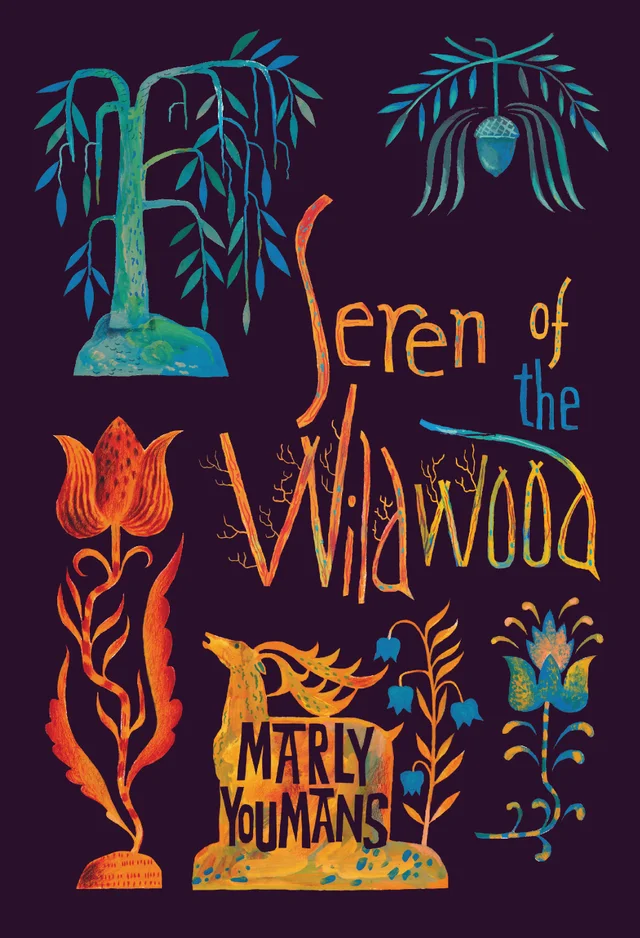
Ideally, the maker who chases the transcendentals would possess the “wise-heartedness” attributed to the artists of the tabernacle in Exodus, and so use the plait of reason, nous, and bodily senses to create good things that add to the sum of beauty and truth in the world. In my recent book, Seren of the Wildwood, the eponymous heroine achieves something of wise-heartedness after seven years of journeys, peril, and sorrows in Wildwood. Transformation leads to a place where she looks back and retrieves out from raw, tumultuous years a desire to make that streams with soulfulness, yet is grounded in earthly things. She thinks
. . . how in secrecy
She might become a golden bowl of flame
In an enchanted world—this one, a place
Of paradise and hell and mundane hours,
Where she could learn to make, to sing her tale
Around
A hearth and wildwood blaze
On nights in winter crowned
By the strange, striking lays
That hold mortals spellbound (72.)
A wise-hearted pursuit of the transcendentals: yes, I think we might call it artistic. Making, in this view, can be regarded as part of the fulfilling of human nature as formed in the image and likeness of God.
Wielding the imagination—making—in order to bring something worthy out of the generous profusion and welter of Creation is a simple though profound idea. Making does not need the complication of the Romantic vision of a suffering, unstable creator, nor does it need to proclaim Aestheticism’s “l’art pour l’art,” nor does it need to reject skill and embrace ugliness and transgression. It must not want to hammer out a message, for that is a work’s ruination. It must not try to cram everything the maker knows into the work. Making will fail if a maker does not honor the makers of the past and refuses to learn their craft and technique. Making will fail if a maker lets the unfairness of the present times and particularly in the world of the arts sap his spirit.
People with the eyes to see the naked emperors of our world—the Repha’im kings of our day—already know that making can miss its mark entirely in execution (as in weak mimesis, ungainly form, axe-grinding, obsession with originality, domination by politics, kitsch, determination to shock or repulse, inappropriate feeling) or in loveless purpose. We discern that missed mark in Genesis when Adam and Eve believe they can hide the shame of an act by stitching together leaves to make coverings for themselves. We see missed marks all around us, as in graffitied and decaying Brutalist architecture, in new Duchampian works influenced by his “readymades,” in lyrics of political hate, or in slatternly poems of worn-out transgression and shapelessness.
Such creations are reductive; they diminish beauty and truth, rather than reaching for “the rendering strange of reality in order to make it clearer” (Mosley 23.) When a visionary Traherne sees children as “moving jewels,” he grasps at the strangeness of a paradox, joining together the stillness of gems to the liveliness of children at play, and in doing so reveals the human form as precious, alive with precious, sparkling light and color, a part of the wider Creation that bathes him in glory. This is revelation, “the rendering strange” that summons up beauty and truth.
A maker should remember that we who make do not only make works that may be labeled as art. We also are co-making ourselves because whatever spirit that flows through a work as it is coming to fruition is also changing us for good or for ill. This, too, is part of what we may call the work of the imagination. Just as all humans ought to have a sound diet in order to thrive, we peculiar humans who have the desire to reach toward a higher making are best fed by strong, fine materials and purposes. And when we are done with a work, we are to yield to others what we have made out of the abundant stuff of Creation, which is our given, our great donnée.
What does that mean for us as viewers, listeners, readers, receivers of what is made? We cannot experience the essence of a maker through what he or she has made, but we can experience the energies of the person and the beauties of a work. Such an encounter can be, to some greater or lesser degree, an immersion in the flowing energies that birth art, and a kind of renewing of the thing made. (This way of looking is a small reflection of the large Orthodox idea that we cannot know God’s essence but can experience his energies or attributes, for that grace radiates from his essence and is revealed to the soul.) For, “the beautiful does not exist for the artist and poet alone—though these can find in it more poignant depths of meaning than other men—so the world of Reality exists for all; and all may participate in it, unite with it, according to their measure and to the strength and purity of their desire” (Underhill 13.)
And if the thing made by a poet or painter or choreographer or composer has captured enough of a sense of life, enough of the maker’s vital energies, it may continue to burn brightly and share its light with all for many years. It may even inspire and be generative for other makers, later in our linear time.
4.
MAKERS AND LITURGY
As we enter now the timeless mystery
The liturgy is a work of symbolic, participative art—it is a vessel, a form filled with adoration, spirit, and oblations meant to join human beings with the Trinity and the Divine Council, to feed men and women through “the holy and immortal mystery” of “our most essential bread,” filling them with divine, uncreated grace (Liturgy 40, 37.) Like a graft on an apple tree, a communicant is incorporated into the very body of Christ through the mystery of mysteries. In the Cherubic Hymn, those called to the Eucharist mystically “represent the Cherubim,” a reminder that they are one with the Divine Counsel. The liturgy lifts a fragment of Creation toward God, and sees that bread and wine transfigured. What is mortal touches the immortal; time and eternity greet each other. As then-Cardinal Joseph Ratzinger asserts in The Spirit of the Liturgy, “Christ himself is the bridge between time and eternity” (92.) Liturgy is a kind of procession over that bridge, into the strange light of the kingdom beyond.
So too, in a far more modest way, human making can result in a shape, a vessel that spills over with mortal mystery—the inspired blending of attention, spirit, and human energies. The influx of power that inspires the poet and embodies itself in words has long been compared to the Holy Spirit, and no writer knows where her muse comes from, or where it goes. A writer can fiddle and make something out of words, or she can be borne on the flood of spirit that clothes itself in her very thoughts and words. Such imaging forth is mystery, and a faint, fractal likeness to the God who speaks the world into being. To repeatedly participate in works of art as maker or enjoyer is, like that crossing of a holy bridge into another kingdom, a way to see more clearly. And like the liturgy, words and musical notes and dance can be seen as procession; they move through time toward their right closure.
Both religion and any art devoted to transcendental qualities are intensely countercultural for us, in a time when the world has been flattened, and all that exists for many has been reduced to material desires. Simultaneously, others have reached a Silicon-Valley hope-for-transcendence where some plot and hope that we can abandon the messiness of life and upload our minds into some technocratic cloud, where we may have faux material pleasures forevermore, or until the plug on the matrix is pulled. Others plan to have their frozen heads revived in some utopian and even more technology-mad age. Surely, we are already veering into that era; iPhones are glued to hands, AI-generated articles appear on Buzzfeed, bad ChatGPT poems pop up online, and we pause to glance at faux retro photographs from Midjourney. Whether pleasing or fleeing the flesh, life is dwindled down to material pleasures bodily felt, or to what can be known without the body, through some fabulous-seeming technology. As Ivan Ilyin warns in his 1937 Foundations of Christian Culture, “a people can stand on the absolute high point of technology and civilization, while in the arrest of spiritual culture (morality, science, art politics, and economy) they can be undergoing a period of degradation (19.)
Christianity and transcendentally-inclined art resist all reductionism and show by their very presence that this world is more than what it appears to be, that the symbolic landscape around us is constantly speaking to us: that it may be broken but is good, beautiful. For a Christian, every tree rooted in earth and pointed toward heaven can recall the cross, and all water the baptism of Christ. Our home planet is alive with energies and mystery.
We may look again to literature to find a more-than-seems world; the Gawain poet shows us how the strange and uncanny may crash into a gathering and drop its weird challenge. Rejoicing in human making, Keats gives to us the lovely “still unravish’d bride of quietness”: an urn. Dickinson joys in a route of evanescence, a wheel of emerald and cochineal: the hummingbird, bright spark of Creation. Vaughan recalls the time of his “Angel-infancy” when he felt “bright shoots of everlastingness.”
Lovely, revelatory images take us back to Traherne’s “Eternity was manifest in the Light of the Day, and something infinite behind everything appeared which talked with my expectation and moved my desire.” In a question that may serve as a response to Traherne’s outpouring of beauty and his sense of a subsequent fall into a “dirty world,” theologian Timothy Patitsas speaks of the necessity of beginning with beauty and pure feeling, and asks whether faith might not be “the memory of theophany, the continuing to launch towards that divine supernova when it seems to have gone dark” (96.)
The slow, powerful procession of the liturgy leads us to the light of Traherne’s “something infinite,” God the maker and giver, the sacrificer, the server, the one who loves his Creation. It teaches, hands down the apostolic faith, joins the human and divine together into one assembly, and allows what is mortal to brush against the infinite. For centuries, human makers mirrored those actions, serving the good of the thing made, passing down tradition and technique, seeking to learn and surpass their own previous work. The maker’s role began to show distinct signs of change during the Renaissance, a transition especially clear in painting, where artists moved from a focus on holiness to the fleshy and erotic in classical and even biblical subjects. The artist became a special, sensitive figure with a role set apart in the Romantic era, when poets and painters grasped after the sublime in nature. By the time we reach Surrealism, with its writers and painters who fulminate against societal structures of many sorts, “nothing is to be regarded as sacrosanct except the random destructive/creative will of the artist, who as a prime principle and presence eclipses God” (Jeffrey 300-301.)
Today we often find that tradition, skill and craft, beauty, and the good of the made thing are rejected—tendencies that may be most vividly exposed in our out-of-control art market for “avant-garde” painting and sculpture but are present in other branches of the arts. What can liturgy say to this?
A unified work of art proclaiming truth and beauty, liturgy upholds and offers the larger life that can be lived in Christ—a corrective to the trivialization, confusion, and technological chaos of the times. Liturgy simultaneously enlarges the maker’s conception of what life is and, thereby, the possibilities of art, while gifting us all with something our rebellious era heartily resists, a kind of modesty: knowledge of our own limits. That is, the liturgy shows useful ways of belonging: our place in family; our place in a community, past, present, and future; and our human limits, our place in the universe as creatures, part of the wider Creation, sharing in its fragility and its need to be stewarded. The journey of liturgy takes us to a place where we know our own modest place, yet can see Traherne’s “Eternity…manifest in the Light of the Day.”
A maker might yet find transformation in the presence of the Maker, and might come to honor not nature, an element outside of us, but Creation, of which she is a part.
O send out thy light and thy truth
___________
Marly Youman’s latest narrative poem Seren of the Wildwood may be purchased at Wiseblood Books: https://www.wisebloodbooks.com/store/p129/seren-of-the-wildwood-by-marly-youmans.html
Bibliography
Ilyin, Ivan. Foundations of christian culture. Translated by Nicholas Kotar, Waystone Press, 2019.
Jeffrey, David Lyle. In the Beauty of Holiness: Art and the Bible in Western Culture. William B. Eerdmans, 2017.
The Divine Liturgy of Saint Gregory the Great according to the usage of Cloud-Bearing Mountain Christian Retreat & Training Center and St. Herman of Alaska Church in the Catskills. 2023.
Maritain, Jacques. 1947. Art and scholasticism. Cluny Press, 2016.
Mosley, David Russell Being deified: poetry and fantasy on the path to god. Fortress Press, 2016.
Ratzinger, Joseph Cardinal. The spirit of the liturgy. Translated by John Saward, Ignatius Press, 2000.
Schmemann, Alexander. 1970. For the life of the world: sacraments and orthodoxy. St. Vladimir’s Seminary Press, 2018.
Stevens, Wallace. 1923. The collected poems of wallace stevens. Alfred A. Knopf, 1954.
Traherne, Thomas. “Centuries of meditation.” Seventeenth-century prose and poetry (4th ed), edited by Witherspoon, Alexander M. and Warnke, Frank J. Harcourt, Brace & World, 1963, 693-704.
Underhill, Evelyn. 1915. Practical Mysticism. Digireads.com Publishing, 2010.
Youmans, Marly. Seren of the wildwood. Wiseblood Books, 2023.