Roberto Estopiñán: Sculptor of God and Modernity


Editor’s Note: This is one of a series  that might be called “Forgotten Catholics”: Great artists, novelists, and poets who are not known as Catholics. In this essay you will meet one of the great 20th-century Latin American sculptors, a refugee from Communist Cuba, who in times of crisis turned to St. Ignatius’ examen exercise to ground himself in the presence of God. Surely a re-valuation of this man’s work in light of his faith is long overdue.

Roberto Gabriel Estopiñán (1921-2015), a Cuban sculptor who emigrated to exile in the United States not long after Fidel Castro’s revolution in 1959, is considered one of Latin America’s most important 20th-century artists.

His work, which includes drawings and prints as well as sculptures in wood and bronze, is in the collections of New York’s Museum of Modern Art, the Smithsonian’s American Art Museum, the Art Institute of Chicago, and the Detroit Institute of Art, among many locations. He is best known for his stark, disturbing renderings of political prisoners, the fruit of his own experiences as a dissident under both Castro and his predecessor, the dictator Fulgencio Batista, and for his representations of the female torso that can remind viewers of both classical statuary and the high-modern, abstractly elongated work of Henry Moore.
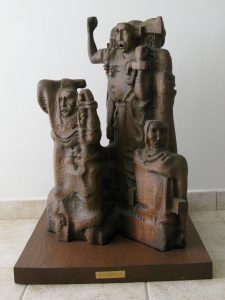
Estopiñán, Prisoners, c. 1964-1965

What is little known about Estopiñán is the centrality of his Catholic faith in both his life and his work.

He was born in Havana to a father from Asturias in northwest Spain and a mother of African descent. His father died when Roberto was seven years old; he and his younger brother were raised by their mother, a maternal uncle, and a grandmother. He attended the local public school but went to a Jesuit church near his home for catechism classes. His youthful exposure to the Jesuits would affect him for the rest of his life. In moments of political crisis he would turn to the examen, a five-step prayer technique that is part of St. Ignatius Loyola’s Spiritual Exercises and focuses on the laying out of the day’s events in the awareness of the presence of God. Besides being a means of discerning one’s relationship to God, the examen has a visual component—seeing in one’s mind how God is working in one’s life—and it informed Estopiñán’s sense of visual aesthetics and would serve as a compass in his art.
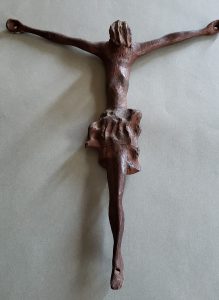
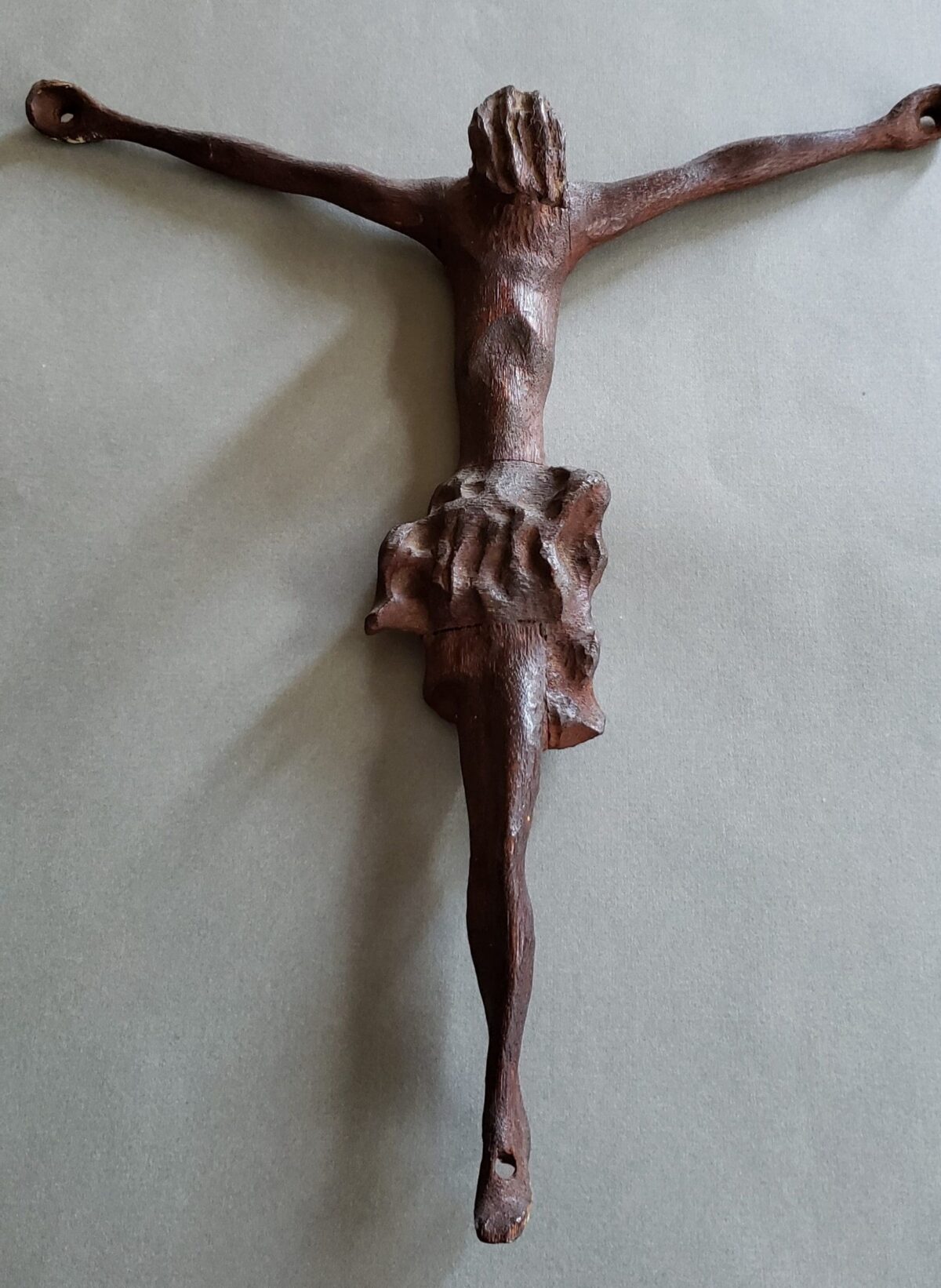
Estopiñán, Crucifixion, 1964

Estopiñán was something of a prodigy. At the age of fourteen, he won the first prize in drawing at the Centro Asturiano, a regional association for Cubans of Asturian descent. Shortly afterward he received special permission to enter the San Alejandro Academy of Fine Arts in Havana, which usually did not accept minors. At the school he was mentored first by its director, the painter Armando Menocal (1863-1941), then by the landscape artist Antonio Rodríguez Morey (1872-1967), and finally by Juan José Sicre (1898-1974), regarded as one of Cuba’s greatest sculptors. Sicre, a professor of sculpture at the Academy, had helped introduce European modernist art to Cuba, and from the 1930s through the 1950s had sculpted monumental figures in Havana of José Martí and other Cuban national heroes that stand to this day.  Estopiñán was first Sicre’s student, then his assistant, and, finally, his colleague for the next fifty years.

After graduating from San Alejandro in 1942, Estopiñán began simultaneously teaching art at the Ceiba del Agua School for young men, assisting Sicre in public art projects and developing his own artistic vision. He also traveled widely, to Mexico, New York, France, and Italy. From the late 1940s through the 1950s his sculpture evolved from an early neoclassical phase under the influence of Maillol to what he defined as “formalist humanism”: emphasizing the abstract beauty of the shapes he sculpted while not abandoning the human figure as the basis of his work. As the 1950s progressed he chose to carve in native Cuban woods as well as weld scraps of various metals. Although he was obviously influenced by Henry Moore and Julio González (1876-1942), a Spanish modernist sculptor whose iron weldings prefigured Estopiñán’s weldings in bronze, he had already created his own visual language.

Estopiñán, an avid reader, was preoccupied by the tensions of the Cold War, the aftereffects of the Nazi concentration camps, and the nuclear detonations that marked that era. There seemed to have been a historical breakdown—and this affected his ideas about people’s inner lives, as well as about what representing the human figure meant for artists after such historical breakdowns. He also felt a call to civic duty, especially after Batista’s coup of March 1952 established a military dictatorship that suspended Cuba’s constitution and most civil liberties in what had been a fragile democracy. Estopiñán joined the Directorio Revolucionario Estudiantil, an anticommunist, pro-democracy student-based organization that opposed the Batista regime.
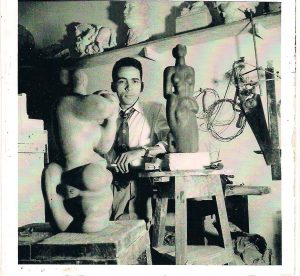
Estopiñán in Havana, 1952

During those years he read voraciously, from anti-communist writers on the left such as George Orwell, Ignazio Silone, and Arthur Koestler to Catholic philosophers such as Jacques Maritain and Étienne Gilson, as well as the poetry of Dante and Valéry.

He was deeply affected by Gilson’s 1955 Mellon lectures at the National Gallery that later became a book, Painting and Reality. Gilson argued that modern painting and sculpture did not aim to represent or imitate the natural world, but rather to add to it. For this reason, Gilson argued, modern art must be distinguished from mere “picturing”—producing images of actual or possible beings. The modern artist, according to Gilson, dismantles the unnecessarily descriptive, the overly decorative, and the merely illustrative, proposing instead an expressive language of the essential that is ultimately more spiritual than conventional depiction. Estopiñán decided to ground his aesthetic practice in Gilson’s theory of the “pure plastic elements” that characterized modern art, as well as Valéry’s definition of a classic: “a work that is measured by three standards: quantity, quality and variety.”

Throughout the 1950s Estopiñán simultaneously experimented formally with his sculpture and engaged in revolutionary acts against the Batista dictatorship. He participated in strikes, printed and delivered leaflets, and hid other revolutionaries on the run. He also began his arresting sculptures of political prisoners, winning prizes in national exhibitions. After the triumph of Castro’s revolution, the new regime rewarded his activism with diplomatic postings as a cultural attaché in Egypt, Czechoslovakia, and China. His experience in China while Mao Zedong carried out his program of forced collectivization of agriculture, suppression of Christian churches, and disastrous Great Leap Forward that resulted in tens of millions of deaths by famine, confirmed misgivings that he had already been experiencing about Cuba just a few weeks after Castro’s triumph.

“My intuition told me that instead of democracy, it was populism manipulated by a demagogue, that rule of law was not restored but replaced by the mob, and that the new regime was turning against the very Catholic church that had supported it,” Estopiñán told me an interview in 2014. “Communist China was simply the nightmare confirmed. I had seen the future and it was hell.”
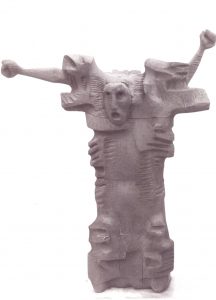
Estopiñán, Rebel Prisoner, 1965

Back in Cuba in early 1961, he encountered a brutally sectarian society where opposition was not tolerated. He saw only four choices for him: adapt and lose your soul; be imprisoned; be executed; or save your soul and your life by going into exile. He chose the latter.

On his way to a new diplomatic assignment in Honduras, he got off the plane in Tegulcigapa, went straight to the U.S. embassy, and requested asylum. In exile first in Miami, then in New York City, he was overcome by a profound existential crisis: How could he have been fooled? Why and how did a revolution meant to be democratic sour so quickly into totalitarianism? He tortured himself looking for an answer, but the Jesuit examen came to his rescue, as did Maritain and Camus.

He also made new discoveries among 20th-century writers who had found meaning in Christian faith: Simone Weil and Thomas Merton. A fellow Cuban exile, the Catholic poet Israel Rodríguez (1925-2008), lent him two books by contemporary Catholic theologians that trace the roots of the atheism and nihilism that undergird many modern ideologies: The Drama of Atheist Humanism by Henri de Lubac and The God Question and Modern Man by Hans Urs von Balthasar. Both were Jesuits, and both were energized by the Second Vatican Council and its efforts to revitalize the Catholic Church as a bulwark against modernity’s aggressive secularism while at the same time speaking a language that modernity would understand.

After arriving in exile in the midst of this crisis of faith and ideology, Estopiñán slowly started to draw and sculpt again. But he found his earlier formalism hollow and lacking. He began to study the Romanesque sculpture of twelfth-century Western Europe, in which the elongated stone figures of Christ and other biblical personages dramatized religious meaning, as well as the work of the German Expressionist sculptor Ernst Barlach (1870-1938), whose realistic but stylized woodcarvings and bronzes that recalled the sculptures of saints on the façades of Gothic cathedrals displayed intense spiritual yearnings. Estopiñán needed to return to the human figure in a less abstract manner, more directly, more emotionally, in the best tradition of religious art.
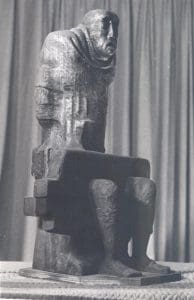
Estopiñán, Seated Prisoner, 1966

And he did.

Throughout the 1960s the human figure returned to Estopiñán’s art, often in specifically religious images. During this decade drawings and sculptures of crucifixes, crucifixions and Calvaries appeared by the dozens, together with his continuing representations of political prisoners along with warriors and exiles. Ranging from minimalistic simplicity to dramatic expressionism, these works communicate depth of feeling and religious intensity. Estopiñán viewed his challenge as translating his inner life, his faith, into these works. I believe he succeeded; those works are grounded in profound Christian belief.
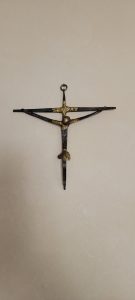
Estopiñán, Crucifix, 1962

Years later Estopiñán recalled: “I wanted to be true to myself, which meant being a modern artist and a believer. [Georges] Rouault and Barlach could do it, as well as abstractionists like [Alfred] Manessier and [Jean René] Bazaine. But so could artists who were not traditional believers, like Matisse in the chapel at Vence, like Germaine Richier’s crucifix in the church at Assy. I am not talking of grotesqueries like Le Corbusier’s church [an asymmetric concrete chapel with tiny windows erected in 1955 in Ronchamp, France], but something deep and clear and balanced.”

During the 1970s Estopiñán’s style shifted toward a more organic figuration, reflecting his desire to convey a synthesis between the human body and plant life. By the 1980s he had arrived at a new classicism, austere and simplified, in which the female torso whose renderings he became famous for and the political prisoners who continued to haunt him were his most constant themes, right through the end of his life.
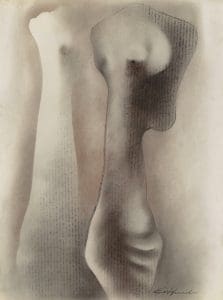
Estopiñán, Untitled (Double Female Torso), 1985

In 2002 Estopiñán and his wife, Carmina Benguría, a performance artist and fellow exile, moved from New York to Miami. There he produced two etchings with crucifixion themes, carved a study for what he called a “resurrection crucifix,” which he hoped to make life-size for a chapel, and made drawings for a sculpture of a Madonna and Child (now in the collection of the chapel at Xavier University in New Orleans) that he was not able to execute.

Shortly before his death at age 93 I interviewed him for the last time. I asked, “Tell me in one sentence what your work is about.” He responded, “It’s about opening up matter–stone, wood, metal–and allowing the Spirit to dwell. In the end, I am merely a tool of God.”
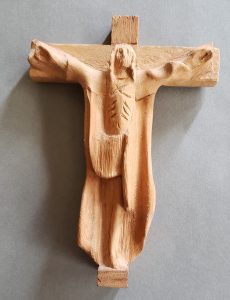
Estopiñán, Study for a Resurrection Crucifix, 2002

Roberto Estopiñán pursued an authentic modern art that was also reflective of his intense Catholic faith. Hans Urs von Balthasar had raised “the God question and modern man” as an expression of the difficulty of maintaining Christian belief in a radically secularized and nihilistic age. Estopiñán provided an answer.


Editor: We asked Alejandro Anreus, a professor of art at William Paterson University, for his biography. He replied: “I came into exile with my mother, grandmother, and two aunts in 1970 in the ‘Freedom Flights’ set up by the LBJ administration. I was short of being ten years old by less than a month. Through anti-Castro human rights activism, I met Estopinan when I was 16 years old, and he became a father figure for the rest of my life. He introduced me to Orwell, Silone, Weil, Merton, also anti-Leninist Marxists like Rosa Luxemburg and Victor Serge, since he was a strong believer that to counterattack Marxism, you need to read it and know it. I organized two major exhibitions of his work; an important three-person show in 1992 at the Montclair Art Museum, and a retrospective of his prints at the Jersey City Museum in 1996. In 2019 I edited a book of interviews ‘Roberto Estopinan. In His Own Words’ published by ARS Atelier Press in Guttenberg, NJ. I have a Ph.D. in art history from the Graduate Center, CUNY, and I am the author of 6 books on Latin American art, and over 60 catalog essays, articles, and reviews, which have appeared in Art Nexus, Commonweal, Third Text, Art Journal and the Madrid-based digital periodical Diario de Cuba.”

Gleaming Brightly: T.M. Doran’s Catholic Imagination (INTERVIEW)

Editor’s Note:

T.M. Doran is a professor of engineering at Lawrence Technological University, but in recent years he has also managed to become one of the most exciting voices in Catholic literature. His novels Circling the Turtle, Terrapin, and Iota represent a bold breadth of thematic storytelling, while his novel Toward the Gleam has launched an entirely new series of Tolkien-related literature which teams with life and originality. Mark Nowakowski is a rising young Catholic composer of sacred music and a professor of music technology at Kent State.  Listening to these two Catholic creators converse is fascinating and revealing.

Mark Nowakowski: Thanks, Mr. Doran, for your valuable time today! What are significant things about Mr. Doran which animate him as a person and an author?

T.M. Doran: I’ve been married to my beautiful wife for over 40 years. She’s too good for me, and I’m not the only one who says that. My areas of specialty are the environment and infrastructure, having worked on hundreds of such projects over the years, and these subjects sometimes seep into my stories. I’m keenly interested in history/archaeology, astrophysics, and the natural sciences, and always have a book on one of these subjects at hand.

Mark Nowakowski: When and why did you start writing fiction?

T.M Doran: I began composing short stories before I was ten. As a boy, I loved to read, and I suppose that inspired me to try my hand. Many of these early stories had surprise endings.

Mark Nowakowski: How do you think about the relationship of your faith (Catholicism) to your art?

T.M. Doran: I strive to compose rousing, provocative, mysterious stories that people want to read. A common subtext in my stories is that moral choices have transcendent meaning, and consequences that migrate like cracks on an ice-covered pond.

Modernist literature may go so far as to admit that choices produce physical or psychological consequences, but can’t admit that such choices are inherently good or bad, right or wrong. So modern literature often depicts human beings as intelligent animals programmed by natural processes to respond in predictable, albeit dramatic, ways.

Authors with religious faith have to be careful not to fall into a similar trap where good choices are always rewarded in this life and bad choices are always punished in the here and now. Another thing I love to explore in my stories is the arc of human growth, often in fits and starts, and never complete in this life: “The road goes ever on and on.”

Mark Nowakowski: I myself am not an author of fiction, but fiction for me was an introduction to creative thought. As a creative kid, I for instance drew incredible solace and inspiration from the idea that an old English professor like JRR Tolkien felt free to spend incredible amounts of time contemplating an imaginary world. Even today, when I compose music, having good fiction at my side is often a wellspring from which inspiration rises (your books too!). Did you experience anything like this as well, given that you were writing at such a young age? And given the importance of Tolkien to some of your published work, when did you discover this pivotal Catholic author?

T.M. Doran: I first read The Lord of the Rings in my early twenties as a fantasy/adventure story. Subsequently, I’ve read The Lord of the Rings and Tolkien’s connected stories as dense, interwoven sagas and songs of a mythological world, as a caution about the lure of pride and power, and more recently, as a stark depiction of human frailty and our utter dependence on grace.

The hero of Middle Earth, Frodo Baggins is the person best suited to take on that terrifying and daunting mission. But he could not have fulfilled his mission without the “assistance” of Gollum, and only mercy made it possible for Gollum to be present at that moment. As for Frodo, there is no peace for him in victory over the Enemy. Will a boat come for me at the end? is a deeply spiritual question many of us ask in times of trial.

Mark Nowakowski: One can often sense the (often hidden) Catholicity of a writer or filmmaker based on how they approach the idea of the consequence of our actions. It’s really a different way of seeing the world. Could you perhaps speak more to the question of moral choice in fiction?

TD: I perceive this Catholic perspective in many creative people: Vivaldi, Michelangelo, Eliot, O’Connor, Capra, Hitchcock, Brubeck, and Graham Greene among them.

I’ve read many reviews of Greene’s “The Quiet American” but none of these mark this essential last-page reflection of the atheistic journalist who contributed to the death of the American in the story: “I thought of the first day and Pyle sitting beside me at the Continental…Everything had gone right with me since he had died, but how I wished there existed someone to whom I could say that I was sorry.”

Greene’s journalist has a sense of honor and contrition, but without God honor falls prey to desires and fears: Where does one go to confess and receive forgiveness when there is no God?

Mark Nowakowski: Speaking of Tolkien: Toward the Gleam is so successful because you a create a plausible prehistory of Tolkien’s created world which seems like it must have actually happened. Then you spin another tale around it which, while imagined, adds another layer of “this could easily be real” to the formula. Was this your intent?

T.M. Doran: Yes, this is what I intended with Toward the Gleam, though I’m not sure I’d have the courage to compose and submit such a story today. Someone once said that I took the easy path by choosing a Tolkien-like character for Toward the Gleam, not realizing how difficult John Hill was to write.

Even though John Hill was a fictional character, I felt severely constrained by what I could do with him. Jan Skala in Iota and Lyle Stuart in The Lucifer Ego were much easier to write because of the creative freedom I enjoyed with these characters; I could let them go in directions I hadn’t expected when I embarked on these stories.

For Toward the Gleam, I spent countless days researching and matching the era of the world of the manuscript with known biology (flora and fauna), geography, climate, even anthropology, thus John Hill’s meetings with Pepin Hermann (who features again in The Lucifer Ego) and Greta Erickson (who features again in book three). As the prehistoric civilization continues to affect characters in Toward the Gleam, so characters in Toward the Gleam continue to affect characters and events in The Lucifer Ego and Kataklusmós.

“This could easily be real” plays out in book three, something I had intended even as I began composing Toward the Gleam fifteen years ago.

Mark Nowakowski: Music has taught me that great art has some manner of pre-existence, and that the great works feel “necessary” in their own existence. When I think of the poetic, I think of a stream of something objectively real and yet entirely beyond our capacity to describe, one into which artists are allowed to dip despite not understanding. Considering the way in which the palpable realism of Toward the Gleam built upon the palpable history of the Lord of the Rings, can you perhaps speak to something like this? Have you had such a sense or experience?

T.M. Doran: I love how you describe the creative experience. In my writing, I’ve experienced this powerful sense of Truth and Beauty beyond understanding, and I’ve also sensed it in music and visual art: An invitation to a larger life, you might say, a life one is permitted to glimpse/hear for brief periods of time, and something that remains with us as a deep yearning.

When I’m writing, I often listen to classical music or instrumental jazz, as music inspires and invigorates me. Without faith, these glimpses of an “unattainable” larger life can lead to despair, as has often occurred in the lives of artists.

Mark Nowakowski: You speak so lovingly of your wife. Was your own marriage perhaps a model for how you depicted the main character’s marriage in Toward the Gleam, especially the closing chapters when they are old?

T.M. Doran: For John Hill and E.M., I did indeed draw on what I had learned about the Tolkien marriage and on my own marriage, as both marriages involve strong-minded people who are deeply in love. When someone spends “incredible amounts of time contemplating an imaginary world (art that transcends the physical world)” it is bound to affect those close to them, even if not a matter of mortal danger as it was for John and E.M.

Mark Nowakowski: Earlier on you mention Iota. As somebody who visited Communist Poland and heard many stories of this world and subsequently later studied it as an adult, I was beyond struck by the accuracy of the “feeling” you achieved in this novel, set in a Soviet prison shortly after World War II. What lead you down the path to pick this setting for a story? And how did you pursue the particular tone and tenor of the Soviet ideological atmosphere?

T.M. Doran: I embarked with the thought of contrasting heroic mercy, which doesn’t come naturally to man, with man’s unspeakable brutality when he rejects the true God. Doing so in the cauldron of a detention camp with men representing many ways of looking at life, and a world with so much chaos, seemed an appropriate setting for these ideas to play out.

There were so many influences on this story. I read a great deal on the Soviet and Nazi ideologies and regimes: Shirer, Churchill, Gilbert, Weigel’s biography of St. John Paul II among them. I have a friend who escaped from Communist Czechoslovakia via North Africa. Solzhenitsyn’s and Pasternak’s writings. The character of Father Petrenko was influenced by the priest depicted in the German film, “The Ninth Day” who was released from Dachau for nine days with the expectation that if he cooperated with the Nazis he wouldn’t be returned to the camp.

Heroic mercy is the central thread in the story: Fr. Petrenko, the guard Piotr, and finally Drewniak. Then, there is the Major, who is full of schemes, illusions, petty aspirations, and yet so empty of life. And yes, I write about the diabolical influence that accompanies extreme depravity. These were my themes.

Mark Nowakowski: How far do you think we are from an Iota setting in America and the West?

T.M. Doran: The totalitarian inclination has persisted throughout history, and particularly in eras where religious faith has waned or is under attack. Soon after the American Revolution, many actually wanted to emulate the brutal radicalism that triumphed in France. They were unsuccessful but came closer to prevailing than many now realize.

For myself, I’m dumbfounded that, so soon after witnessing the viciousness of 20th-century totalitarian ideologies in action, there is so much ignorance (including the so-called highly educated) of where this path inevitably leads.

Sometimes, I feel like George Orwell must have felt in the 1940s. There’s an irreverent story told about Robert Conquest who unmasked Stalin’s brutality in his book, “The Great Terror” (1968) and was roundly criticized/ridiculed for it at the time. Years later, after the fall of the Soviet Union, when the book was reissued, Conquest was reported to have suggested the title: “I Told You So, You ###### Fools”. Irreverent but to the point.

Mark Nowakowski: What (if any) has been your experience with secular publishers?

T.M. Doran:  I’ve reached out to secular publishers/agents without success. I think it’s harder today to sell a story that goes against the strong secular/materialist spirit of today’s world. On the other hand, I don’t consider myself a strong enough writer (certainly not a Greene or O’Connor or Waugh) to be a good test. Furthermore, I don’t have the traditional education/experience of most authors, a significant shortcoming to many in the publishing world. I’m at peace with this today.

Mark Nowakowski: What can the world expect from T.M. Doran next?

T.M. Doran: I’m in the production phase for Kataklusmós, a story that completes the Toward the Gleam saga. A demanding story to write, 3-4 years composing, a dozen versions, lots of research, and challenging themes. I’m always working on several longer or shorter stories, but after Kataklusmós I may step back from publishing.

Mark Nowakowski: We wish you luck on that, sir, and hope that your step back from publishing may not be too long a hiatus. Thank you for your time today!

The Beha Option

Flannery O’Connor; Walker Percy; J.F. Powers: young Catholic novelists may dream of joining the pantheon of 20th century greats, openly Catholic, yet acknowledged by the literary world. But is that even possible any more?

In 2015 Piers Paul Read, a bestselling novelist published by international giant Bloomsbury, suggested that in the UK the answer was “no”:

A novel with an overtly Catholic theme now finds it difficult to find a British publisher: the fine English Catholic novelist Lucy Beckett, having failed to find a publisher in the UK, has her work published by Ignatius Press in San Francisco. My own novel, The Death of a Pope, was published in the U.S. by Ignatius after I was advised by my agent that it was too Catholic in content to be submitted for publication in the UK.

And so a parallel literary world, a “Catholic ghetto,” has emerged in recent years to cope with this new reality. In the US, journals like Dappled Things and Image and publishing houses like Ignatius, Wiseblood, Angelico, and Slant offer Catholic authors a forum, and, perhaps even more crucially, a sense of community. Inspired by Dana Gioia, Catholic scholars, novelists, and poets now gather biannually in cities across the US to celebrate and discuss the “Catholic Literary Imagination.”

This mini-Catholic literary revival is a wonderful thing, and I am one of its many grateful beneficiaries. But for many of us, some nagging doubts remain: shouldn’t we be trying to escape the Catholic ghetto? Shouldn’t we write novels of the human condition that appeal to all kinds of readers, and not just to fellow churchgoers?

I don’t know whether Christopher Beha’s new novel, The Index of Self-Destructive Acts, deliberately sets out to be such a Catholic novel for all seasons, but the results speak for themselves.

Set among the New York media and financial elite after the 2008 financial crisis, The Index is one of those ambitious, era-capturing sagas that recalls Tom Wolfe and Jonathan Franzen. But Beha’s new novel is also concerned with faith in a thoroughgoing way that’s increasingly rare.

Beha, a cradle Catholic who, after falling away, recently reverted, is the author of two previous novels and a 2010 memoir, The Whole Five Feet: What the Great Books Taught Me About Life, Death, and Pretty Much Everything Else, about the year he took off to read the Harvard Classics. In 2019 Beha was appointed the editor at Harper’s, which The New York Times, in reporting on his elevation, called “a hot seat in the world of highbrow journalism.”

Thus, he is a rare believer in the midst of the literary scene, bringing a Catholic perspective to a disenchanted world.

What that entails, exactly, is worth teasing out. The Index is not about what Beha has elsewhere termed “the Catholic experience.” True, the Doyle family at the heart of the book is Catholic. But they are hardly devout.

Kit, the mother, conceives of prayer as a form of relaxing meditation and doubts its power to act in the world. She goes to Mass every few months at best, and avoids the confessional.

By and large, Catholic practice doesn’t play a major role in the book, except when its patterns resurface under other guises in the behavior of former believers whose longing for meaning has outlived the lapse of their faith.

Instead of hagiography, Beha holds up a mirror in which readers full of ambitious dreams and little faith can see themselves flailing in self-deception, addiction, and sickness.

Walker Percy observed that the pleasure that a novel gives is equal to the recognition it inspires: the more the truth of our condition is revealed in the characters, the more we are elated to find our sins exposed and transcended. Beha puts his finger on the human tendency to tragicomic dysfunction, our compulsion to behave in ways no data-driven model would predict, often at great cost to ourselves and others.

This idea, a close cousin to the doctrine of original sin, is expressed in the titular “index,” a baseball stat that refers to hit batsmen, balks, and other pitching miscues. When Frank and “the kid” attend a ballgame, they argue about whether numbers capture the sport’s essence:

“Unbelievable,” Frank said. “We’re going to lose this game on a balk. How many of your computer simulations would you have to run before that happened?”

“Quite a few,” the kid admitted.

Like that hapless losing team, almost everyone in Beha’s novel meets with self-inflicted disgrace: Frank Doyle, a pundit and baseball writer, torpedoes his career by making offensive jokes on live television (the jokes are objectively offensive, rather than just perceived as such by an indignant mob, which anchors this episode firmly in 2009 rather than 2020). Journalist Sam Waxworth, despite his self-declared coolly rational worldview, embarks on an affair that puts his marriage and new job in jeopardy. Other characters get involved in shady schemes, hit “reply all” when they know they shouldn’t, or suffer illness or addiction without recognizing how weakened and enslaved they have become.

“Something in us wanted to be irrational,” Waxworth thinks at one point. “Something wanted, perhaps, to be wrong.”

Beha suggests these unforced errors are symptoms, the sort of glitch that happens when we don’t face up to our longing for eternity. “Nothing would be returned to us in the fullness of time, because time had no fullness,” Frank thinks despairingly on his deathbed. “It was a constant emptying.” He yearns for “a recording angel” to preserve the instants slipping away, the memories and unrealized projects that will die with him.

When a self-styled prophet named Herman Nash predicts the end of the world, Frank’s daughter Margo reflects that his “great mistake was not to believe that the world would come to an end, but to think that it wasn’t ending every day.” Camus once wrote something similar: “Do not wait for the Last Judgment. It takes place every day.”

Christianity, in Beha’s novel, is less an objective truth that breaks into our lives, compelling assent, than the answer to a subjective, existential predicament. Repeated self-sabotage breaks down trust in the sovereign individual self, leading to a quest—“the search,” as Walker Percy put it—for a transcendent lifeline. Similarly, Frank’s desire to have his life omnisciently transcribed is a sign that we are, inescapably, religious beings, straining toward the infinite.

Nash, the streetcorner preacher with an internet following, is a touchstone for these longings. When a benefactor launches a full-fledged PR campaign to push Nash’s forecast of doom, billboards and even a television spot during the World Series ask a portentous question: “What would you change if you knew it was all going to end? November 1, 2009, 10 o’clock?

Is Nash a lunatic or a con artist? He could be either. Yet his call to repentance resonates, both in our world and in Beha’s fictional one. We live in a culture which distracts us from—and lures us to—death, but the great questions nag at our hearts.

Frank Doyle’s son, Eddie, an Iraq War vet, is one of those touched by Nash’s message. Eddie first sees the preacher performing ad hoc baptisms in the fountain in Washington Square and ends up following him home. There Eddie makes an impromptu confession (“God’s power is greater than any sin,” Nash assures him) and is dunked in a bathtub:

Eddie had anticipated a sense of peace coming over him, but he felt instead exhilaration, as though he’d been walking around with weights on, and now that they had been removed he had a great store of energy and strength. Nash handed Eddie a towel from the rack by the sink, and he retreated discreetly from the room while Eddie dried off his face and hair. When he’d finished, Eddie didn’t go straight outside. He stayed by himself, seated on the edge of the bath, trying to catch his breath.

Eddie grew up Catholic. He has not so much repudiated the faith as found his parents’ lukewarm way of living it out unpersuasive. When eventually he moves in with Nash, the man’s preaching has “a kind of familiarity. So much of it was already somewhere inside of Eddie. He’d thought he’d left the church behind when he went off to college, but thirteen years of Catholic school had left more traces than he’d imagined. He felt as though he were coming home, rather than embarking on an entirely new practice.”

A true seeker, Eddie is humble enough to admit his desire for God, and willing to give of himself. He simply never encountered models of holiness who could make the Christian message vibrant and plausible. His scripture-quoting roommate turns out to be less reliable than anticipated, but through him Eddie rediscovers the power of the sacraments, if only in ersatz form.

Suffering from both crippling jealousy and a strange physical ailment, Waxworth’s wife Lucy also turns to a healer. Someone presses a flyer into her hand on the street: “Ms. Clara Luna says: DON’T GIVE UP!! […] SHE […] can bring the SPIRIT OF RELEASE and CONTROL […] There is a Doctor of all doctors. WHEN YOUR CASE SEEMS HOPELESS THERE IS A REMEDY FOR YOU.

Lit by candles and fragrant with incense, Lucy’s awkward, comical visit with Clara Luna isn’t as satirical as it sounds. Rather than mocking alternative liturgies, Beha seems to be asking what their existence says about our craving for sacramental absolution.

Nash ends up being wrong, of course—the world does not end. But his prophecy comes true individually for Frank, Kit, Eddie, and the rest.

At first, these minor apocalypses produce a rosy foretaste of resolution. Disaster thickens family bonds. Margo and Sam experience moments of clarity—they seem to have come through a decisive ordeal. Yet just when the story seems poised to leave at least some characters sitting pretty, Beha resists the temptation to tidiness. Fortunes are lost; redemptive arcs unravel; couples split up, in spite of rectified intentions and sincere apologies.

While this life offers many good things, ultimate happiness is not among them.

Beha’s ability to reveal upward yearnings and sacramental patterns, as well as his refusal of what Joshua Hren has called “easy exits,” bespeaks a Catholic sensibility no less palpable for being largely implicit. What is missing here, perhaps, is confidence in what lies beyond the secular, a sense that not only do we long for the infinite, but that the infinite also longs for us.

In our days of diversity quotas and cancel culture, we need a “Benedict Option,” wherein Catholic talent can stretch its limbs freely. But to ensure the work is not only well-intentioned but also really good, we shouldn’t shy from the standard of the “Beha Option,” which wins readers who don’t necessarily share the author’s faith. No work can succeed, commercially but also aesthetically, unless it touches what all of us share: the inescapable human condition.

For today’s believing writer, Beha’s achievement in The Index of Self-Destructive Acts strikes me as an unavoidable reference point.

Trevor Cribben Merrill is the author of a novel, Minor Indignities (Wiseblood Books, 2020). His writing has appeared in The University Bookman, Dappled Things, and The American Conservative, among others.

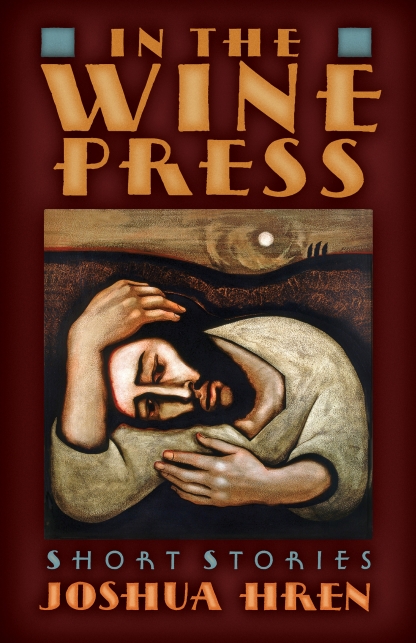
Joshua Hren’s In The Wine Press: ‘Not for Radical Autonomy But For Communion and Transcendence’

In a recent essay Joseph Bottum pins the novel’s decline less on screens and social media than on metaphysical flatness. Much contemporary fiction either inhabits a character at close range or—in a more recent trend—zooms out to offer 30,000-foot omniscience. But at its best the art of fiction is both subjective and objective, getting into the characters’ heads and hearts while detaching us enough to confer a superior understanding. To achieve this depth, however, requires both a sense of the distortions of our age and a clear vision of the good life.

Few writers have either; fewer still possess both. Joshua Hren (editor of Wiseblood Books which is about to publish my novel Minor Indignities) is one of those who both sees clearly and is equipped to interpret what he sees.  His new collection takes us to the heart of dysfunctions—familial, clerical, intellectual—that plague our world while offering a revivifying sanity.

“Horseradish,” the opening story, is just shy of twenty pages. It presents a nighttime conversation between a father and his son on the rickety porch they built together. They’ve gone out to watch a comet, but as they stand physically “closer than they had been in years” they have the sort of serious, awkward exchange that most of us in the same position would do our best to flee. The son goes on the attack, forcing his dad to confront past abdications, but while their oversharing dredges up memories, some fond (the father grew up in what he recalls with pride as the “Slovenian ghetto”), others troubling, what eventually emerges is a more recent trauma: the son is there because he decamped after losing his temper with his wife and hurling a salt shaker through a window.

With this revelation, the see-saw tilts. The father takes control, admonishing and firm, but also paternally tender:

“I maybe never gave you enough. Affection,” he said.

“Dad, “ I said. “Oče.”

“Don’t,” he commanded me, cuffing my wrist with his hand. “Listen. Maybe I never did. But listen. I don’t want to hear how you never touched your wife like that. How you never laid your hands on her. I’m not interested too much in what you didn’t do. But I’ve been wondering one thing for a long time. Do you ever? Touch her. Why am I going to die without ever having held a grandchild? Are you two…”

My arms stuck out like a poorly-clad scarecrow, and I swear I saw him look up, a terse search of the sky, as though he hoped a bird would blind me with dung for failing to give him descendants.

There may be nothing so tricky to represent without mawkishness as the fall of barriers between two people so close as to make intimacy unbearable. By story’s end Hren has given us reconciliation without sentimentality, and symbols—the porch as unstable artifact of the father-son bond, the once-in-a-lifetime comet mirroring a brief window for genuine connection—that work on every level.

Another story, “Old Blood,” reaches toward reconciliation with similar tact: a school shooter’s almost-but-not-quite-girlfriend phones her Vietnam vet uncle in a nursing home to invite him to move in with her. She is spurred to this act of charity by loneliness, yes, but above all by reflecting on what could have driven her former online paramour to such evil. If in his previous collection Hren trod ground more familiar to partisans of Catholic fiction—the spiritual physics of self-mortification—here he telegraphs his intentions less, and shows more restraint. The action of grace is there, but not so much in the parting of the sea within the story’s frame as in the reader’s awareness that blocked exits in the here-and-now point to liberations that fiction most successfully represents discreetly, or even a contrario.

In “Work of Human Hands,” a widow seeks healing for her twelve-year-old son, Rudy, sexually abused by their parish priest, whose predations are described with excruciating but muted realism. We are then privy to Rudy’s encounter with the virtuous but decrepit Father Sun, a wheelchair-bound traditionalist (he has Mosebach’s Heresy of Formlessness by his bedside) who nods off in mid-conversation before snapping awake again to lay hands on the boy in a very different sense, adding another layer to the story’s title:

Balancing his body with his good arm, Father searched the bureau somewhat frantically until, nodding, he heaved out an old black book whose edges were light red like the priest’s face. Father Sun’s eyes flitted fiercely across the pages. His shoulders scrunched up and his neck shot out as he searched. Peering into a prayer at the very end, he nodded again and mouthed the words, ignoring the absence of sound, and in the naked room his rasps came out loud. He pressed his hands against the boy’s head, rubbing in the water he had sprinkled there, holding his hands against Rudy’s temples until the trembling in his hands ceased, then until the boy stopped shaking.

Finally, we eavesdrop on the offending priest’s own fantasies of doing penance through bloody, self-inflicted violence—followed by his realization that a first, faint stirring of justice could be achieved only by expressing contrition directly to his victims. The story’s use of multiple viewpoints offers a sense of orchestration and design.

There is maturity in the idea running through In the Wine Press that unspectacular words and gestures contain still greater spiritual power than needed but secondary acts of physical penance. The collection’s title suggests that providence will in the course of our everyday lives devise mortifications more effective than any we invent for ourselves. And it is under the pressure they place on us that drops of precious mercy are squeezed out of our otherwise hardened hearts.

Two of Hren’s stories—“Some Other Exit” and “Their Fire is Not Quenched”—feature adolescents in rebellion. One rages against a world of spreadsheets, self-help mantras, and pyramid schemes, doctoring his Harvard t-shirt to read “Hatred” and fronting a rock band called CORIOLANUS; the other dreams of cold political mastery and a plum job with a Washington think tank but lives with his parents, whose piety he despises. Other stories address the cover-up of clerical misdeeds, the innocence tarnished by pornography, and the damage casually inflicted by political ambition. Such are the subjects—at once weighty and ticklish—Hren has taken on. We’d rather look away, but his ethic as a writer is to cut through discomfort and depression with brutal honesty. As St. Thomas knew, contemplating the truth is among the best remedies for sadness.

Set in a corner store, the collection’s last story, “Proof of the Immortality of the Soul, with Reference to Beeswax Soap,” is a high-degree-of-difficulty piece that blurs the lines between prose and poetry:

Look a broomstick-thin man with two packs of cigars bulging out of his chest, pockets fatter than his frame, man he’s chewing on his sleeves, stepping up to the clerk who’ll be here until close, squinting under the beams that illumine the things that his ma clicked her tongue at as he flicked up his finger. But he still can’t quite shake that sharp tsk when he sees unclad ladies on the covers of shellacked magazines and the color-code condoms claiming pleasures and ease and he clings, cleaves condemned, to the counter’s cliff-edge like a cold-blood-caught criminal on apocalypse eve, feeling heat if you will like a fried nervous chicken with five bona fide furies biting after his heels.

As the scene shifts to a smelly church bathroom,  physical grime is likened to the buildup of sin on the soul, and you feel genuinely elated when “you” (the story is told in the second person) ends up joining a confession line. As for Hren’s method of delivering impressions in a relentless staccato, with plentiful alliteration—is it over the top? Yes. Does it work? Yes, at least for this story.

Most of the book, however, relies on more familiar narrative techniques and requires only as much investment from the reader as the author can pay back, with interest, in the currency of storytelling pleasure. This, I think, is the route forward for Catholic writers: mastery of craft united with a vision informed by faith, but never the latter without the former—and the former above all.

The Czech writer Josef Skvorecky once said that all great novels are thesis novels—and they all have the same thesis. As liberalism’s success breeds its own failure, we need works that lead our society to reexamine its basic anthropological premises, reminding us that we are wired not for radical autonomy but for communion and transcendence. Of course, such works make their point not through abstract statements but by artfully selecting details, characters, actions. Any attempt at paraphrase falls short—their intellectual meaning is accessible only by experiencing them in their entirety. While some recent novels published by mainstream houses meet this description (Christopher Beha’s Index of Self-Destructive Acts comes to mind), in the end we may have to rebuild our literary culture from the ground up.

It is with fiction like Joshua Hren’s that we can undertake this essential task.

Trevor Cribben Merrill’s reviews and essays have appeared in The University Bookman, Dappled Things, and The American Conservative, among others.

The Wounded Surgeon: Suffering the Little Children in Dana Gioia’s “Special Treatments Ward”

But Jesus said to them: “Suffer the little children, and forbid them not to come to me: for the kingdom of heaven is for such.”

—Matthew 19:14

“Evil,” wrote Flannery O’Connor, “is not a problem to be solved but a mystery to be endured.” Pains can either be borne in emulation of Christ crucified or they can be borne bitterly, like arbitrary afflictions lacking meaning and mystery.

Dana Gioia, the poet and public intellectual who has done more than any other living figure to galvanize the Catholic literary tradition, prompts this either / or in a number of his poems, not a few of which unveil him as no stranger to suffering. Gioia, once a business executive and former Chairman of the National Endowment for the Arts, acquired a keen knowledge of loss when in December of 1987 his four-month-old son Michael Jasper died of sudden infant death syndrome.

As he said after the death, “I saw poetry differently. Writing took on a spiritual urgency I had never experienced before.” Often this urgency leads us through hellish landscapes, lairs of despair. And yet, as Janet McCann observes, if Gioia’s poetry can be dark, it “isn’t nihilistic, nor is it unforgiving.” “Special Treatments Ward”  is one striking example.  In this poem, the narrator’s reduced state leaves the reader rattled; the suffering of innocents has left him lost. Taken as a whole, however, the poem elevates us above this world’s ceiling, ameliorating our losses through the dead children’s healing.

So this is where the children come to die,
hidden on the hospital’s highest floor.
They wear their bandages like uniforms
and pull their IV rigs along the hall
with slow and careful steps. Or bald and pale,
they lie in bright pajamas on their beds,
watching another world on a screen.

Read More about The Wounded Surgeon: Suffering the Little Children in Dana Gioia’s “Special Treatments Ward”

“Gloriosa Dicta Sunt De Te”

“Gloriosa Dicta Sunt De Te”

When we think of our land, we often think
Of those bare wilds waiting to be claimed,
As if it were a force of will alone
That made it ours, and mixing sweat with dust,
Its matter with our labor, what was nothing
Becomes somehow a thing that might be loved,
Be built upon and put to use, defended.
I have been one of those who stand in awe
Of pioneers and makers of great things,
Of those who slice a sharp spade through thick roots.


How much less often do we think of land
Not as the stuff lain idle to be grabbed,
But as a stage, a platform where we stand.
Not empty, for upon it we depend;
Not arbitrary, for it’s all been formed
So long before our dawning that we sense
A hundred histories have gone to dust
Deepening the hillsides, carving out its rivers.
How rarely do we think of it as place,
As scene where destinies are shaped by grace.


So, in my childhood, the lakeside chapel,
Modest and plain, shaped like a wooden boat,
Where I heard Mass in summertime, was named
For St. de Porres, and he prayed for us,
Though all I knew about him was his name.
And so, in Maryland and San Francisco,
The place is named not for what we have done there,
But for what we hope we might still receive:
The walls of city, home, and church designed
Just to contain what grace will fill them with.


So, sitting in my classroom, as a boy,
The school named for Saint Thomas of Aquino,
I heard my teacher speak of Michigan,
Of Joliet, Doblan, and Père Marquette.
And, telling us their stories, she unfolded
Another history than the one we’re used to.
One in which, by the Holy Spirit’s grace,
Men slipped along the wilderness’s veins,
Bearing such names as, hitherto unspoken,
Might be, to consecrate a land of saints.


For, naming is a kind of grace not deed.
It clarifies what was not understood,
Such that, what outwardly remains the same
Becomes itself more fully and more truly,
Transformed within by the articulate light.
To lay above a saint’s bones on the shore;
To pray the words that saints have prayed before;
To name and know what comes forth from the darkness;
These are the occupations of a place,
Its purpose and its glory and its grace.


Editor’s Note: This is part 5 from James Matthew Wilson’s new song cycle, The River of the Immaculate Conception which may be purchased from Wiseblood Books. The title translates as “Glorious Things Have Been Said of You.” This is first a quotation from Psalm 87, where it refers to “The City of God.” But it is also a quotation from a Gregorian chant celebrating the Immaculate Conception: “Glorious things have been proclaimed concerning you, O Mary; for the Almighty has
done marvelous things on your behalf.”

Subscribe to Our Emails