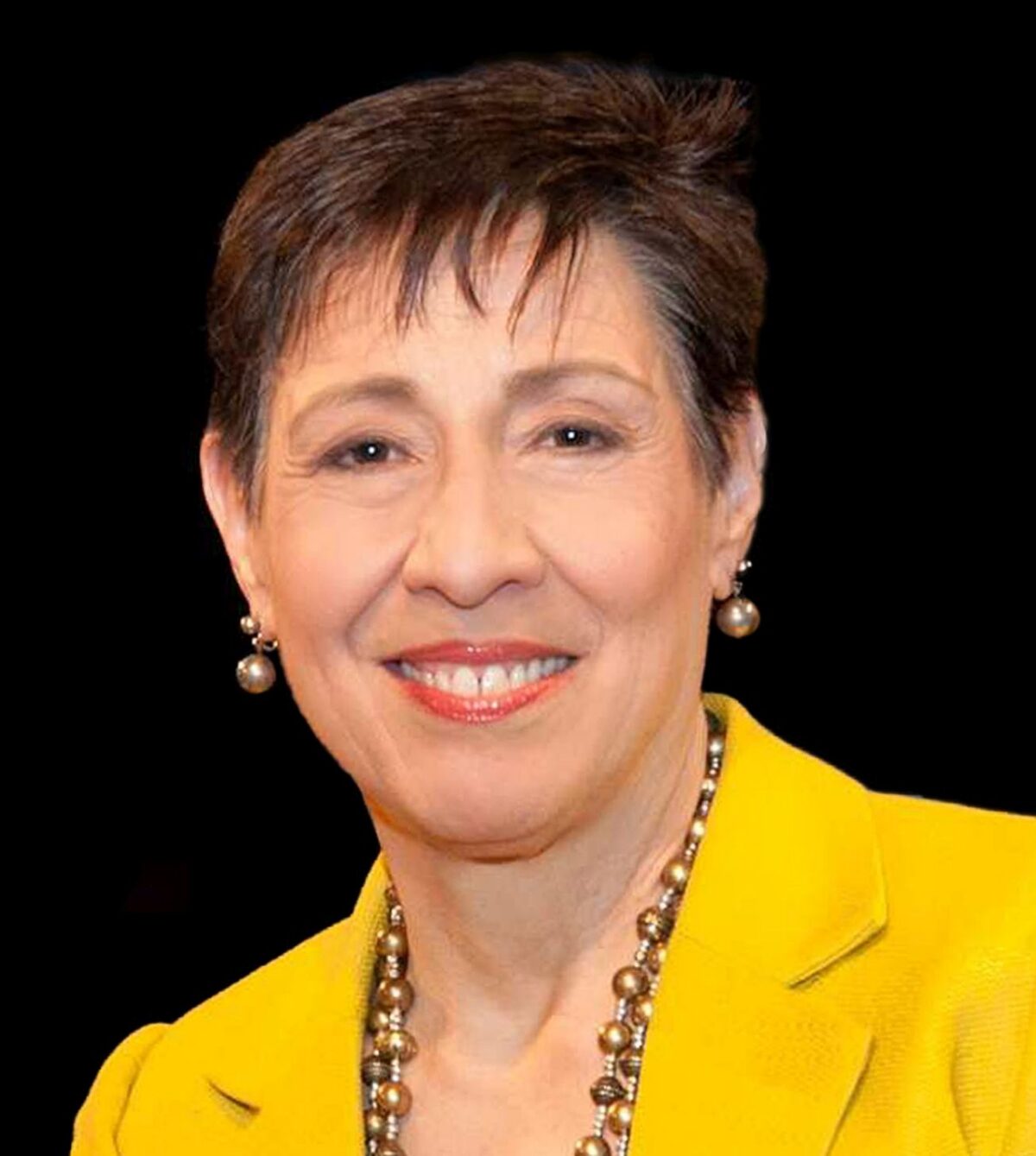
Sarah Cortez is known as “the cop poet.” One of her favorite photos of herself features a mischievously smiling Cortez showing off her gun in its shoulder holster.
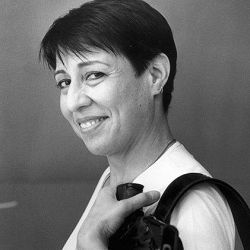
Her work includes short stories, essays, and a memoir as well as poetry, and much of it centers around her later-life career as a police officer in her native Houston. (She graduated from that city’s police academy in 1993.) Her first collection of poetry, How to Undress a Cop (2000), published by Arte Público Press, was described by Publisher’s Weekly as “[b]y turns erotic, tender, and gritty” and “powerfully direct.” The poems, some of which had such titles as “Rosie Working Plain Clothes” and “Christmas With the Vice Squad,” bore witness to another of her literary strengths: a sly and observant sense of humor.
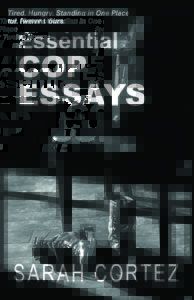
Her latest collection, Tired, Hungry, Standing in One Spot for Twelve Hours: Essential Cop Essays (2018) won a 2019 award from the National Federation of Press Women. In that book Cortez wrote of “the endless boredoms and dirt” and the “tiny, stark terrors” of police work, but also the “hidden rewards of intense camaraderie, sense of mission, and the fulfillments of justice and duty.” Her 2013 collection of poems about policing, Cold Blue Steel, was praised by Booklist for displaying “a frank language in sharp lyrics charged with weary passion.”
Cortez’s literary—and above all, religious—roots run deep. After graduating from Rice University with honors (majoring in psychology and religion) in 1972, she taught herself ancient Greek and obtained a master’s degree in classics from the University of Texas-Austin, and then another master’s degree, in accounting, from the University of Houston, which launched a corporate career that paid well but never satisfied her.
After four years as a full-time officer on the Houston police force specializing in sexual-assault investigations, she moved to reserve-officer status in order to devote herself to a literary career: writing, editing, and teaching creative writing courses as well as promoting the experiences of the Latino-Americans of Texas.
Not long after taking up police work, she returned to the practice of the childhood Catholic faith in which she was raised.
Sarah Cortez is currently the founder and president of Catholic Literary Arts a Houston-based nonprofit that offers workshops in spiritual journaling, poetry and fiction writing and hosts an annual Fearless Catholic Writers Camp for high school students. Find out more about these and other Cortez adventures at CatholicLiteraryArts.org.
Charlotte Allen: Did you start out just writing at night, sort of like Joseph Wambaugh on his first novel?
Sarah Cortez: I started writing before I became a police officer. I was first published as a fiction writer, in the short story. A few years into that, as my first marriage started failing, when I sat down to write, instead of prose, poetry came out.
I only wrote poetry for maybe the next ten to twelve years, so it was during that period that I finished the police academy and became a full-time police officer.
Charlotte Allen: How long did this go on before you decided to try to get published—or did you just decide right away and start sending your stuff off?
Sarah Cortez: Well, I had already been published in fiction. It took several years of doing full-time police work before I started writing about it, because I was then writing about my family, my large, crazy Latino family. I hesitated to write about police work. The majority of police work is dirty and boring. It’s not dramatic and certainly not sexy. That’s a Hollywood myth. But there aren’t too many police officer-poets, so once people started seeing the work, I got a great deal of interest.
Once I started writing the poems and once I won my first award in 1999, many were interested because the poems were written from a street cop’s perspective. I suppose they had an innate veracity and realism that people were attracted to; also, because they were about calls for service, about getting shot at, what is it like wearing a ballistic vest, and so forth. So, people knew from the subject matter of some of these poems what I did.
Charlotte Allen: One might think that no one really cares about poets, but in fact that seemed not to be the case in your case.
Sarah Cortez: In fact, I got my first offer for a book without even asking for it. I just got it in the mail from a very wonderful publisher.
It was one of the most gorgeous meetings, ordained by the Holy Spirit. I was standing in the University of Houston Parking lot, doing extra duty as a full-time police officer, when who should come out of the building next to the lot but Nicolás Kanellos, award-winning professor of Hispanic Studies at the University of Houston and director of Arte Público Press?
I recognized him. I knew his face. I introduced myself and said, “I just want to tell you: I admire you work and I’ve followed your achievements, and I want to congratulate you.” First, he says “Thank you.” And then he asks that magical question every writer is waiting for the publisher to ask: “And do you write?”
I could have melted into a little puddle on the asphalt. And I said, “Yes, sir.” And he said, “What do you write?” And I said, “Poetry.” And he said, “Well, send me some.”
That began a year and a half of correspondence with this fine scholar and man. I would get home from evening shift at 11 p.m. or 10 p.m. and I would write for 20 minutes or 30 minutes almost every night. I would finish, revise and revise, and I’d send him a group of poems and a snailmail letter, and he would send me a letter back, e.g.: “Well this one is great. I like this one, but I didn’t like the last stanza. It’s too elegiac,”
And then after a while, he wrote me a letter and said, “Well, I think you have enough poems for a book. Do you want a book with us?”
He’s an amazing scholar, an amazing publisher, and I think it shows his character. I was just an unknown cop in a parking lot. He didn’t know about me. I hadn’t won my first big award yet.
And just out of the goodness of his heart, he took the time to have this year-and-a-half correspondence with me.
Charlotte Allen: What has made you a Catholic writer?
Sarah Cortez: Well, after 35 years of being gone from the Catholic Church, I came back about ten years ago. I love being Catholic. There’s so much joy and so much meaning for me in the sacramental life of the Church, in trying to live up to the call of the Gospel. I would never claim to do a very good job at it. I’m always trying to get better at doing that. But I want to share that joy through my writing. I want to appreciate the writing of others. And at this point in my literary career I want to be known as a Catholic writer. It’s very important to me.
Charlotte Allen: Were you baptized Catholic?
Sarah Cortez: Yes. My mother was Catholic. My dad was baptized early on, but his mother died when he was five, and his father remarried a non-Catholic.
My dad was born in 1917. Both my mother’s and my father’s families came to rural south Texas from Spain in the 19th century, farmers and fishermen. Both families were just struggling. They were struggling to eat and to stay alive. My dad’s mom died in one of the great influenza epidemics of the early 20th century. So, my dad really didn’t have much of a childhood, and he didn’t have any faith instruction in his childhood. He never opposed my mother going to church, and eventually he started going to church with us. After I left to go to college, he actually started fully participating in the Catholic faith.
Charlotte Allen: And what about you? It sounds to me as though just as your father was reentering the faith, you were leaving it.
Sarah Cortez: Yes, I went to college, and like most college kids decided to worship in the chapel of convenience. And then I had my corporate career. And then I left corporate America to go into police work.
Charlotte Allen: Why police work as opposed to anything else?
Sarah Cortez: I fell in love it like you fall in love with a man. Being faced with unmitigated insanity—because the streets are insane. These TV shows don’t even begin to get it right. The insanity doesn’t even have to be dangerous, although it oftentimes is. It’s just a different world. It’s not the world of plush couches in offices. A crazy person knifes you, and you have a knife wound. Or a sane person knifes you, and you still have a knife wound.
But I also fell in love with the mission, which is public safety, the public good, the common good. It’s no longer fashionable to believe in the common good or what’s good for society as a whole among certain people, but to be an effective public servant you must completely identify with the mission, which is being willing to die for people that you don’t even know.
That’s true whether you’re a firefighter, EMS, a police officer, or military. My husband is a retired fireman. There are very few people in policing or firefighting whom I have ever met in 25 years who haven’t come from a Christian background. Even if they’re not “practicing.” They still come from that core set of assumptions about humanity that you find in the Christian and especially Catholic worldview.
Charlotte Allen: Are there police officers who just haven’t come to terms with death and find themselves unable to continue? They think that they will never die, or people on their watch aren’t going to die?
Sarah Cortez: I’ll put it the way a good friend of mine in my department put it: These young kids who want to become a cop—they don’t really think about it, but they want to be a Care Bear. They get in, and they go through the academy, and they do fine, and they qualify with a firearm and they get a job. And then they find out that a lot of people in the world, especially now, regrettably in America, hate them! You wear a blue shirt? Hey, we hate you! You wear a blue shirt—you’re a racist! With no data, no evidence, no nothing, people just hate them. And it freaks them out, because they want to be a Care Bear.
I went into police work at an older age with my eyes open: OK, some people are going to hate me, some people are going to like me, most people are not going to care about me. I’m hired to do a job, so I’m going to do my job. That person likes me, that person hates me. I don’t know if the younger ones, just because our society has changed so much, understand that.
Charlotte Allen: They hope to be heroes and find out that most of it isn’t very heroic on a day-to-day basis.
Sarah Cortez: It’s dirty. You may lose your life to save somebody else’s life—and they hate cops. But that’s part of the sacramental nature about it.
Charlotte Allen: Is that something that led you back to the church, back to practicing your faith?
Sarah Cortez: Well, it led me to a much stronger faith, because you really must come to some sort of peace with the idea of death before you go to the police academy. If you don’t. you’re really stupid. I was older than the traditional candidate. I was around 40 when I went to the police academy. Most people are in their twenties. But you must know: OK, I’m willing to die. I know what death is, and it’s OK. For most people, that requires belief in God. Not everybody, obviously.
So, it got me closer to my initial belief, but at that point I still wasn’t willing to mitigate belief by action. It was, I believe in God, yeah, but I’m not willing to do the right thing.
But I did have strongly in my mind that if I ever married a second time, that second marriage had to be a sacramental marriage in the Catholic Church. So, when my husband asked me to marry him, I had to get my act in order.
The priest recommended that both my husband and I go through RCIA. And that was actually pretty cool, because when I left the church, I was all of 18 or 19, so I had a pretty simplistic understanding of the Catholic faith. After going through RCIA one of my favorite things to read now is moral theology. I love trying to extend my intellectual grasp of the religion, although religion is undoubtedly lived out in human interactions, not lived out in reading books. My husband asked me to get married, we went through RCIA, I did my confession, and boom! Here I am today!
I love St. John Paul II. I remember reading his answer to the question: What’s the basis of hope in today’s world? That’s something a cop has to think about: how do we believe in the best, even after seeing the worst?
I have seen things, or read them in reports, or seen crime-scene photographs that are some of the worst things that a human can do. Yet I am constantly called upon by the requirements of my job and my calling to believe the best I can believe in everybody. If I’m here to save your life as a police officer, I have to believe that your life is worth saving. But I also know that someone who looks exactly like you maybe she tortured her dog.
Police work for me becomes an extremely fascinating crucible to hold all of society’s burning ashes of sheer evil and meanness without it burning me up and still believe in the best in everybody.
Charlotte Allen: How do you avoid cynicism?
Sarah Cortez: The key is realizing that when you know the difference between good and evil then you know that that capacity to do good and evil is inside of everybody: Some people live it out more to the sheep or more to the goats. That is human nature since the Fall. Faith shores you up despite knowledge, so knowledge doesn’t destroy you.
You become that crucible. The crucible cannot break. The crucible has got to hold everything, it’s got to hold it until it gets molten enough to mix together so you can get what the dross turns into, which is the gold, the treasure. So, you’ve got to be able to hold all of this inside of you without breaking.
Charlotte Allen: When you returned to the faith, was this a kind of gradual process, or did it all just happen overnight?
Sarah Cortez: It was gradual, but it was clear. What I had to make it through was the fear. And I think probably for myself as a human being and for many other human beings as well, you’ve to make it through the fear to get to clarity.
Charlotte Allen: What were you afraid of?
Sarah Cortez: Can you imagine going to confession after 35 years? That right there was probably the biggest stumbling-block.
As a child, I confessed things like lying to my mom, being smart-off to my mom. Even so, back then I was always very scared to go to confessional. After 35 years of adult life, I was terrified. But I just regret having waited so long, because there have been so many times that I could have been dead. I woke up twice after falling asleep driving—I opened my eyes and I found I was headed straight to a cement wall. So, if my guardian angel or the Holy Spirit or whatever it was hadn’t awakened me, I would have just driven into the cement wall.
Charlotte Allen: How does your Catholicism works its way into your writing?
Sarah Cortez: Sometimes it works its way into my writing as prayers. I like to write prayers. One poem is the prayer of a sexual-assault investigator, and it came from a case of mine. That was one of my police specialties: sexual assault. I have another prayer that actually came from one of my husband’s cases. He was an arson investigator, so: Prayer of an Arson Investigator.
I love writing prayers. I also love writing about the Mysteries of the Rosary, the great sacred mysteries of the Truth: the Incarnation, transubstantiation, the Immaculate Conception, great mysteries like this. I used to think, again with that simplistic, childlike viewpoint, that the mysteries of the church related to things I would never understand. What I’ve found out, since I’ve come back as an adult to Faith, that the mysteries of the faith really mean that no matter how deep I go into them either intellectually, emotionally, mentally, on any level, I will never get to the bottom. The source will never cease flowing.
Charlotte Allen is a D.C. based arts reporter for Catholic Arts Today and the author of The Human Christ: The Search for the Historical Jesus. This is the second of a series of Catholic Arts Today interviews with Catholic writers who attended the 2019 Catholic Imagination Conference at Loyola University’s Hank Center for the Catholic Intellectual Heritage.